
Short Answer
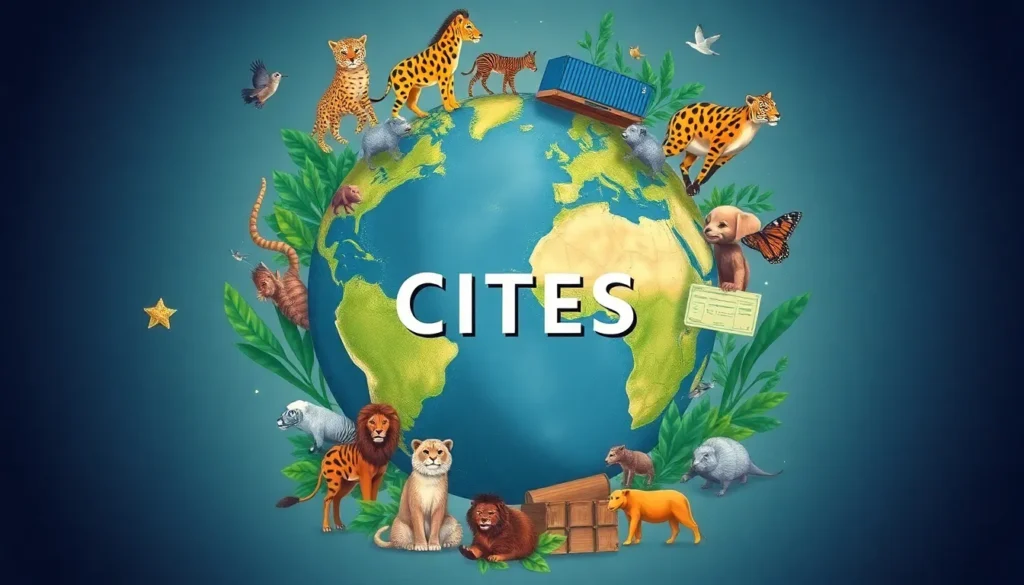
21 Facts About CITES
- Established in 1973: The Convention on International Trade in Endangered Species of Wild Fauna and Flora (CITES) was adopted to address the increasing concerns over the impact of international wildlife trade on species survival.
- Entered into force in 1975: The treaty officially came into effect two years after its adoption, enabling member countries to begin implementation.
- Nearly 184 Parties: As of 2024, 184 countries are Parties to CITES, representing nearly every country in the world.
- Regulates trade of over 38,000 species: CITES covers both animal and plant species listed in its three Appendices, which classify species according to the level of protection needed.
- Three Appendices system: Appendix I includes species threatened with extinction and prohibits commercial trade; Appendix II lists species not necessarily threatened but require controlled trade; Appendix III contains species protected by individual countries requesting assistance.
- Trade permits and certificates: International trade in CITES-listed species requires permits or certificates to ensure legality and sustainability.
- Focus on sustainable trade: CITES aims not to ban all trade but to ensure that trade does not threaten species survival.
- Species coverage is dynamic: Species can be added, removed, or reclassified in the Appendices based on scientific assessments and proposals by member countries.
- Secretariat located in Geneva: The CITES Secretariat supports implementation and coordination among Parties.
- Decisions made at Conference of the Parties (CoP): Every two to three years, the CoP meets to review and amend the Appendices and adopt resolutions guiding implementation.
- Monitoring illegal trade: While CITES regulates legal trade, it also collaborates with enforcement agencies to combat illegal wildlife trafficking.
- Impact on global conservation: CITES is a key international instrument in curbing overexploitation of species for international markets.
- Involvement of multiple stakeholders: Governments, non-governmental organizations, scientists, and industry groups all participate in CITES processes.
- Inclusion of both fauna and flora: CITES protects a broad range of species including mammals, birds, reptiles, orchids, and timber species.
- National implementation varies: Each Party enacts its own laws and regulations to enforce CITES provisions within its territory.
- Supports conservation through trade controls: By regulating trade, CITES indirectly promotes sustainable use and habitat protection.
- Challenges in enforcement: Despite its success, illegal wildlife trade remains a significant challenge due to limited resources and transnational nature of trafficking.
- Listed species include iconic animals: Species such as elephants, tigers, and rhinos are protected under CITES to prevent extinction driven by trade.
- Role in combating wildlife crime: CITES collaborates with organizations like INTERPOL and the World Customs Organization to enhance enforcement.
- Educational and capacity-building programs: CITES helps Parties improve their scientific, technical, and enforcement capacities to comply with the treaty.
- Adaptation to emerging threats: The treaty continues evolving to address new challenges such as online wildlife trade and climate change impacts.
Habitat and Behavior
CITES itself is not an organism but an international treaty. However, it influences the habitats and behaviors of wildlife species by regulating the trade that affects them. The species protected under CITES inhabit diverse ecosystems worldwide, ranging from tropical forests and savannas to marine and freshwater environments. By controlling international trade, CITES helps maintain natural population dynamics, reduce pressures from overexploitation, and indirectly supports habitat conservation efforts. The treaty’s impact on behavior is seen in reduced poaching and illegal trade activities in many regions, as well as encouraging sustainable use practices among communities dependent on wildlife resources.
Why This Animal Matters
Though CITES is not an animal, it matters profoundly in the context of global biodiversity conservation. It plays a critical role in preventing species extinction triggered by unsustainable international trade. By coordinating global efforts, the treaty helps protect ecological balance, supports livelihoods dependent on wildlife, and maintains genetic diversity essential for ecosystem health. Furthermore, CITES fosters international cooperation and awareness about the importance of responsible wildlife trade, integrating conservation goals with economic and social considerations. Its significance extends to cultural values, as many protected species hold symbolic or traditional importance for communities worldwide.
Common Misconceptions
Misconception: CITES bans all international trade of endangered species.
Correction: CITES regulates trade based on threat levels, allowing controlled trade for many species under strict permits to ensure sustainability, rather than imposing blanket bans.
Misconception: CITES enforcement is uniform and equally effective in all countries.
Correction: Enforcement varies widely among Parties due to differences in legal frameworks, resources, and capacity. Some countries face significant challenges in implementing CITES provisions fully.
Misconception: CITES only protects animals.
Correction: CITES protects both animal and plant species, including many types of flora that are threatened by international trade.
Misconception: CITES eliminates wildlife trade altogether.
Correction: The treaty’s objective is to ensure trade is sustainable and legal, not to eliminate it, thus balancing conservation with economic and social needs.
Misconception: CITES handles illegal wildlife trade enforcement alone.
Correction: While CITES facilitates cooperation, enforcement is a shared responsibility involving national authorities, international organizations, and law enforcement agencies.
FAQ
What is the main goal of CITES?
The primary goal of CITES is to ensure that international trade in wild animals and plants does not threaten their survival, by regulating and monitoring trade through permits and trade controls.
How are species classified under CITES?
Species are classified into three Appendices based on their conservation status: Appendix I for species threatened with extinction, Appendix II for species that could become threatened without trade control, and Appendix III for species protected by individual countries seeking assistance.
Does CITES ban all trade of endangered species?
No, CITES does not ban all trade. It regulates trade to ensure it is sustainable and legal. Trade in species listed in Appendix I is generally prohibited for commercial purposes, while controlled trade is allowed for species in Appendices II and III under strict regulations.


Leave a Reply