
Short Answer
21 Facts About Swordtails
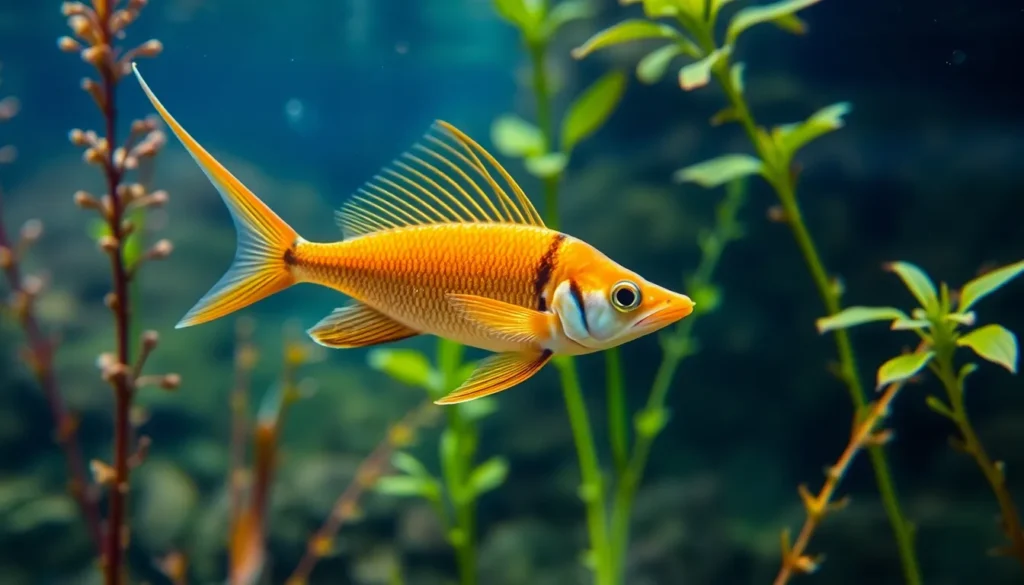
- Distinctive Sword-like Tail: Swordtails are named for the elongated lower lobe of their caudal fin, which resembles a sword and is most prominent in males.
- Scientific Classification: Swordtails belong to the genus Xiphophorus, which is part of the Poeciliidae family.
- Native Range: They are native to Central America, predominantly found in Mexico, Guatemala, and Honduras.
- Sexual Dimorphism: Males typically have the characteristic sword tail extension, whereas females do not, making it easy to differentiate between sexes.
- Omnivorous Diet: Swordtails feed on a varied diet including algae, plant matter, insects, and small invertebrates.
- Livebearers: Unlike many fish, swordtails give birth to live young rather than laying eggs.
- Reproductive Behavior: Males use their sword to attract females during courtship displays.
- Hybridization: Swordtails can hybridize with platies, another popular aquarium fish, producing fertile offspring.
- Adaptability: They are highly adaptable to different water conditions, which contributes to their popularity in home aquariums.
- Water Preferences: Swordtails prefer slightly alkaline water with moderate hardness and temperatures between 22–28°C (72–82°F).
- Social Behavior: They are generally peaceful but males can display territorial behavior toward each other.
- Size: Adult males typically grow up to 12 cm (4.7 inches), while females are usually larger, reaching up to 14 cm (5.5 inches).
- Use in Genetics Research: Swordtails have been used extensively in genetic and evolutionary biology studies due to their diverse coloration and breeding behaviors.
- Color Variations: Natural populations exhibit a range of colors, but selective breeding has produced many vibrant color morphs in captivity.
- Ecological Role: In their native habitats, swordtails help control insect populations and contribute to aquatic plant health by grazing algae.
- Predators: They are prey for larger fish, birds, and amphibians in their natural environments.
- Lifespan: Swordtails typically live 3 to 5 years in captivity with proper care.
- Conservation Status: While not currently endangered, some wild populations face habitat loss and pollution threats.
- Introduction to Non-native Areas: Swordtails have been introduced to various regions worldwide, where they sometimes establish feral populations.
- Popular Aquarium Fish: Their vibrant colors, ease of care, and peaceful temperament make them popular among aquarium enthusiasts.
- Cultural Significance: Swordtails have appeared in various cultural contexts, often symbolizing vitality and beauty due to their striking appearance.
Habitat and Behavior
Swordtails inhabit freshwater rivers, streams, and lakes, typically favoring slow-moving or still waters with abundant vegetation. Their native range extends across Central America, with populations adapted to a variety of microhabitats. Behaviorally, swordtails are active swimmers and social fish that often form small groups. Males can be territorial and display courtship behaviors that involve flaunting their sword-like tail extensions to attract females. Their omnivorous diet allows them to exploit diverse food sources, which contributes to their adaptability. Swordtails are livebearers, meaning females give birth to free-swimming young rather than spawning eggs, an adaptation that can increase offspring survival in variable environments.
Why This Animal Matters
Swordtails play an important ecological role in their native freshwater ecosystems. By feeding on algae and insects, they help maintain ecological balance, contributing to plant health and controlling pest populations. Their position as prey supports higher trophic levels, including birds and larger fish. In scientific research, swordtails have been valuable model organisms for studying genetics, evolution, and sexual selection due to their diverse phenotypes and breeding capabilities. Additionally, swordtails hold cultural and economic significance in the aquarium trade, promoting awareness of freshwater biodiversity. Conservation attention is warranted for wild populations facing habitat degradation, highlighting the need for sustainable environmental practices.
Common Misconceptions
- Misconception: Swordtails use their tail “swords” for defense against predators.
- Correction: The elongated tail fin in males primarily serves as a sexual display during courtship, not as a weapon for defense.
- Misconception: Swordtails can survive in any water condition.
- Correction: While adaptable, swordtails require specific water parameters such as moderate temperature and pH for optimal health and reproduction.
- Misconception: Swordtails and platies are the same fish.
- Correction: Swordtails (Xiphophorus hellerii) and platies (Xiphophorus maculatus) are related but distinct species, though they can interbreed.
FAQ
What is the lifespan of a swordtail fish?
Swordtails typically live between 3 to 5 years in captivity when provided with proper care, including suitable water conditions and a balanced diet.
Are swordtails aggressive fish?
Swordtails are generally peaceful and social fish, but males can exhibit territorial behavior, especially when competing for females.
Can swordtails live with other fish species?
Yes, swordtails are compatible with many other peaceful freshwater fish species, making them popular in community aquariums.



Leave a Reply