
Short Answer
21 Facts About Animals in Greek Mythology
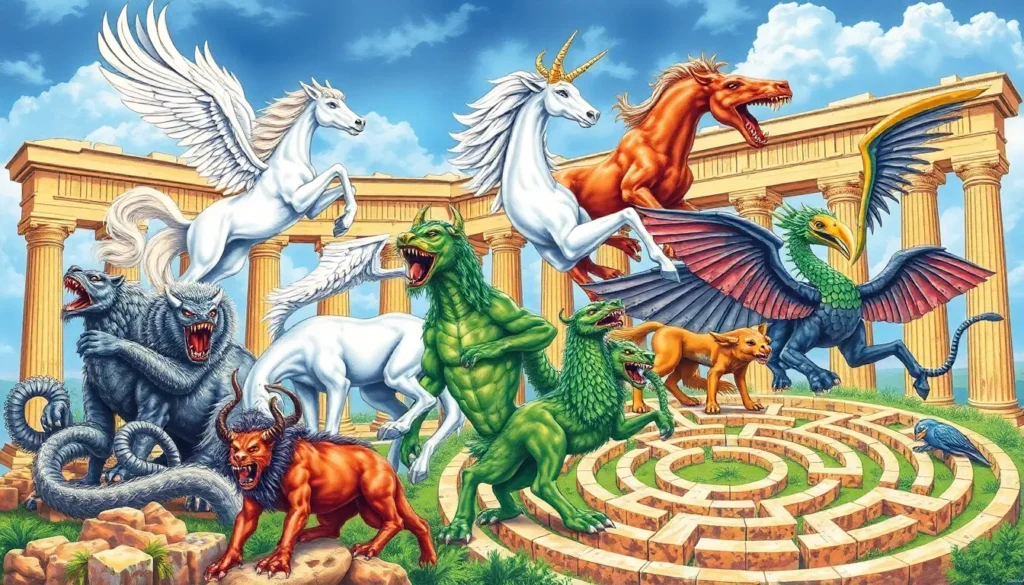
- The Griffin was a mythical creature with the body of a lion and the head and wings of an eagle. It symbolized divine power and protection, often seen as a guardian of treasures.
- The Hydra was a serpent-like water monster with multiple heads. When one head was cut off, two more would grow in its place. It was slain by Heracles as one of his Twelve Labors.
- The Pegasus was a winged horse born from the blood of Medusa. It represented inspiration and poetic genius, often associated with the Muses.
- The Cerberus was a three-headed dog guarding the entrance to the Underworld. It prevented the dead from leaving and the living from entering without permission.
- The Chimera was a monstrous fire-breathing hybrid creature with the body of a lion, a goat’s head protruding from its back, and a serpent for a tail. It was known for its terrifying appearance and destructive power.
- The Sphinx had a woman’s head, a lion’s body, and wings of a bird. It posed riddles to travelers and was defeated by Oedipus.
- The Nemean Lion had an impenetrable hide that could not be pierced by weapons. It was defeated by Heracles as part of his Twelve Labors.
- Harpy was a winged spirit with the face of a woman and the body of a bird. They were often agents of punishment, abducting people and tormenting them.
- The Sirens were creatures with the body of a bird and the head of a woman. Their enchanting songs lured sailors to their doom.
- The Calydonian Boar was a monstrous wild boar sent by Artemis to ravage the region of Calydon. It was hunted by many heroes in a famous mythological event.
- The Stymphalian Birds were man-eating birds with metallic feathers. They were driven away by Heracles as another of his Twelve Labors.
- The Minotaur was a creature with the body of a man and the head of a bull. It dwelled in the Labyrinth and was slain by Theseus.
- The Ceryneian Hind was a sacred deer with golden antlers and bronze hooves. Capturing it was one of Heracles’ tasks.
- The Hippocamp was a sea creature with the upper body of a horse and the lower body of a fish. It pulled the chariot of Poseidon.
- The Phoenix was a mythical bird that cyclically regenerated or was reborn from its ashes. It symbolized immortality and resurrection.
- The Catoblepas was a creature with a deadly gaze and a heavy head that it could barely lift. It was said to live in remote regions and cause death with a glance.
- The Lamia was a female demon who could transform into a child-eating monster, sometimes depicted with animal features. She was associated with envy and vengeance.
- The Teumessian Fox was a gigantic fox destined never to be caught. It was sent to punish Thebes and was ultimately turned to stone.
- The Satyrs were half-human, half-goat creatures associated with Dionysus. They represented wildness and revelry.
- The Nymphs were nature spirits often linked to particular animals or natural features. They played roles in myths emphasizing the connection between animals, nature, and the divine.
- The Owl was sacred to Athena and symbolized wisdom and knowledge. It appears frequently in Greek art and mythology as a representation of the goddess.
Habitat and Behavior
Animals in Greek mythology often inhabit fantastical or symbolic environments rather than realistic habitats. Many of these creatures dwell in liminal spaces such as labyrinths, caves, forests, or bodies of water. Their behaviors are frequently exaggerated or supernatural, reflecting themes of power, danger, or protection. For example, the Hydra lives in swamps and lakes and regenerates its heads, while the Nemean Lion has an invulnerable hide. Mythological animals may act as guardians, punishers, or symbols of divine attributes, rather than exhibiting natural animal behaviors. Their survival often depends on their magical abilities or divine origin rather than ecological factors.
Why This Animal Matters
Animals in Greek mythology serve multiple important roles: they embody natural forces, symbolize human virtues or vices, and enhance the narrative depth of myths. Creatures like the Pegasus inspire artistic and poetic imagination, while monsters like the Minotaur or Hydra challenge heroes and represent chaos or evil. These animals also reflect the ancients’ attempts to understand the natural world and human psychology through allegory. Furthermore, many mythological animals have influenced Western art, literature, and culture for centuries, maintaining relevance in modern storytelling and symbolism.
Common Misconceptions
Misconception: All mythological animals in Greek myths were purely evil or monstrous.
Correction: While many creatures were antagonists, some animals like Pegasus or the owl of Athena symbolized positive qualities such as inspiration and wisdom.

Misconception: Mythological animals were based on real animals exactly as described.
Correction: Many creatures were hybrids or fantastical inventions reflecting symbolic meanings rather than real zoological species.
Misconception: The behavior and habitat of mythological animals correspond to real ecological patterns.
Correction: These animals often exist in symbolic or supernatural settings, and their actions serve narrative or allegorical purposes, not ecological accuracy.
Misconception: The number of heads or features of creatures like the Hydra or Cerberus is always consistent.
Correction: Different sources sometimes vary in descriptions, such as the number of Hydra’s heads or Cerberus’s heads.
FAQ
What role do animals play in Greek mythology?
Animals in Greek mythology often symbolize natural forces, divine attributes, or human traits. They can be protectors, monsters, companions to gods and heroes, or allegorical symbols within myths.
Are mythological animals based on real animals?
Many mythological animals are hybrids or exaggerated versions of real animals, created to convey symbolic meanings rather than realistic representations.
Why do some mythological animals have multiple heads or unusual features?
Multiple heads or hybrid features often symbolize the creature’s supernatural power, danger, or unique role within a myth, enhancing its otherworldly nature.
Leave a Reply