
Short Answer
21 Facts About Lightest Animals (Shrew and Bee Hummingbird)
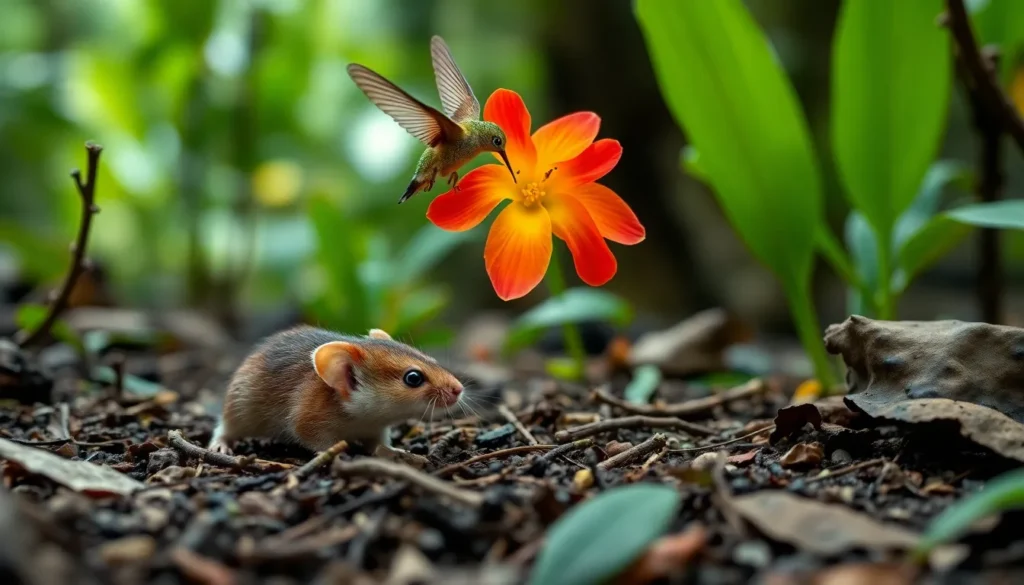
- Smallest Mammal by Weight: The Etruscan shrew (Suncus etruscus) is widely considered the lightest mammal, weighing as little as 1.2 grams.
- Fast Metabolism: Shrews have an extremely high metabolic rate, requiring them to eat constantly to survive.
- Impressive Speed: Despite their small size, shrews can move rapidly, which helps them catch prey and avoid predators.
- Tiny but Fierce: Shrews have sharp teeth and venomous saliva, which they use to immobilize prey.
- Longest Life for Size: The Etruscan shrew can live up to two years, relatively long for such a tiny mammal.
- Smallest Bird by Weight: The bee hummingbird (Mellisuga helenae) is the smallest bird, weighing about 1.6 to 2 grams.
- Brightly Colored Plumage: Male bee hummingbirds display iridescent feathers that reflect sunlight in vibrant hues.
- Rapid Wing Beats: Their wings beat approximately 80 times per second, enabling them to hover in place.
- High Energy Needs: Like shrews, bee hummingbirds have high metabolisms and feed on nectar frequently to maintain their energy.
- Unique Flight Capabilities: Bee hummingbirds can fly backward, a rare ability among birds.
- Short Lifespan: They generally live for 3 to 5 years in the wild.
- Pollinator Role: Bee hummingbirds play a critical role in pollinating many tropical flowers in their native Cuban habitats.
- Shrew’s Sensory Adaptations: Shrews rely on echolocation and acute senses of smell and hearing to navigate and hunt.
- Bee Hummingbird’s Bill Shape: Their slender, slightly curved bills are perfectly adapted for extracting nectar from flowers.
- Shrew’s Reproductive Rate: Shrews have multiple litters per year, with some species producing up to 10 offspring per litter.
- Bee Hummingbird Nesting: They build tiny nests often no larger than a walnut, camouflaged with moss and spider silk.
- Distribution of Shrews: Etruscan shrews are found across southern Europe and parts of North Africa.
- Bee Hummingbird’s Endemic Range: This species is endemic to Cuba and the nearby Isla de la Juventud.
- Conservation Status of Shrews: While some shrew species are common, habitat loss threatens others.
- Conservation Status of Bee Hummingbird: Currently listed as Least Concern but vulnerable to habitat degradation.
- Scientific Study Interest: Both animals are subjects of scientific research due to their unique physiology and adaptations.
Habitat and Behavior
The Etruscan shrew inhabits warm environments such as Mediterranean woodlands, grasslands, and scrub areas. It is a nocturnal and solitary animal, relying on its keen senses to hunt insects and small invertebrates. Its high metabolism means it must consume food equal to its body weight almost daily, resulting in almost continuous foraging behavior.
The bee hummingbird lives primarily in Cuba’s tropical forests and gardens. It is diurnal and highly active, feeding almost constantly on nectar, small insects, and spiders to sustain its rapid metabolism and energetic flight. It exhibits territorial behavior, especially males defending feeding areas during breeding seasons.
Why This Animal Matters
Shrews play an important ecological role as insect predators, helping to control populations of insects and other small invertebrates. Their presence indicates healthy ecosystems, and they contribute to nutrient cycling through their feeding habits.
Bee hummingbirds are vital pollinators for many native Cuban plants, supporting biodiversity and the reproduction of numerous flowering species. Their ecological role is crucial for maintaining the health of tropical forest ecosystems.
Both animals also hold scientific interest for understanding adaptations related to size, metabolism, and sensory capabilities. Conservation of their habitats helps protect broader environmental health.
Common Misconceptions
Misconception: The shrew is a rodent.
Correction: Shrews belong to the order Eulipotyphla and are not rodents. They are more closely related to moles and hedgehogs.
Misconception: The bee hummingbird is the smallest animal in the world.
Correction: While it is the smallest bird, it is not the smallest animal overall; many insects and microorganisms are smaller.
Misconception: Shrews are harmless tiny mammals.
Correction: Some shrew species have venomous saliva used for subduing prey, making them unique among mammals.
Misconception: All hummingbirds can hover equally well.
Correction: Although many hummingbirds hover, the bee hummingbird’s wing beat frequency and flight agility are exceptional even among hummingbirds.
FAQ
What is the lightest mammal in the world?
The Etruscan shrew (Suncus etruscus) is generally recognized as the lightest mammal, weighing around 1.2 grams.
How small is the smallest bird?
The bee hummingbird (Mellisuga helenae) is the smallest bird, measuring about 5 to 6 cm in length and weighing between 1.6 and 2 grams.
Why do shrews have such a high metabolism?
Due to their tiny size and high surface area to volume ratio, shrews lose heat quickly and must consume large amounts of food relative to their weight to maintain energy and body temperature.


Leave a Reply