
Short Answer
21 Facts About Animal Testing Ethics
- Animal testing ethics is centered on the welfare of animals used in research. Ethical guidelines aim to minimize pain and distress to animals involved in experiments.
- The Three Rs principle guides ethical animal testing. This stands for Replacement (using alternatives), Reduction (using fewer animals), and Refinement (minimizing suffering).
- Many countries require approval from ethical review boards before animal testing can proceed. These committees evaluate the scientific necessity and animal welfare considerations.
- Animal testing is regulated by laws that vary widely worldwide. Some regions have strict controls, while others have minimal regulation.
- Alternatives to animal testing are increasingly promoted. These include in vitro methods, computer modeling, and human tissue cultures.
- Animal testing ethics debates often focus on balancing scientific progress with animal rights. Some argue animal use is necessary for medical advances, while others advocate for total abolition.
- Ethical concerns differ depending on the species used. Primates, dogs, and cats typically receive more legal protection than rodents or fish.
- Public opinion influences animal testing policies and practices. Increasing awareness has led to stricter regulations and more funding for alternatives.
- Many ethical frameworks emphasize the moral status of animals. This includes considerations of sentience, capacity for suffering, and intrinsic value.
- Some ethical guidelines prohibit the use of certain procedures considered excessively painful or invasive. Humane endpoints are established to reduce suffering.
- Transparency and reporting standards are important ethical issues. Some advocate for full disclosure of animal use in research to hold institutions accountable.
- Animal welfare organizations play a key role in monitoring and advocating for ethical testing practices. They often collaborate with regulatory bodies and researchers.
- Ethical animal testing includes proper housing, care, and environmental enrichment for research animals. These factors affect animal wellbeing and the quality of scientific data.
- Ethical review boards also assess the potential benefits of research against the harms caused to animals. This cost-benefit analysis is central to ethical approval.
- Some ethical perspectives reject animal testing altogether, citing animal rights theory. These views consider animal use inherently unjust regardless of outcome.
- International organizations, such as the International Council for Laboratory Animal Science (ICLAS), promote global ethical standards. These aim to harmonize practices across countries.
- Ethical discussions often include the concept of moral responsibility of scientists and institutions. Accountability for humane treatment is emphasized.
- Education and training programs in laboratory animal science address ethical considerations as a core component. Proper training is required to ensure compliance with ethical standards.
- Some scientific journals require authors to declare ethical approval for animal research when submitting manuscripts. This ensures published work meets ethical criteria.
- Public campaigns and legislation have led to bans on animal testing for cosmetics in several countries. This reflects growing ethical concerns in consumer products.
- The debate over animal testing ethics continues to evolve as new technologies and societal values emerge. Ongoing dialogue seeks to balance innovation and animal welfare.
Habitat and Behavior
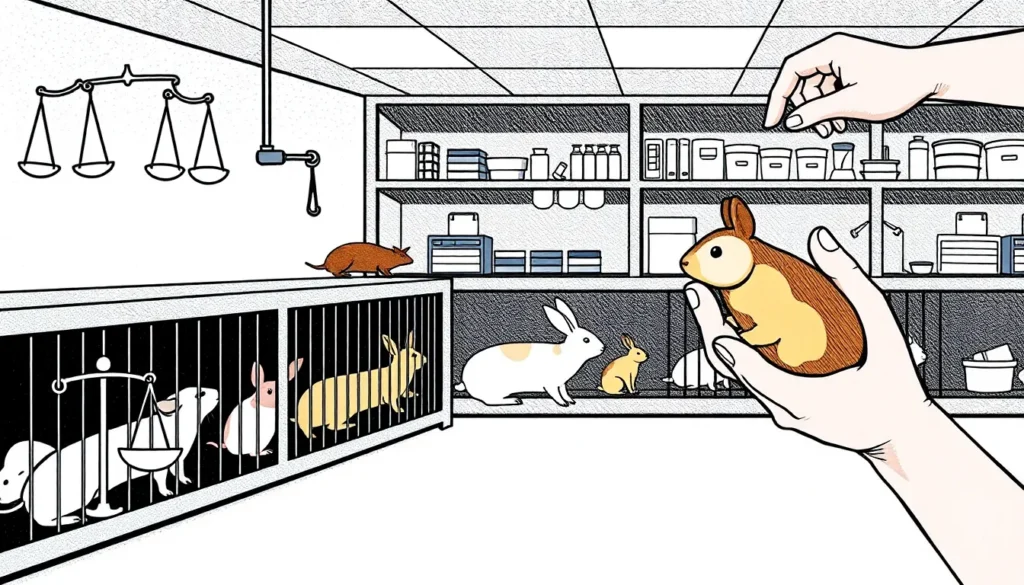
This article focuses on the ethical considerations of animal testing rather than a specific animal species. However, animals commonly used in testing, such as mice, rats, rabbits, and primates, are typically housed in controlled laboratory environments. Their behavior in these settings is influenced by cage size, social interactions, and enrichment provided by caretakers. Understanding natural behaviors of these species is critical for improving their welfare in captivity. For instance, rodents naturally engage in burrowing and nesting, which laboratories attempt to replicate through environmental enrichment to reduce stress.
Why This Animal Matters
Animals used in testing contribute significantly to medical and scientific research. Their biological systems often provide important models for understanding human diseases and developing treatments. Ethical use of these animals is crucial to ensure that scientific advancements do not come at unacceptable moral costs. Maintaining animal welfare standards improves the reliability of research data and reflects societal values regarding humane treatment of living beings. Furthermore, these animals play a role in regulatory safety assessments that protect human and environmental health.
Common Misconceptions
Misconception: Animal testing is entirely unregulated and conducted without oversight.
Correction: In reality, animal testing is subject to extensive regulation and ethical review in many countries, with mandatory oversight to protect animal welfare.
Misconception: Alternatives to animal testing have completely replaced the need for animal research.
Correction: While alternatives exist and are promoted, many scientific questions still require animal models, though efforts continue to reduce this dependence.
Misconception: All animals used in research suffer extreme pain and distress.
Correction: Ethical guidelines require minimizing pain through anesthesia, analgesia, and humane endpoints, and many procedures are designed to reduce suffering as much as possible.
Misconception: Animal testing ethics only concern animal rights activists.
Correction: Animal testing ethics is a multidisciplinary concern involving scientists, ethicists, policymakers, and the general public to ensure responsible research practices.
FAQ
What is the main ethical principle guiding animal testing?
The main ethical principle is the Three Rs: Replacement (using alternatives to animals), Reduction (using the minimum number of animals necessary), and Refinement (modifying procedures to minimize pain and distress).
Are there laws regulating animal testing?
Yes, many countries have laws and regulations that govern animal testing, requiring ethical review and adherence to welfare standards to ensure humane treatment.
Can animal testing be completely replaced by alternatives?
While alternatives such as in vitro testing and computer models are increasingly used, some scientific research still requires animal models due to their complex biological systems; ongoing research aims to further reduce reliance on animal testing.






Leave a Reply