
Short Answer
21 Facts About Lynx and Hare Predation
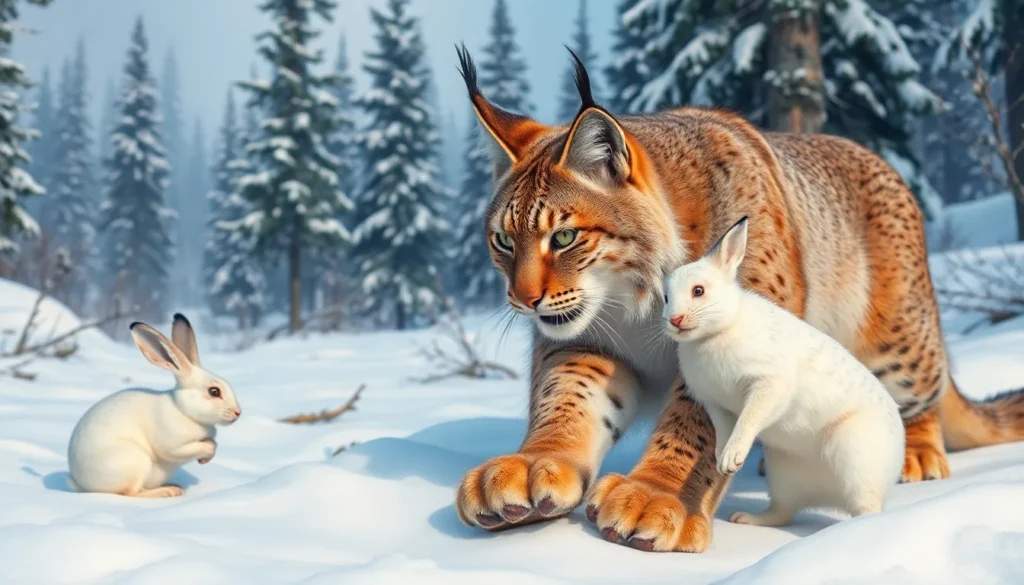
- Predator-Prey Relationship: The lynx is a primary predator of the snowshoe hare, and their populations often fluctuate in a cyclical pattern influenced by predation rates.
- Population Cycles: Lynx and snowshoe hare populations typically follow a roughly 10-year cycle, where increases in hare numbers lead to increases in lynx numbers, which in turn reduce hare populations.
- Specialized Hunter: The Canada lynx has evolved specialized traits, such as large, furry paws, to move efficiently in snowy environments while hunting hares.
- Diet Diversity: While hares are a staple, lynx may also consume birds, rodents, and occasionally carrion when hare numbers are low.
- Hare Camouflage: Snowshoe hares change their fur color seasonally, from brown in summer to white in winter, to evade predators like lynx.
- Hunting Strategy: Lynx typically hunt by stalking and ambushing rather than chasing their prey over long distances.
- Reproductive Impact: Hare population declines can negatively affect lynx reproduction and survival rates due to food scarcity.
- Territory Size: Lynx territories may expand when hare populations decrease to increase hunting opportunities.
- Juvenile Lynx Learning: Young lynx improve their hunting success by practicing stalking and catching hares under parental guidance.
- Snowshoe Hare Behavior: Hares are primarily crepuscular, active at dawn and dusk, which overlaps with lynx hunting times.
- Predation Pressure: Lynx predation is a significant mortality factor for snowshoe hares, especially during population peaks.
- Population Monitoring: Fur trapping records historically provided valuable data on lynx and hare population dynamics.
- Climate Influence: Climate variations can affect snow cover, influencing lynx hunting efficiency and hare camouflage effectiveness.
- Adaptations to Cold: Both lynx and hares possess adaptations such as thick fur and large feet to survive harsh winter conditions.
- Impact on Vegetation: Hare population changes can influence vegetation dynamics, as hares are herbivores consuming significant plant biomass.
- Coevolution: The predator-prey relationship between lynx and hares is an example of coevolution, where each species influences the other’s adaptations.
- Human Influence: Habitat fragmentation and hunting can disrupt lynx and hare populations and their natural cycles.
- Conservation Status: Canada lynx are protected in many areas, partly due to their dependency on healthy hare populations and boreal forest habitats.
- Hare Reproductive Rate: Snowshoe hares have high reproductive rates, producing multiple litters annually, which supports lynx populations.
- Predator Competition: Lynx may compete with other predators such as coyotes and foxes for hares, especially when prey is scarce.
- Ecological Indicator: The lynx-hare cycle serves as an important ecological indicator reflecting the health of northern forest ecosystems.
Habitat and Behavior
The Canada lynx (Lynx canadensis) primarily inhabits boreal forests across Canada and parts of the northern United States. These forests are characterized by dense coniferous trees and heavy snow cover in winter, conditions that favor the lynx’s adaptations such as large paws that act like snowshoes. The snowshoe hare (Lepus americanus), the lynx’s main prey, thrives in similar habitats, relying on dense understory vegetation for food and cover.
Lynx are solitary and territorial animals, marking large home ranges that may expand or contract based on prey availability. They are crepuscular hunters, most active during dawn and dusk when hares are also active. Lynx hunt by stealth, using cover to approach hares closely before pouncing. During winter, the lynx’s thick fur and large feet enhance its ability to move silently over snow.
Snowshoe hares use their seasonal coat color changes to blend with their environment, turning white in snowy winters and brown during summer months. They are prolific breeders, producing multiple litters per year to offset high predation rates. Hares are primarily herbivorous, feeding on shrubs, grasses, and woody plants.
Why This Animal Matters
The lynx and hare predator-prey relationship is a textbook example of population dynamics and ecosystem balance. Their cyclical population fluctuations illustrate the complex interactions between predator pressure and prey availability. This dynamic influences not only the two species but also the broader ecosystem, including vegetation patterns and other animal species.
Ecologically, lynx act as a keystone predator, controlling hare populations and thus indirectly regulating plant communities. Culturally, the lynx has significance in indigenous folklore and is often associated with wilderness and the health of northern forest ecosystems. Conservation efforts aimed at preserving lynx habitats also benefit a wide range of other species that share these boreal environments.
Common Misconceptions
Misconception: Lynx only eat hares.
Correction: While snowshoe hares are the lynx’s primary prey, lynx have a varied diet that includes birds, small mammals, and occasionally carrion, especially when hare numbers are low.
Misconception: The lynx-hare population cycle is only driven by predation.
Correction: Although predation by lynx is a significant factor, other elements such as food availability for hares, disease, and climate also influence the population cycles.
FAQ
Why do lynx populations depend on snowshoe hares?
Lynx primarily prey on snowshoe hares, so their survival and reproductive success are closely tied to hare availability. When hare numbers decline, lynx may experience food shortages, leading to reduced reproduction and higher mortality.
How do snowshoe hares avoid predation by lynx?
Snowshoe hares employ camouflage by changing their fur color seasonally to match their environment, use dense vegetation for cover, and are most active during dawn and dusk to reduce exposure to predators.
Can lynx survive if snowshoe hare populations collapse?
While lynx can occasionally consume other prey, they are highly specialized hunters of snowshoe hares. A sustained collapse in hare populations typically leads to declines in lynx numbers due to starvation and reduced reproduction.


Leave a Reply