
Short Answer
21 Facts About Myrmecophytes and Ants
- Myrmecophytes are plants that live in mutualistic relationships with ants. These plants provide ants with shelter, food, or both, while ants offer protection or nutrients in return.
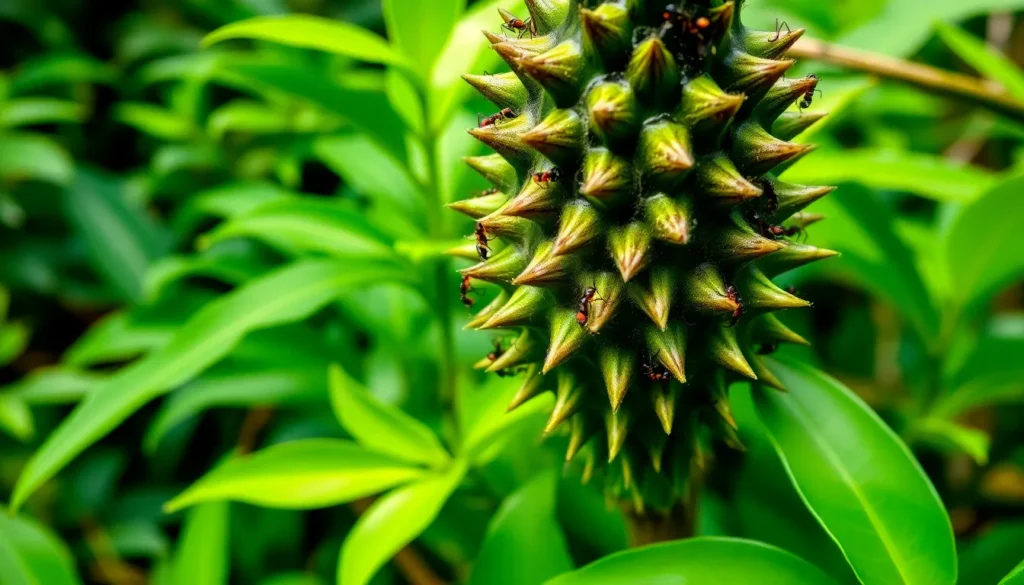
- Specialized structures called domatia often house ants. These can be hollow stems, thorns, or swollen petioles designed specifically to accommodate ant colonies.
- Some myrmecophytes produce food bodies for ants. These nutrient-rich structures, such as Beltian bodies or pearl bodies, serve as a food source for the resident ants.
- Ants protect myrmecophytes from herbivores and competing plants. By aggressively patrolling and attacking intruders, ants reduce damage to the plant.
- The relationship benefits nutrient-poor environments. Ants often deposit waste inside the plant structures, providing essential nitrogen and other nutrients.
- Not all ant-plant relationships are mutualistic. Some ants exploit plants without offering benefits, which can lead to parasitic or commensal interactions.
- Examples of myrmecophytes include species of Acacia, Cecropia, and Macaranga. Each has evolved unique features to host ants.
- In some Acacia species, ants live inside large hollow thorns. These ants aggressively defend the plant and prune away encroaching vegetation.
- Cecropia trees provide shelter in hollow stems and produce Müllerian bodies for ants. The resident Azteca ants protect the tree from herbivores and vines.
- Myrmecophyte-ant relationships have evolved independently multiple times. This convergent evolution highlights their ecological importance.
- Ants can influence the reproductive success of myrmecophytes. By defending flowers and fruits, they help increase seed survival rates.
- Some ants farm scale insects on myrmecophytes. These insects provide honeydew, a sugary secretion, as additional food for the ants.
- The presence of ants can affect the surrounding plant community. By deterring herbivores and suppressing competitors, myrmecophytes can shape local biodiversity.
- Myrmecophytes are primarily found in tropical and subtropical regions. These climates support the diverse ant species involved in mutualisms.
- Research on myrmecophyte-ant interactions contributes to understanding coevolution. Studying these relationships helps reveal how species adapt to one another over time.
- Some myrmecophytes have extrafloral nectaries to attract ants. These nectar-producing glands are not part of the flowers but serve to recruit protective ants.
- Ants living in myrmecophytes often show high colony specialization. They rely heavily on their host plants for food and shelter.
- These mutualisms can be disrupted by environmental changes. Habitat disturbance or climate change may affect both ants and their host plants.
- Conservation of myrmecophyte species supports associated ant diversity. Protecting these plants helps maintain complex ecological networks.
- Studying myrmecophytes offers insights into sustainable pest management. Harnessing natural ant defenses could reduce reliance on chemical pesticides.
- The term “myrmecophyte” derives from the Greek words “myrmex” meaning ant and “phyton” meaning plant. It signifies plants that have evolved to live with ants.
Habitat and Behavior
Myrmecophytes are predominantly found in tropical and subtropical forests, where the environment favors their complex interactions with ants. These plants have developed specialized structures such as hollow thorns, stems, or petioles that provide living spaces for ant colonies. Additionally, they often produce food bodies or nectar to sustain their ant inhabitants. The ants, in turn, defend the plants from herbivorous insects and other threats, pruning away encroaching vegetation and sometimes even deterring larger herbivores. The mutualistic relationship allows both organisms to thrive in nutrient-poor soils or competitive environments, with ants contributing nutrients through their waste. Behaviorally, the ants exhibit aggressive territoriality, patrolling the plant and responding rapidly to disturbances, which benefits the host plant’s survival and reproductive success.
Why This Animal Matters
The myrmecophyte-ant relationship is an important example of mutualism in ecology, demonstrating how species can coevolve and depend on each other for survival. These interactions contribute to the regulation of herbivore populations and influence plant community dynamics. By providing ants with shelter and food, myrmecophytes support diverse ant populations, which in turn protect the plants and surrounding vegetation. This mutualism enhances ecosystem stability and nutrient cycling, especially in challenging environments. Additionally, understanding these relationships aids conservation efforts by highlighting the interconnectedness of species. The study of myrmecophyte-ant systems also offers potential applications in sustainable agriculture and pest management by leveraging natural biological defenses.
Common Misconceptions
Misconception: All ants living on plants harm the plants.
Correction: Many ants form beneficial mutualisms with plants, protecting them from herbivores and providing nutrients in exchange for shelter and food.
Misconception: Myrmecophytes are a single species or type of plant.
Correction: Myrmecophytes refer to a variety of plant species across different genera that have independently evolved relationships with ants.
Misconception: The ant-plant relationship is always beneficial for both parties.
Correction: While often mutualistic, some ant-plant interactions can be neutral or even exploitative, depending on environmental context and species involved.
Misconception: Ants living in myrmecophytes only protect the plant from insects.
Correction: Ants can also defend against larger herbivores and competing plants by pruning or deterring them, thereby providing broader protection.
Misconception: Myrmecophytes are common in all climates.
Correction: Myrmecophytes are mostly found in tropical and subtropical regions where the climate supports their specialized mutualisms.
FAQ
What are myrmecophytes?
Myrmecophytes are plants that have a mutualistic relationship with ants, providing them with shelter or food in exchange for protection or nutrients.
How do ants benefit myrmecophyte plants?
Ants protect myrmecophytes from herbivores and competing vegetation, and they may also provide nutrients through their waste deposited inside plant structures.
Are all ants living on plants beneficial?
No, while many ants form mutualistic relationships with plants, some ants live on plants without providing benefits and may be neutral or harmful to the plant.




Leave a Reply