
Short Answer
21 Facts About Glowworms
- Glowworms produce light through bioluminescence. They emit light using a chemical reaction involving luciferin, luciferase, ATP, and oxygen.
- Glowworms are not worms but beetle larvae. They belong primarily to the family Lampyridae or related families, depending on the region.
- Bioluminescence serves multiple purposes. It is mainly used to attract prey or mates and to deter predators.
- Glowworms can be found on every continent except Antarctica. However, species distribution varies with climate and habitat conditions.
- Different species produce different colors of light. Most glowworms emit greenish-yellow light, but some may produce blue or pale light.
- Glowworms’ light is cold light. It produces very little heat, making it energy-efficient compared to incandescent light.
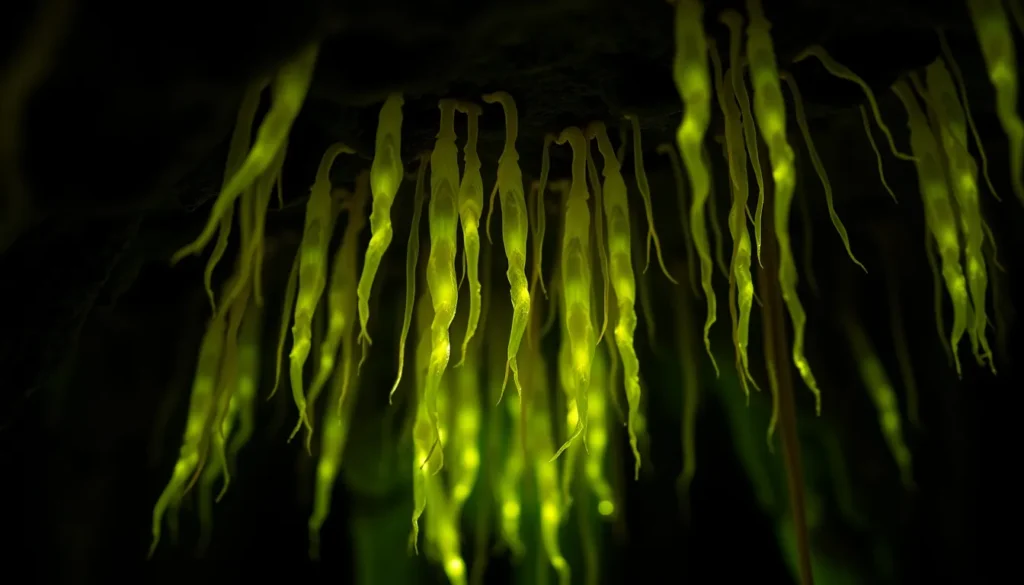
- Some glowworm species create silk threads to trap prey. These sticky threads hang from cave ceilings or forest foliage to catch flying insects.
- Glowworms are mostly nocturnal. They glow primarily at night to increase the visibility of their light signals.
- The glowworm life cycle includes egg, larva, pupa, and adult stages. The larval stage is when they produce light most prominently.
- Adult glowworms often do not feed. Many adult glowworms have reduced mouthparts and rely on energy stored during larval stages.
- Glowworm populations are indicators of environmental health. They require clean, moist habitats and are sensitive to pollution.
- Glowworms play a role in controlling insect populations. Their predation helps balance ecosystems by consuming various small insects.
- Some glowworm species are endemic to specific regions. For example, New Zealand and Australia have unique glowworm species found nowhere else.
- Glowworms can synchronize their light flashes. In some species, males and females coordinate flashes to facilitate mating.
- Glowworm luminescence intensity varies with temperature and age. Cooler temperatures and younger larvae often exhibit brighter glows.
- Cave-dwelling glowworms create spectacular natural light displays. These displays attract tourists in places like New Zealand’s Waitomo Caves.
- Glowworms have inspired cultural stories and folklore. They often symbolize mystery, magic, or guidance in various cultures.
- Scientists study glowworm bioluminescence for medical and technological applications. Their light-producing mechanisms offer potential uses in imaging and sustainable lighting.
- Glowworms are vulnerable to habitat destruction. Urbanization, pollution, and artificial lighting threaten their populations.
- Not all bioluminescent insects are glowworms. Fireflies are related but distinct species known for their flashing light patterns.
- Glowworms emit light continuously or in patterns depending on the species. This helps them attract prey or mates efficiently.
Habitat and Behavior
Glowworms inhabit moist, sheltered environments such as forests, caves, and riverbanks. They prefer areas rich in humidity and organic matter, which support their prey and provide suitable conditions for their larvae. Their behavior is largely nocturnal, using bioluminescence to lure prey or attract mates during the night. Some species hang sticky silk threads to trap flying insects, while others may rely on light patterns to communicate. Glowworms undergo complete metamorphosis, with the larval stage being the most active in glowing and feeding. Adults often have a short lifespan and may not feed at all. Their ability to produce light plays a crucial role in their survival and reproductive success.
Why This Animal Matters
Glowworms have significant ecological roles as both predators and prey within their ecosystems. By controlling insect populations, they contribute to maintaining ecological balance. Their sensitivity to environmental changes makes them valuable bioindicators for habitat health and pollution levels. Culturally, glowworms have inspired myths and artistic representations, highlighting human fascination with natural bioluminescence. Scientifically, the study of glowworm bioluminescence has advanced understanding of chemical light production, with potential applications in medical diagnostics, environmental monitoring, and sustainable lighting technologies. Conservation of glowworm habitats is important to preserve biodiversity and maintain these ecological and cultural benefits.
Common Misconceptions
Misconception: Glowworms are worms.
Correction: Glowworms are actually the larval stage of certain beetle species, not worms.
Misconception: Glowworms produce light to keep warm.
Correction: The light produced is cold light and generates very little heat; its primary functions are attraction and defense.
Misconception: All bioluminescent insects are fireflies.
Correction: While fireflies are bioluminescent beetles, glowworms represent different species or life stages within related families.
Misconception: Glowworms glow constantly with the same brightness.
Correction: Glow intensity can vary with species, temperature, and developmental stage, and some glowworms flash in patterns.
Misconception: Glowworms are found everywhere worldwide.
Correction: Although widely distributed, glowworms are absent from some regions like Antarctica and have specific habitat requirements.
FAQ
What causes glowworms to emit light?
Glowworms emit light through a biochemical reaction involving the enzyme luciferase acting on luciferin in the presence of ATP and oxygen, producing cold light without heat.
Are glowworms dangerous to humans?
Glowworms are not dangerous to humans. They do not bite or sting and are harmless.
Why do glowworms glow?
Glowworms glow mainly to attract prey and mates. The light helps lure insects into their sticky traps or signals readiness to mate.



Leave a Reply