
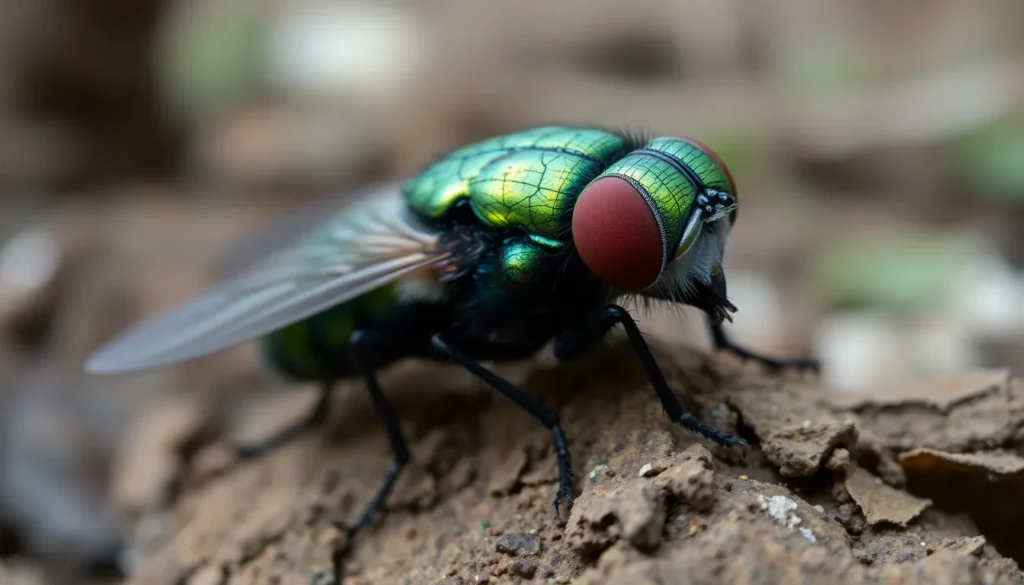
Short Answer
21 Facts About Blow Flies
- Blow flies belong to the family Calliphoridae. This family contains over 1,000 species worldwide, characterized by their metallic blue, green, or black coloration.
- They are often among the first insects to arrive at decomposing animal remains. This makes them important in forensic entomology for estimating time of death.
- Blow flies undergo complete metamorphosis. Their lifecycle includes egg, larva (maggot), pupa, and adult stages.
- Blow fly larvae feed primarily on decaying flesh. This saprophagous diet helps recycle nutrients back into ecosystems.
- Adults typically feed on nectar, plant sap, and other sugary substances. This diet supports their energy needs for reproduction and flight.
- Many blow flies can detect odors from decomposing matter from long distances. Their olfactory systems are highly sensitive, enabling rapid location of food sources.
- Some species of blow flies are important pollinators. While less famous than bees, they contribute to pollination of certain plants.
- Blow flies have metallic coloration caused by microscopic surface structures. This coloration can vary with viewing angle due to structural coloration rather than pigments.
- Blow flies are distributed globally but are most abundant in temperate and tropical regions. Their adaptability allows them to thrive in diverse environments.
- Some blow fly species are used in maggot therapy. In controlled medical applications, their larvae help clean wounds by consuming dead tissue.
- Blow flies play a role in nutrient cycling. By breaking down carrion, they help return nutrients to the soil and support ecosystem health.
- They have a rapid reproductive cycle. Under optimal conditions, a blow fly can complete its lifecycle in as little as two weeks.
- Blow flies communicate through chemical signals known as pheromones. These chemicals help in mating and locating food sources.
- Some blow flies display territorial behavior during mating seasons. Males may defend areas attractive to females or food sources.
- Blow flies have compound eyes that provide a wide field of vision. This visual adaptation helps them detect threats and locate resources.
- They are attracted to light and often enter human dwellings. This behavior can lead to them being commonly observed in urban environments.
- Blow fly larvae have been studied in forensic science for over a century. Their predictable development times help estimate postmortem intervals.
- Some blow fly species exhibit seasonal migrations or population fluctuations. These patterns depend on environmental conditions like temperature and food availability.
- Blow flies can carry pathogens due to their breeding sites. However, their role in disease transmission is generally less significant than other flies like house flies.
- Blow flies have sensory hairs on their bodies to detect environmental changes. These mechanoreceptors assist in navigation and finding food.
- Research on blow flies has contributed to understanding insect physiology and ecology. Their ease of rearing and ecological importance make them model organisms in some studies.
Habitat and Behavior
Blow flies are found worldwide, inhabiting a variety of ecosystems from forests and grasslands to urban areas. They favor environments where decaying organic matter is available, such as dead animals, garbage, and feces. Adults often seek out flowers and other sources of sugars for nourishment. They are strong fliers and can cover considerable distances to locate suitable breeding sites. Their behavior is influenced by temperature, humidity, and availability of resources. Larvae develop in decomposing material, where they feed voraciously before pupating in nearby soil or sheltered locations. Blow flies tend to be more active in warmer months, with some species showing seasonal population peaks.
Why This Animal Matters
Blow flies play a critical ecological role in decomposing dead animals, facilitating nutrient recycling and preventing the spread of decay. Their presence is vital for maintaining balanced ecosystems. In forensic science, blow flies provide valuable information for determining the time since death in legal investigations. Medically, their larvae have been used in maggot therapy to promote wound healing. Additionally, blow flies contribute to pollination, supporting plant reproduction. While sometimes considered pests due to their association with decay, their environmental contributions are significant. Understanding blow flies also aids in managing sanitation and public health concerns, as their biology intersects with human environments.
Common Misconceptions
Misconception: Blow flies only spread diseases and are harmful to humans.
Correction: While blow flies can carry pathogens due to their breeding sites, they are generally less significant vectors of disease compared to other flies like house flies. Their ecological benefits often outweigh their potential risks.
Misconception: Blow flies are always attracted to live humans.
Correction: Blow flies are primarily attracted to decomposing organic matter rather than live humans, although they may occasionally enter homes in search of food or shelter.
FAQ
What is the typical lifespan of a blow fly?
The lifespan of a blow fly varies by species and environmental conditions but typically ranges from 2 to 4 weeks in the adult stage. The entire life cycle from egg to adult can be completed in as little as two weeks under optimal conditions.
How do blow flies help in forensic investigations?
Blow flies are often the first insects to colonize a dead body. By studying the species present and the developmental stages of larvae, forensic entomologists can estimate the postmortem interval (time since death), aiding legal investigations.
Are blow flies harmful to humans?
Blow flies themselves are not directly harmful to humans, but because they breed in decaying matter, they can potentially carry pathogens. However, their role as disease vectors is less significant than other flies like house flies.


Leave a Reply