
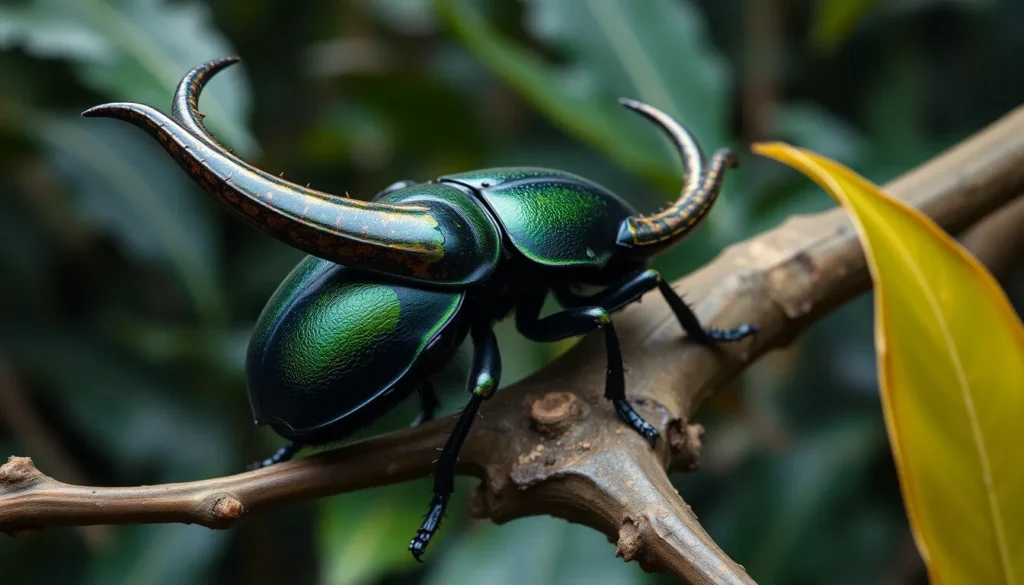
Short Answer
21 Facts About Hercules Beetles
- One of the Largest Beetles: Hercules beetles (Dynastes hercules) are among the largest beetles in the world, with some males reaching lengths of over 17 centimeters (6.7 inches), including their horns.
- Pronounced Sexual Dimorphism: Males possess large, distinctive horns used for fighting, while females lack these horns and are generally smaller.
- Horn Structure: The horns of males are used in contests with other males, primarily to establish dominance and access to mates.
- Color Changes: The beetle’s exoskeleton can change color depending on humidity, varying from olive green to black due to microscopic structures in their shells.
- Impressive Strength: Hercules beetles are capable of lifting objects up to 850 times their own body weight, making them one of the strongest animals relative to size.
- Lifespan: The beetle’s life cycle includes a larval stage that can last up to two years, while adults typically live for a few months.
- Larval Diet: Hercules beetle larvae feed on decaying wood and organic matter, playing a role in nutrient recycling in their ecosystems.
- Adult Diet: Adults primarily consume fruit, tree sap, and other sweet substances for energy.
- Nocturnal Behavior: These beetles are mostly nocturnal, being active during the night and resting during the day.
- Habitat Range: They inhabit tropical rainforests in Central and South America, including countries like Brazil, Ecuador, and Colombia.
- Flight Capability: Despite their large size, Hercules beetles are capable flyers, using their wings to move between trees.
- Role in Ecosystem: By feeding on decomposing material and fruits, they contribute to nutrient cycling and seed dispersal within forests.
- Temperature Sensitivity: Their activity and color changes are influenced by temperature and humidity, adapting to their rainforest environment.
- Defensive Behavior: When threatened, Hercules beetles may produce a hissing sound by rubbing their abdomen against their wing covers.
- Scientific Interest: Their strength and unique morphology make them subjects of biomechanical and evolutionary studies.
- Sexual Selection: Male combat using horns is a form of sexual selection, influencing reproductive success.
- Conservation Status: While not currently endangered, habitat loss and deforestation pose threats to their populations.
- Popularity in Culture: Hercules beetles are popular in insect collections and have symbolic significance in some indigenous cultures.
- Molting Process: Like other beetles, they undergo complete metamorphosis, shedding their exoskeleton as they grow.
- Temperature-Dependent Coloration: The greenish color is caused by the beetle’s cuticle structure, which changes with moisture levels.
- Unique Adaptations: Their large horns are hollow and lightweight, optimized for fighting without compromising flying ability.
Habitat and Behavior
Hercules beetles primarily reside in the humid tropical rainforests of Central and South America, where they inhabit decaying logs and tree canopies. They are nocturnal creatures, being most active during the night when they forage for fruit and sap. The beetles’ larval stages develop within rotting wood, feeding on decomposing plant material and contributing to nutrient recycling in their environments. Adult males use their prominent horns to compete for mates, engaging in ritualized fights that rarely result in injury. They are capable flyers, navigating dense forest canopies in search of food and mates. Their color-changing exoskeleton helps them adapt to the varying humidity levels of their habitat, providing some camouflage.
Why This Animal Matters
Hercules beetles play an important ecological role in their rainforest habitats by aiding in the decomposition of dead wood and organic matter, which supports nutrient cycling crucial for forest health. Their fruit-eating behavior can also assist in seed dispersal, contributing to forest regeneration. Culturally, these beetles have fascinated humans due to their impressive size and strength, sometimes featuring in folklore and art across indigenous communities. Scientifically, their biomechanics and sexual selection mechanisms provide insights into evolutionary biology and animal behavior. Although not currently endangered, their dependence on tropical forests makes them vulnerable to habitat destruction, highlighting the importance of rainforest conservation.
Common Misconceptions
Misconception: Hercules beetles use their horns to kill opponents.
Correction: The horns are mainly used to wrestle and push rivals rather than to cause fatal injuries. These contests typically establish dominance without serious harm.
Misconception: Hercules beetles are dangerous to humans.
Correction: Despite their intimidating appearance, Hercules beetles are harmless to humans and do not bite or sting.
Misconception: The green color on their shells is due to pigment.
Correction: The color results from microscopic structures in the cuticle that change with humidity, not from pigment.
Misconception: Hercules beetles can live for many years as adults.
Correction: While their larval stage may last up to two years, adult beetles typically live only a few months.
Misconception: All large beetles with horns are Hercules beetles.
Correction: Several beetle species have horns, but the Hercules beetle is a specific species known for its particular size and horn shape.
FAQ
How big can Hercules beetles get?
Male Hercules beetles can reach lengths of over 17 centimeters (about 6.7 inches), making them one of the largest beetle species in the world.
What do Hercules beetles eat?
Larvae feed on decaying wood and organic matter, while adults primarily consume fruit and tree sap.
Are Hercules beetles dangerous to humans?
No, Hercules beetles are not dangerous to humans. They do not bite or sting and generally avoid confrontation.




Leave a Reply