
Short Answer
21 Facts About Emperor Scorpions
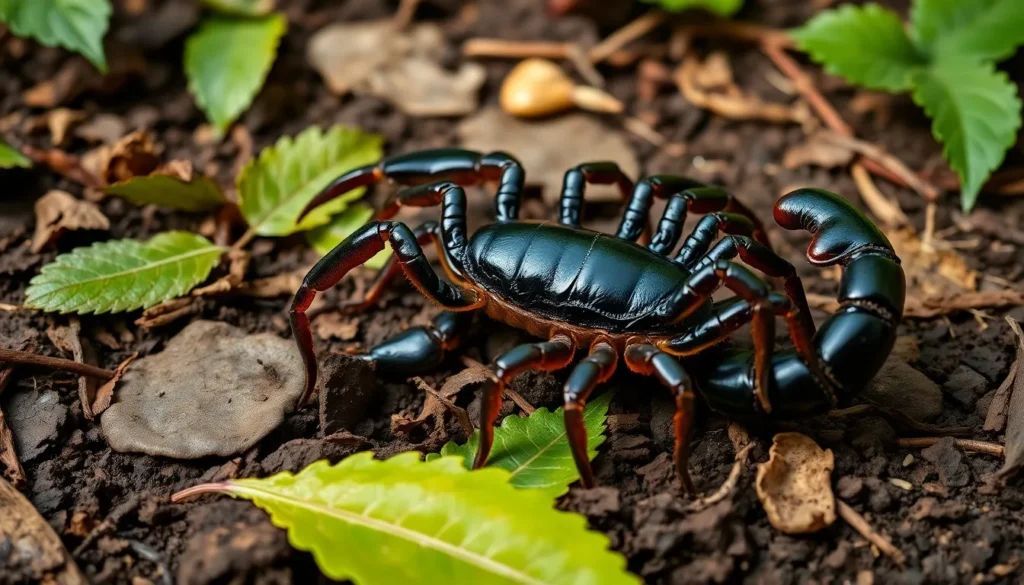
- Largest Scorpion Species: Emperor scorpions are among the largest scorpions in the world, reaching lengths of up to 20 cm (8 inches).
- Nocturnal Creatures: They are primarily nocturnal, hunting and becoming active mainly at night to avoid predators and harsh daytime temperatures.
- Distinctive Black Color: Their shiny black exoskeleton makes them easily recognizable compared to other scorpion species that have varying colors.
- Limited Venom Toxicity: Despite their intimidating appearance, their venom is relatively mild and primarily used to subdue prey rather than for defense against large animals.
- Glow Under UV Light: Like many scorpions, emperor scorpions fluoresce under ultraviolet light due to chemicals in their exoskeleton.
- Social Behavior: They exhibit more social tolerance than many scorpion species, sometimes cohabiting in groups without lethal aggression.
- Prey and Diet: Their diet mainly consists of insects, spiders, and other small invertebrates, which they immobilize with their strong pincers and venom.
- Strong Pincers: Their large pincers are their primary tools for capturing prey and defense, often more relied upon than their venomous sting.
- Burrowing Habits: Emperor scorpions dig burrows or use natural shelters to avoid predators and extreme environmental conditions.
- Slow Movers: Compared to other scorpions, emperor scorpions move relatively slowly, relying on stealth and strength rather than speed.
- Reproductive Behavior: Females give birth to live young, which remain on the mother’s back until their first molt.
- Molting Process: Like other arachnids, emperor scorpions periodically molt their exoskeleton to grow, a vulnerable time for them.
- Wide Distribution in West Africa: They are native to the rainforests and savannahs of West Africa, including countries like Ghana, Togo, and Nigeria.
- Temperature and Humidity Preferences: They thrive in warm, humid environments typical of tropical rainforests.
- Defensive Posture: When threatened, emperor scorpions raise their pincers and tail in a defensive stance to deter predators.
- Long Lifespan for Arthropods: In captivity, emperor scorpions can live up to 6-8 years, which is relatively long for scorpions.
- Use in Scientific Research: Their venom and behavior have been subjects of scientific studies, particularly in toxinology and arachnid biology.
- Role in Pet Trade: Emperor scorpions are popular in the exotic pet trade due to their size and comparatively mild venom.
- Conservation Status: While not currently endangered, habitat destruction in West Africa poses potential risks to wild populations.
- Ecological Role: As predators of insects and other small animals, they help regulate invertebrate populations in their ecosystems.
- Adaptations to Environment: Their tough exoskeleton provides protection from predators and environmental stressors like dehydration.
Habitat and Behavior
Emperor scorpions inhabit the tropical rainforests and savannah regions of West Africa. They prefer warm, humid environments where they can find shelter under rocks, logs, or within burrows that they dig themselves. Their nocturnal nature helps them avoid daytime heat and many predators, while allowing them to hunt insects and other small invertebrates effectively. Socially, they are less aggressive toward each other than many other scorpion species, sometimes living in loose groups. Their large pincers serve as their primary means of hunting and defense, while their venom is comparatively mild and mainly used to subdue prey. These scorpions are relatively slow-moving but rely on stealth and strength to capture food and avoid threats. Reproduction involves live birth, and young scorpions stay with their mother until their first molt, which provides them with protection during early development.
Why This Animal Matters
Emperor scorpions play a significant ecological role as predators controlling populations of insects and other small arthropods. This helps maintain balance within their ecosystems, particularly in tropical forest environments. Their unique adaptations and behavior provide valuable insights into arachnid biology and evolutionary biology. Additionally, their venom has become a subject of scientific research for potential medical applications. Culturally, while they are sometimes feared due to their appearance, emperor scorpions have also become popular exotic pets, raising awareness about arachnid diversity. Conservation-wise, they highlight the importance of preserving tropical habitats, as habitat loss could impact their populations and the broader ecosystem health.
Common Misconceptions
Misconception: Emperor scorpions are deadly to humans.
Correction: While their sting can be painful, emperor scorpion venom is generally mild and not dangerous to healthy humans.

Misconception: Emperor scorpions are aggressive and will attack unprovoked.
Correction: These scorpions are relatively docile and tend to avoid confrontation, using their pincers and venom defensively only when threatened.
Misconception: Emperor scorpions glow in the dark naturally.
Correction: They fluoresce only under ultraviolet light, not in normal darkness.
Misconception: All scorpions are desert dwellers.
Correction: Emperor scorpions live primarily in tropical rainforests, demonstrating that scorpion habitats vary widely.
Misconception: Emperor scorpions can survive long periods without food or water.
Correction: While they can endure short periods of scarcity, they require regular access to moisture and food to survive long-term.
FAQ
Are emperor scorpions dangerous to humans?
Emperor scorpions have venom that is relatively mild and not considered dangerous to healthy humans. Their sting can cause pain similar to a bee sting but is generally not medically significant.
What do emperor scorpions eat?
They primarily eat insects, spiders, and other small invertebrates, using their pincers to capture prey and venom to subdue it.
Where do emperor scorpions live?
Emperor scorpions are native to the tropical rainforests and savannah regions of West Africa, where they prefer warm and humid habitats.


Leave a Reply