
Short Answer
21 Facts About Leeches
- Leeches belong to the phylum Annelida. They are segmented worms related to earthworms and polychaetes, characterized by a segmented body structure.
- There are over 700 known species of leeches. These species exhibit a wide range of feeding habits, including bloodsucking and predation on small invertebrates.
- Leeches have two suckers. One is located at the anterior (front) end used for feeding, and the other at the posterior (rear) end used for attachment and movement.
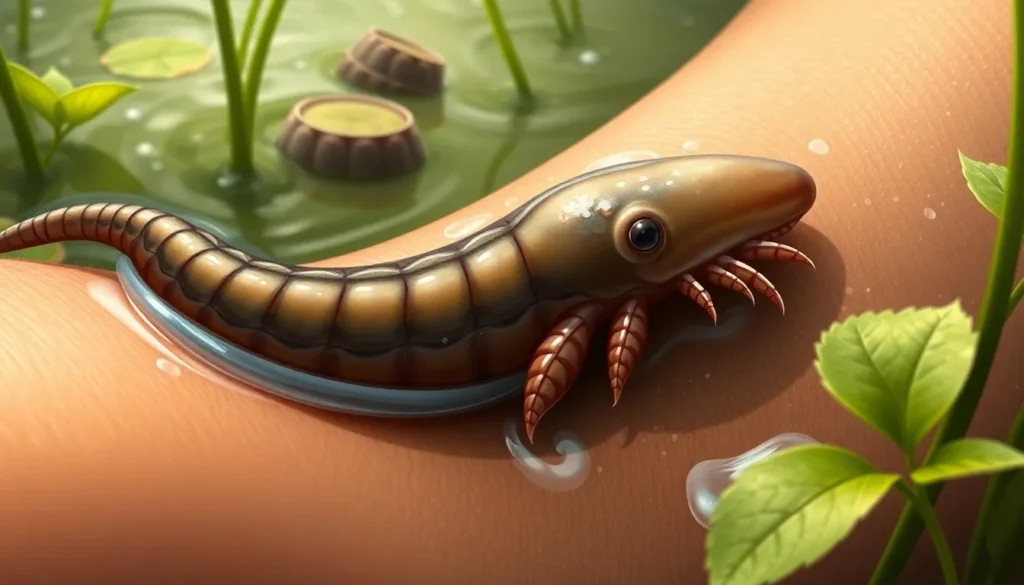
- Many species are hematophagous. These blood-feeding leeches attach to hosts such as fish, amphibians, reptiles, mammals, and sometimes humans to feed.
- Leeches secrete anticoagulants. Their saliva contains substances like hirudin that prevent blood clotting, allowing them to feed efficiently.
- Not all leeches feed on blood. Some are predatory, feeding on small invertebrates or scavenging organic matter.
- Leeches can consume large amounts of blood. Some species can ingest blood up to several times their own body weight.
- They have a closed circulatory system. Similar to other annelids, leeches possess blood vessels that circulate nutrients and oxygen.
- Leeches have a simple nervous system. They possess a brain and paired ganglia that control their movements and feeding behavior.
- Reproduction in leeches is hermaphroditic. Each individual possesses both male and female reproductive organs, often exchanging sperm during mating.
- Leeches lay cocoons for their eggs. These cocoons protect the developing embryos until they hatch.
- Some leeches can survive long periods without feeding. Certain species endure months or even years between meals by slowing their metabolism.
- Leeches move by looping or swimming. They use their suckers alternatively to anchor and pull their bodies forward or swim in water using undulating motions.
- Medicinal leeches have been used for centuries. Hirudo medicinalis and related species were historically employed to treat bloodletting and other ailments.
- Modern medicine uses leeches in microsurgery. Leeches help improve blood circulation in reattached fingers, toes, and skin grafts by reducing venous congestion.
- Leeches play a role in aquatic ecosystems. They serve as both predators and prey, contributing to food web dynamics.
- Their anticoagulants are studied for medical applications. Compounds derived from leech saliva inspire development of drugs to prevent blood clots and improve circulation.
- Leeches have segmented bodies typically ranging from 1 to 20 cm in length. Size varies significantly among species.
- Some terrestrial leeches exist. While many are aquatic, several species inhabit moist forest floors and feed on amphibians and mammals.
- Leeches detect hosts through heat and chemical cues. They can sense temperature changes and chemicals emitted by potential hosts to locate feeding opportunities.
- Leeches are sensitive to environmental changes. Pollution and habitat destruction negatively impact their populations, making them indicators of ecosystem health.
Habitat and Behavior
Leeches primarily inhabit freshwater environments such as ponds, lakes, marshes, and slow-moving streams, although some species are marine or terrestrial. They tend to prefer environments with abundant potential hosts and suitable conditions for reproduction. Aquatic leeches often attach to submerged animals or plants and use their suckers to move and feed. Terrestrial leeches thrive in humid forested areas, hiding under leaf litter or soil to avoid desiccation.
Behaviorally, leeches are adept hunters and scavengers. Blood-feeding leeches exhibit specialized behaviors to locate hosts, including detecting body heat, vibrations, and chemical signals. Once attached, they use their razor-sharp jaws or proboscis to pierce the skin and secrete anticoagulant saliva to facilitate blood flow. When not feeding, leeches often remain hidden or burrow into substrate to conserve moisture and avoid predators.
Why This Animal Matters
Leeches have ecological importance as both predators and prey within aquatic and terrestrial ecosystems. By feeding on various animals, they help regulate host populations and contribute to nutrient cycling. Their presence can indicate healthy, unpolluted environments.
Culturally and medically, leeches have a notable history. Medicinal leeches were widely used in traditional medicine for bloodletting and continue to have modern clinical applications, particularly in reconstructive surgery to improve blood flow and prevent tissue death. The biochemical compounds in leech saliva are a subject of ongoing pharmaceutical research.
Conservation-wise, some leech species face threats from habitat degradation and water pollution. Protecting their habitats supports broader ecosystem health and biodiversity.
Common Misconceptions
Misconception: All leeches are dangerous parasites.
Correction: While many leeches feed on blood, not all are parasitic; some are predators or scavengers, and most do not pose significant harm to humans.
Misconception: Leeches can survive indefinitely on blood alone.
Correction: Although leeches can store blood for long periods, they require periodic feeding and cannot survive indefinitely without nourishment.
Misconception: Leeches transmit diseases to humans.
Correction: Leeches are not known to be significant vectors of human diseases, although infections can occur if wounds are not properly treated.
Misconception: Leeches are insects.
Correction: Leeches are annelids, a group of segmented worms, and are not related to insects.
Misconception: Medicinal leech therapy is outdated and ineffective.
Correction: Medicinal leech therapy remains a valuable medical tool, especially in microsurgery and wound healing.
FAQ
Do all leeches suck blood?
No, not all leeches are bloodsuckers. While many species feed on blood, others are predators or scavengers that consume small invertebrates or organic debris.
Are leeches harmful to humans?
Leeches are generally not harmful to humans. Blood-feeding leeches attach temporarily and usually do not cause serious injury. However, wounds should be cleaned to prevent infection.
Why are leeches used in modern medicine?
Leeches are used in modern medicine primarily in microsurgery to improve blood circulation in reattached tissues by reducing venous congestion, thanks to their anticoagulant saliva.





Leave a Reply