
Short Answer
21 Facts About Box Jellyfish
- Distinctive Cube Shape
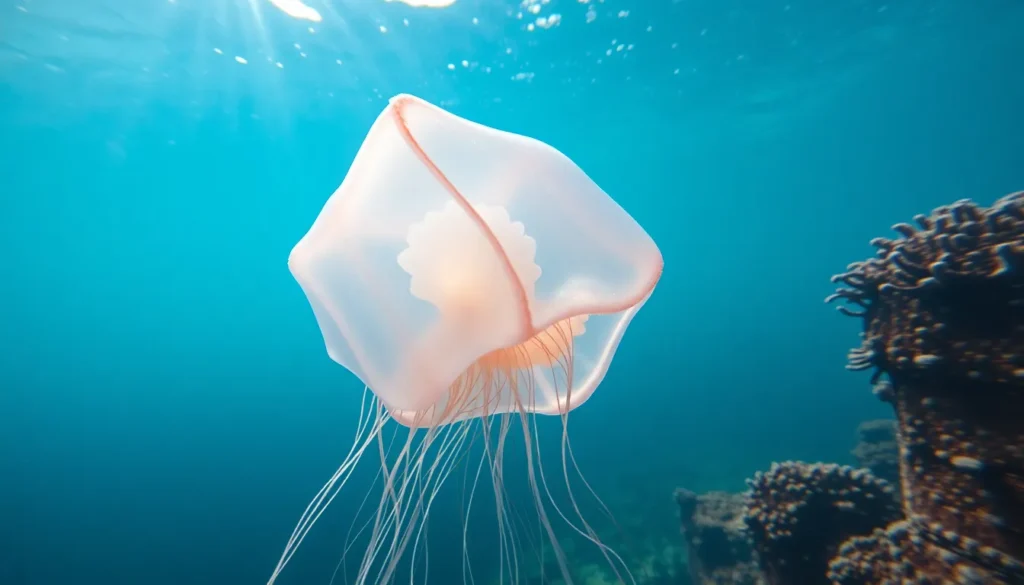
Box jellyfish are named for their cube-shaped medusae, which differ from the typical bell shape of most jellyfish. - Highly Venomous
They possess some of the most potent venom among marine animals, capable of causing severe pain and even death in humans. - Complex Eyes
Box jellyfish have 24 eyes grouped in clusters called rhopalia, including lenses, corneas, and retinas, enabling them to navigate their environment. - Fast Swimmers
Unlike many jellyfish, box jellyfish can actively swim and maneuver quickly in the water. - Habitat Range
They are primarily found in the coastal waters of the Indo-Pacific region and northern Australia. - Small Size
Their bells typically measure up to 15 cm (6 inches) in diameter, although tentacles can extend several meters. - Long Tentacles
Each bell has up to 15 tentacles, which can reach lengths of up to 3 meters (10 feet). - Stinging Cells
The tentacles are covered with cnidocytes, specialized cells that inject venom through nematocysts when triggered. - Predators
Box jellyfish prey on small fish and invertebrates, using their venom to immobilize prey quickly. - Lifecycle
They have a complex lifecycle including polyp and medusa stages, typical of cnidarians. - Venom Composition
The venom contains toxins that affect the heart, nervous system, and skin cells. - Medical Treatment
Vinegar is commonly used to neutralize undischarged nematocysts after stings. - Fatal Stings
Box jellyfish stings have been known to cause fatalities, especially in northern Australia. - Seasonal Presence
In some regions, box jellyfish are more prevalent during the warmer months. - Behavioral Adaptations
They exhibit behaviors such as avoiding strong currents and seeking shallow waters at night. - Navigation
They use their eyes not only to avoid obstacles but also to locate prey and suitable habitats. - Scientific Interest
Box jellyfish are studied for insights into nervous system function and venom biochemistry. - Conservation Status
There is limited data on their population trends, but habitat degradation may impact some species. - Human Interaction
Swimmers and fishermen in affected areas take precautions to avoid stings, including wearing protective clothing. - Ecological Role
They are both predators and prey, contributing to marine food webs and ecosystem balance. - Public Awareness
Educational campaigns in affected regions aim to reduce sting incidents and promote safety.
Habitat and Behavior
Box jellyfish inhabit warm coastal waters primarily in the Indo-Pacific region, including northern Australia, Thailand, and the Philippines. They prefer shallow waters near mangroves, estuaries, and coral reefs where prey is abundant. Unlike many jellyfish that drift passively, box jellyfish are capable swimmers, using pulsations of their bell to navigate. Their advanced eyes allow them to detect light, avoid obstacles, and locate prey. They tend to be more active at night or during certain tidal conditions. Their behavior includes avoiding strong currents and seeking refuge in protected areas. The box jellyfish’s venomous tentacles enable them to capture fish and other small marine animals efficiently, making them effective predators despite their small size.
Why This Animal Matters
Box jellyfish play a crucial ecological role as both predator and prey in marine ecosystems. By controlling populations of small fish and invertebrates, they help maintain ecological balance. Their venom has attracted scientific interest for potential medical applications, including pain relief and treatment of cardiovascular conditions. Culturally, box jellyfish are significant in regions where they pose a threat to human safety, influencing local practices and safety measures. Conservation-wise, understanding their biology and habitat needs is important amid coastal development and climate change, which may affect their populations and the ecosystems they inhabit.
Common Misconceptions
Misconception: All jellyfish are passive drifters.
Correction: Box jellyfish are active swimmers and can navigate their surroundings using their complex eyes.
Misconception: Box jellyfish stings are always fatal.
Correction: While their venom is potent and can be deadly, fatalities are relatively rare and depend on factors like sting location, amount of venom, and timely medical treatment.
Misconception: Box jellyfish only live in deep ocean waters.
Correction: They are primarily found in shallow coastal waters, often near mangroves and reefs.
Misconception: Vinegar cures box jellyfish stings.
Correction: Vinegar helps neutralize undischarged stinging cells but is not a cure; medical attention is necessary after a sting.
FAQ
Are box jellyfish dangerous to humans?
Yes, box jellyfish possess venom potent enough to cause severe pain, injury, and in rare cases, death. Prompt medical treatment is critical after a sting.
How do box jellyfish navigate their environment?
They use 24 specialized eyes grouped in rhopalia to detect light, avoid obstacles, and locate prey, allowing them to swim actively rather than drifting passively.
What should I do if stung by a box jellyfish?
Apply vinegar to neutralize any undischarged nematocysts, avoid rubbing the area, and seek immediate medical attention. Do not use freshwater or rub the sting site, as this can worsen symptoms.



Leave a Reply