
Short Answer
21 Facts About Sea Cucumbers
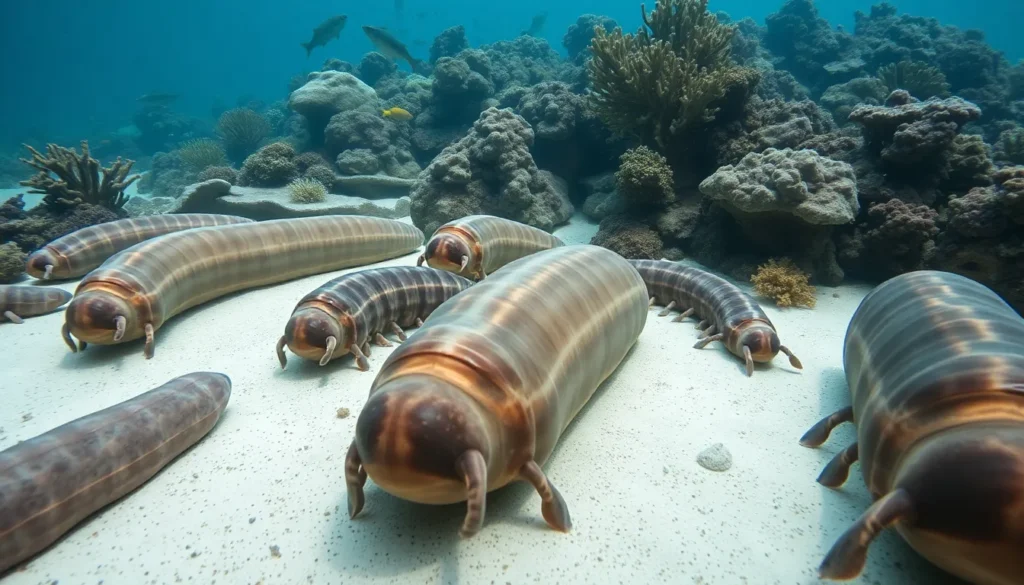
- Sea cucumbers are echinoderms. They belong to the same phylum as sea stars and sea urchins, characterized by radial symmetry and a calcareous endoskeleton.
- They have a leathery, elongated body. Their soft, flexible bodies can range from a few centimeters to over a meter in length, typically resembling a cucumber in shape.
- Sea cucumbers possess tube feet. These tube feet help them move slowly along the ocean floor and are part of their water vascular system.
- They feed by filter-feeding or scavenging. Many species use tentacle-like structures around their mouths to gather plankton or organic particles from sediment.
- Sea cucumbers can expel their internal organs. As a defense mechanism, some species eject their internal organs to distract predators, later regenerating the lost parts.
- They play a critical role in nutrient cycling. By processing sediment, sea cucumbers help recycle nutrients and oxygenate the ocean floor.
- Sea cucumbers have a unique respiratory system. They breathe through a pair of respiratory trees connected to the anus, facilitating gas exchange underwater.
- They exhibit varying reproductive methods. Some species reproduce sexually by releasing eggs and sperm into the water, while others can reproduce asexually through regeneration.
- Sea cucumbers are found worldwide. They inhabit a range of marine environments from shallow reefs to deep ocean trenches.
- They contribute to sediment stability. Their movement and feeding behavior help maintain the structure of the seabed.
- Some species are bioluminescent. Certain sea cucumbers can produce light, which may serve as a form of camouflage or communication.
- They have a slow locomotion speed. Typically, sea cucumbers move at less than a meter per hour.
- Sea cucumbers can live for several years. Lifespans vary but may range from 5 to 10 years or more depending on species and environment.
- They have commercial significance. In some cultures, sea cucumbers are harvested for food and traditional medicine.
- Sea cucumbers can tolerate low oxygen environments. Their physiology allows them to survive in areas where oxygen levels are insufficient for many other marine animals.
- They possess microscopic calcareous structures called ossicles. These provide some rigidity to their otherwise soft bodies.
- Sea cucumbers play a role in marine ecosystem health. Their sediment processing helps prevent the buildup of organic material that could otherwise cause harmful algal blooms.
- They have few natural predators. Their tough skin and ability to secrete toxic substances deter many potential threats.
- Some species exhibit seasonal migration. Movement patterns can change in response to breeding or environmental conditions.
- Sea cucumbers can regenerate lost parts. Beyond expelling organs, they can regrow damaged tentacles and other body parts.
- Their classification includes over 1,700 species. This diversity reflects adaptations to various marine habitats around the globe.
Habitat and Behavior
Sea cucumbers inhabit a wide range of marine environments, from shallow coastal waters to the deep sea. They are benthic organisms, meaning they live on or near the ocean floor. Most species prefer sandy or muddy substrates where they can find abundant detritus and organic matter for feeding. Behaviorally, sea cucumbers are slow-moving and often nocturnal, reducing exposure to predators. Their feeding involves extending tentacles to capture food particles or ingesting sediment to extract nutrients. Defense strategies include the expulsion of sticky tubules or internal organs to deter attackers. Reproduction can vary, but many sea cucumbers release gametes into the water column for external fertilization, while others may engage in brooding or asexual reproduction.
Why This Animal Matters
Sea cucumbers play an essential role in marine ecosystems by recycling nutrients and maintaining sediment health. Their feeding activity aerates the seabed, promoting biological diversity and supporting coral reef systems. Ecologically, they contribute to the balance of organic material on the ocean floor, potentially reducing the risk of hypoxic conditions. Culturally and economically, sea cucumbers are valued in some regions as a delicacy and for their purported medicinal properties, leading to commercial harvesting. Conservation concerns arise due to overfishing and habitat degradation, emphasizing the need for sustainable management practices to preserve their populations and the ecosystems they support.
Common Misconceptions
Misconception: Sea cucumbers are plants.
Correction: Despite their name and appearance, sea cucumbers are animals, specifically echinoderms related to sea stars and sea urchins.
Misconception: Sea cucumbers are harmful or venomous.
Correction: Sea cucumbers are generally harmless to humans; while some secrete toxins to deter predators, these substances do not pose a significant threat to people.
Misconception: All sea cucumbers live in shallow waters.
Correction: Sea cucumbers inhabit a broad depth range, from shallow reefs to deep ocean trenches, showing great adaptability to various marine habitats.
FAQ
What do sea cucumbers eat?
Sea cucumbers primarily feed on detritus, plankton, and organic particles found in sediment, which they collect using their tentacle-like feeding structures.
How do sea cucumbers defend themselves from predators?
They can expel sticky tubules or their internal organs to distract predators, and some species secrete toxic substances to deter attacks.
Are sea cucumbers endangered?
While many sea cucumber populations are stable, some species face threats from overfishing and habitat destruction, leading to conservation concerns in certain regions.


Leave a Reply