
Short Answer
21 Facts About Leafy Seadragons
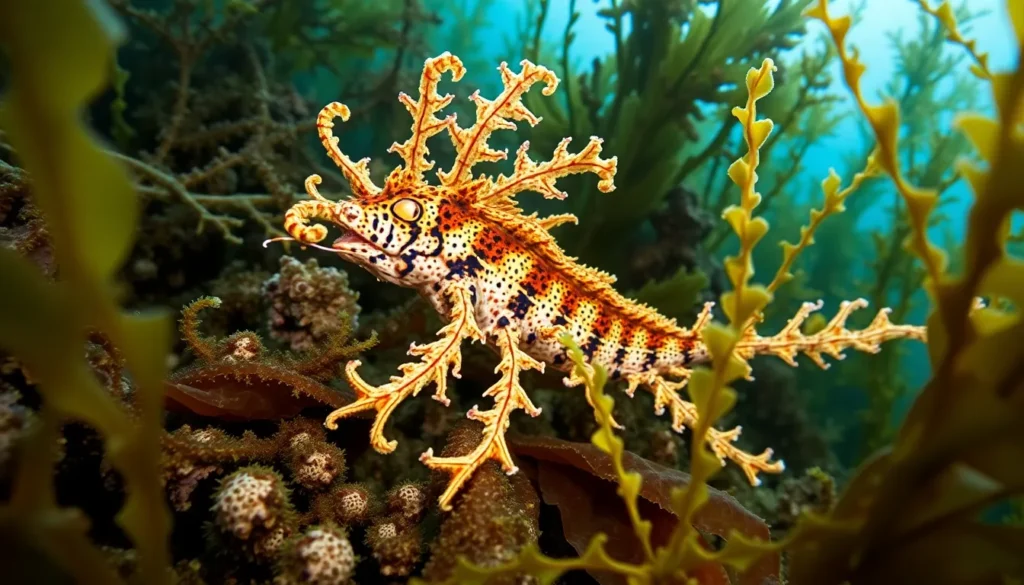
- Unique Appearance: Leafy seadragons have leaf-like appendages that resemble seaweed, providing them with effective camouflage against predators.
- Scientific Classification: They belong to the family Syngnathidae, closely related to seahorses and pipefish.
- Native Range: They are endemic to the southern and western coasts of Australia.
- Size: Adult leafy seadragons typically grow to about 20-24 centimeters (8-9.5 inches) in length.
- Coloration: Their coloration varies from yellow to brown with greenish hues, aiding in blending with seaweed and kelp.
- Movement: Despite their elaborate appearance, leafy seadragons are poor swimmers and rely on small fins for slow, graceful movement.
- Diet: They feed primarily on small crustaceans, plankton, and mysid shrimp.
- Reproduction: Male leafy seadragons carry eggs on the underside of their tails until hatching, a rare reproductive trait among fish.
- Camouflage Efficiency: Their leaf-like protrusions are not used for propulsion but for disguise, making them nearly invisible among seaweed.
- Predators: Natural predators include large fish and humans, although their camouflage reduces predation risk.
- Lifespan: In the wild, leafy seadragons live for around 6 to 10 years.
- Behavior: Generally solitary animals, they are slow-moving and tend to drift with ocean currents.
- Conservation Status: Listed as Near Threatened due to habitat loss, pollution, and collection for the aquarium trade.
- Legal Protection: In Australia, leafy seadragons are protected by law, making it illegal to collect them without permits.
- Temperature Range: They prefer water temperatures between 15°C and 20°C (59°F to 68°F).
- Habitat Preference: Leafy seadragons inhabit coastal reefs, seagrass beds, and areas with kelp or seaweed.
- Vision: They have excellent eyesight but lack teeth, using suction to consume prey.
- Scientific Research: They are studied for insights into camouflage, evolution, and reproductive biology.
- Role in Ecosystem: As predators of small crustaceans, they help maintain the balance in their marine ecosystems.
- Popularity: Their unique appearance makes them popular in marine education and conservation awareness.
- Difficulty in Captivity: They require specialized care and are challenging to keep in aquariums due to their dietary and environmental needs.
Habitat and Behavior
Leafy seadragons are found along the southern and western coastlines of Australia, favoring temperate waters rich in seaweed and kelp. Their habitats typically include rocky reefs, seagrass meadows, and areas with abundant macroalgae, which provide both shelter and camouflage. Behaviorally, leafy seadragons are slow-moving and rely heavily on their leaf-like appendages to blend seamlessly with their environment. They use small pectoral fins on the sides of their heads and a dorsal fin along the back for propulsion, allowing gentle movement through the water. These fish are generally solitary and exhibit a unique reproductive behavior where males carry the fertilized eggs attached to the underside of their tails until the young hatch. Their diet mainly consists of small crustaceans and planktonic organisms, which they suck into their toothless mouths. Their reliance on camouflage and slow movements makes them vulnerable to environmental changes and human impact.
Why This Animal Matters
Leafy seadragons play a significant role in their marine ecosystems by controlling populations of small crustaceans and plankton, contributing to ecological balance. Their striking appearance and rarity have made them symbols of marine biodiversity and conservation efforts, especially in Australia. Protecting leafy seadragons involves preserving their natural habitats, which are sensitive to pollution, climate change, and human disturbances. Furthermore, they serve as important subjects in scientific research related to camouflage, evolutionary biology, and reproductive strategies, offering insights applicable to broader fields of marine biology and conservation science. Their conservation status highlights the need for sustainable practices and legal protections to ensure their survival in the wild.
Common Misconceptions
Misconception: Leafy seadragons use their leaf-like appendages for swimming.
Correction: The leaf-like appendages serve strictly as camouflage and do not aid in propulsion; swimming is achieved through small fins.
Misconception: Leafy seadragons are a type of seaweed or plant.
Correction: Despite their appearance, leafy seadragons are fish and part of the Syngnathidae family, related to seahorses.
Misconception: The male leafy seadragon gives birth to live young.
Correction: Males carry eggs externally on their tails until they hatch but do not give live birth; the young emerge as fully formed miniature seadragons.
Misconception: Leafy seadragons are common and easy to find in the wild.
Correction: They are elusive and well-camouflaged, making sightings rare; they also have a limited geographic range and face threats that reduce their populations.
Misconception: Leafy seadragons can survive in standard home aquariums.
Correction: They have very specific dietary and environmental needs, making them difficult to maintain in captivity without specialized care.
FAQ
What do leafy seadragons eat?
Leafy seadragons primarily feed on small crustaceans such as mysid shrimp and planktonic organisms, which they suck into their toothless mouths.
How do leafy seadragons reproduce?
Male leafy seadragons carry fertilized eggs attached to the underside of their tails until they hatch, after which the young are released as fully formed miniature seadragons.
Why are leafy seadragons considered Near Threatened?
They face threats from habitat loss, pollution, and collection for the aquarium trade, which have contributed to declining populations, leading to their Near Threatened conservation status.



Leave a Reply