
Short Answer
21 Facts About Rainbowfish
- Diverse Family: Rainbowfish belong to the family Melanotaeniidae, which includes over 70 recognized species spread across Australia, New Guinea, and nearby islands.
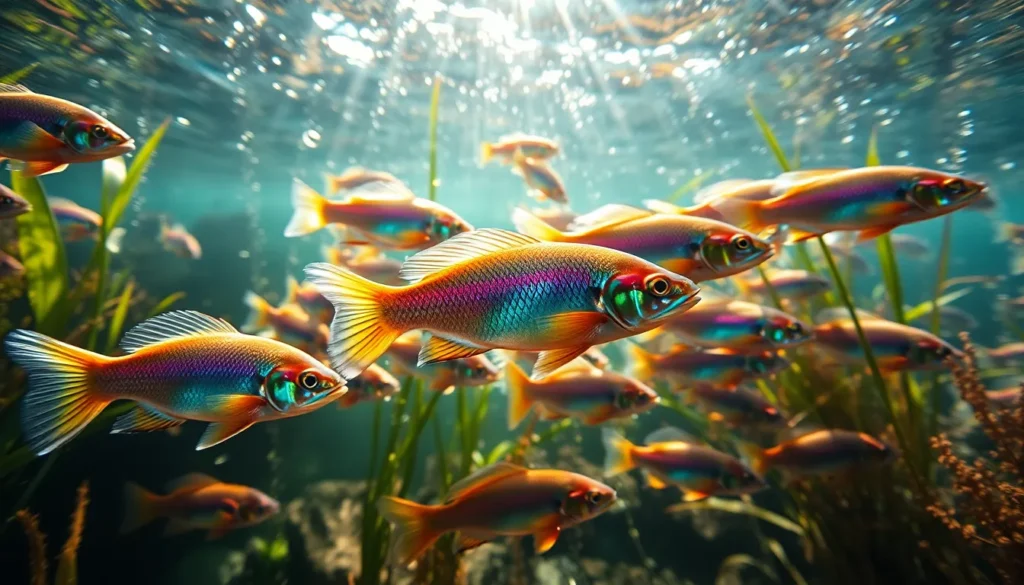
- Vibrant Colors: These fish are named for their bright, iridescent colors that often include shades of blue, green, red, and yellow, which can change based on light and mood.
- Sexual Dimorphism: Males typically display more intense coloration and elongated fins compared to females, especially during breeding seasons.
- Habitat Variety: Rainbowfish inhabit a range of freshwater environments, including rivers, lakes, swamps, and slow-moving streams.
- Omnivorous Diet: They feed on a mix of algae, small insects, crustaceans, and plant matter, contributing to the balance of their aquatic ecosystems.
- Schooling Behavior: Rainbowfish are social creatures that often swim in groups, which provides protection from predators.
- Breeding Patterns: They are egg-layers; females scatter eggs among aquatic plants, and the fry hatch in about a week depending on water temperature.
- Adaptability: Certain species of rainbowfish can tolerate a range of water conditions, making them resilient in varied environments.
- Size Range: Most species grow between 6 to 12 centimeters (2.4 to 4.7 inches) in length, although size may vary among species.
- Longevity: In the wild and captivity, rainbowfish typically live around 5 to 8 years with proper care or natural conditions.
- Ecological Indicators: Due to their sensitivity to water quality, rainbowfish populations can serve as indicators of ecosystem health.
- Popular in Aquariums: Their bright colors and peaceful behavior have made rainbowfish popular among aquarium hobbyists worldwide.
- Endemic Species: Many species are endemic to specific regions, such as the Lake Kutubu Rainbowfish found only in Papua New Guinea.
- Conservation Status: Some rainbowfish species face threats from habitat destruction, pollution, and invasive species, leading to varied conservation statuses.
- Nocturnal Activity: While mostly diurnal, some species exhibit crepuscular or nocturnal feeding behaviors under certain conditions.
- Temperature Preferences: They generally prefer tropical waters with temperatures ranging from 23 to 28 degrees Celsius (73 to 82 degrees Fahrenheit).
- Unique Scale Structure: Their scales reflect light in a way that creates shimmering and rainbow-like patterns across their bodies.
- Communication: Rainbowfish use visual signals, particularly color changes and fin displays, to communicate during mating and social interactions.
- Diet Variation Among Species: Some species consume more insect larvae, while others rely more heavily on algae and plant matter depending on habitat availability.
- Role in Traditional Knowledge: Indigenous communities in New Guinea have long recognized rainbowfish and incorporated them into cultural practices and local ecological knowledge.
- Scientific Studies: Rainbowfish serve as model organisms in evolutionary biology and ecology due to their diversity and adaptive traits.
Habitat and Behavior
Rainbowfish are primarily freshwater species found in Australia, New Guinea, and surrounding islands. They occupy a variety of aquatic habitats including clear rivers, streams, lakes, swamps, and floodplains. These environments typically feature abundant aquatic vegetation, which provides shelter and breeding sites. Rainbowfish are generally peaceful and social, forming shoals that help protect them from predators. Their omnivorous diet consists of algae, small invertebrates, and detritus, which contributes to nutrient cycling within their habitats. Breeding usually occurs during warmer months when males display vibrant colors to attract females. Females then scatter adhesive eggs among plants. The species’ adaptability to different water conditions allows some rainbowfish to survive in fluctuating environments, although many require stable, clean water to thrive.
Why This Animal Matters
Rainbowfish play a significant ecological role as both consumers and prey within freshwater ecosystems. By feeding on algae and small invertebrates, they help maintain balanced aquatic food webs and contribute to controlling algae growth. Their presence indicates healthy water quality, making them valuable bioindicators for environmental monitoring. Culturally, rainbowfish are recognized by indigenous communities, who value them for ecological knowledge and sometimes traditional uses. In the aquarium trade, they are appreciated for their beauty and peaceful nature, which raises awareness about freshwater biodiversity. Conservation efforts for threatened rainbowfish species highlight the importance of preserving freshwater habitats, which face increasing pressure from human activities such as deforestation, mining, and pollution.
Common Misconceptions
Misconception: Rainbowfish change colors like chameleons.
Correction: While rainbowfish can display varying intensities of their colors depending on light, mood, and breeding condition, they do not change colors rapidly like chameleons. Their coloration shifts are more subtle and gradual.
Misconception: All rainbowfish are tropical fish that require very warm water above 28°C.
Correction: Although many rainbowfish prefer tropical temperatures, some species can tolerate cooler water conditions and thrive in a range of temperatures from approximately 23°C to 28°C.
Misconception: Rainbowfish are aggressive and territorial.
Correction: Most rainbowfish species are peaceful and social, often schooling without significant territorial aggression, especially when kept in appropriate group sizes.
FAQ
What do rainbowfish eat?
Rainbowfish are omnivores that consume a diet of algae, small insects, crustaceans, and plant matter, which helps maintain a balanced aquatic ecosystem.
Where are rainbowfish naturally found?
They are native to freshwater bodies in Australia, New Guinea, and surrounding islands, inhabiting rivers, lakes, and swamps.
Are rainbowfish suitable for home aquariums?
Yes, many rainbowfish species are popular in aquariums due to their vibrant colors and peaceful nature, provided their water and social needs are met.


Leave a Reply