
Short Answer
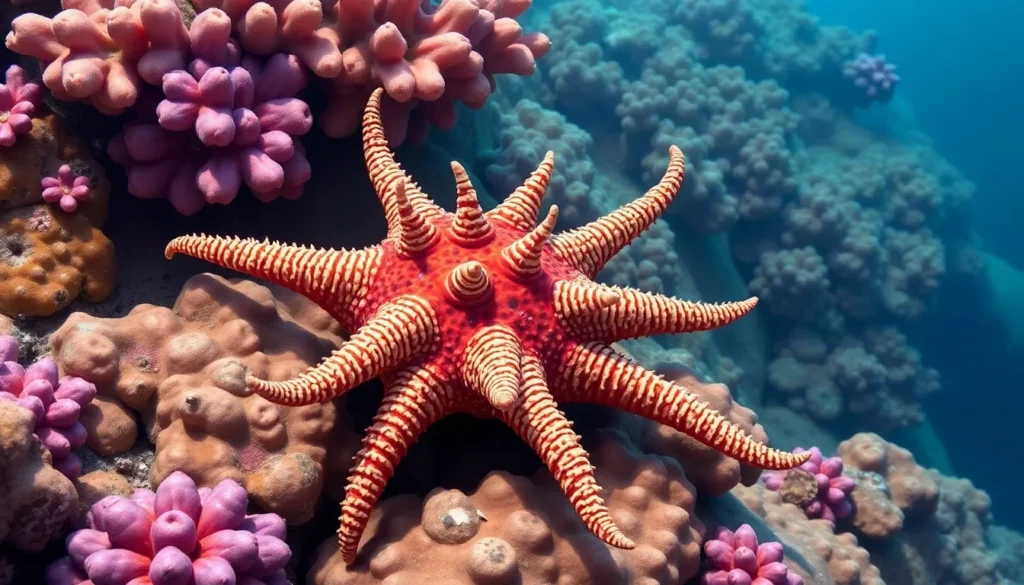
21 Facts About Crown-of-thorns Starfish
- Crown-of-thorns starfish are voracious coral eaters.
These starfish primarily feed on coral polyps, consuming large amounts of coral and significantly impacting reef ecosystems.
- They can reproduce rapidly.
A single female crown-of-thorns starfish can release millions of eggs in a single spawning event, leading to population booms.
- They have a unique feeding method.
They extrude their stomachs to digest coral externally, allowing them to consume coral more efficiently.
- They are native to the Indo-Pacific region.
Their habitat includes coral reefs from the Red Sea to the Pacific Ocean, making them widespread in tropical waters.
- Population outbreaks can devastate coral reefs.
When crown-of-thorns starfish populations surge, they can destroy large areas of coral, leading to significant ecological changes.
- They possess venomous spines.
The spines of the crown-of-thorns starfish contain toxins that can cause pain and discomfort to predators and humans alike.
- Natural predators include certain fish and sea turtles.
Some species, like the Pacific triton snail and various fishes, prey on crown-of-thorns starfish, helping to control their populations.
- They can live for several years.
Typically, crown-of-thorns starfish can live up to 5-10 years in the wild, depending on environmental conditions.
- Climate change affects their populations.
Rising sea temperatures can lead to more frequent outbreaks, as warmer waters can enhance their reproduction rates.
- They have a significant role in reef ecosystems.
While they can be destructive, crown-of-thorns starfish are also part of the natural balance within coral reef environments.
- Overfishing of their predators contributes to population surges.
As natural predators are removed from ecosystems, crown-of-thorns starfish populations can increase unchecked.
- They are subject to control measures.
Efforts to manage their populations include manual removal and targeted fishing of crown-of-thorns starfish in affected areas.
- They are important indicators of reef health.
Monitoring their populations can provide valuable insights into the overall health of coral reef ecosystems.
- Their feeding can promote coral diversity.
By consuming dominant coral species, they can allow less competitive species to thrive, promoting biodiversity.
- They have a complex life cycle.
Crown-of-thorns starfish undergo a larval stage before settling on the reef and developing into adults.
- They are often mistaken for harmless starfish.
Due to their appearance, many may not recognize the ecological threat posed by crown-of-thorns starfish.
- They can regenerate lost arms.
Crown-of-thorns starfish have the ability to regenerate damaged or lost arms, which is vital for their survival.
- They have a significant impact on tourism.
Coral reefs affected by crown-of-thorns starfish can lead to declines in marine tourism, affecting local economies.
- They can adapt to various environmental conditions.
Crown-of-thorns starfish are resilient and can thrive in a range of conditions, which can lead to their increased proliferation.
- Research continues on their ecological role.
Scientists are studying crown-of-thorns starfish to understand their impact on coral reefs and to develop effective management strategies.
- They are a focus of conservation efforts.
Efforts are being made to balance their populations to protect coral reefs while maintaining their ecological role.
Habitat and Behavior
Crown-of-thorns starfish inhabit coral reefs across the Indo-Pacific region, favoring warm, shallow waters where coral is abundant. They exhibit nocturnal feeding habits, emerging at night to consume coral polyps. During the day, they often camouflage themselves among the coral to avoid predators. Their ability to adapt to various environmental conditions allows them to thrive in diverse habitats.
Why This Animal Matters
Crown-of-thorns starfish play a dual role in coral reef ecosystems. While their feeding can lead to coral degradation, they also contribute to reef dynamics by allowing for greater species diversity. Understanding their impact is crucial for coral conservation efforts as they can serve as indicators of reef health, informing scientists and conservationists about the overall status of coral ecosystems.
Common Misconceptions
Misconception: Crown-of-thorns starfish are always harmful to coral reefs.
Correction: While they can cause significant coral damage, they also promote biodiversity by allowing less competitive coral species to flourish.
Misconception: They have no natural predators.
Correction: Certain species of fish and sea turtles prey on crown-of-thorns starfish, helping to regulate their populations.
FAQ
What is the diet of the crown-of-thorns starfish?
Crown-of-thorns starfish primarily feed on coral polyps.
How do they reproduce?
They reproduce by releasing millions of eggs into the water during spawning events.
What threats do they face in their habitats?
They face threats from overfishing of their predators and environmental changes due to climate change.





Leave a Reply