
Short Answer
21 Facts About Salmon Spawning
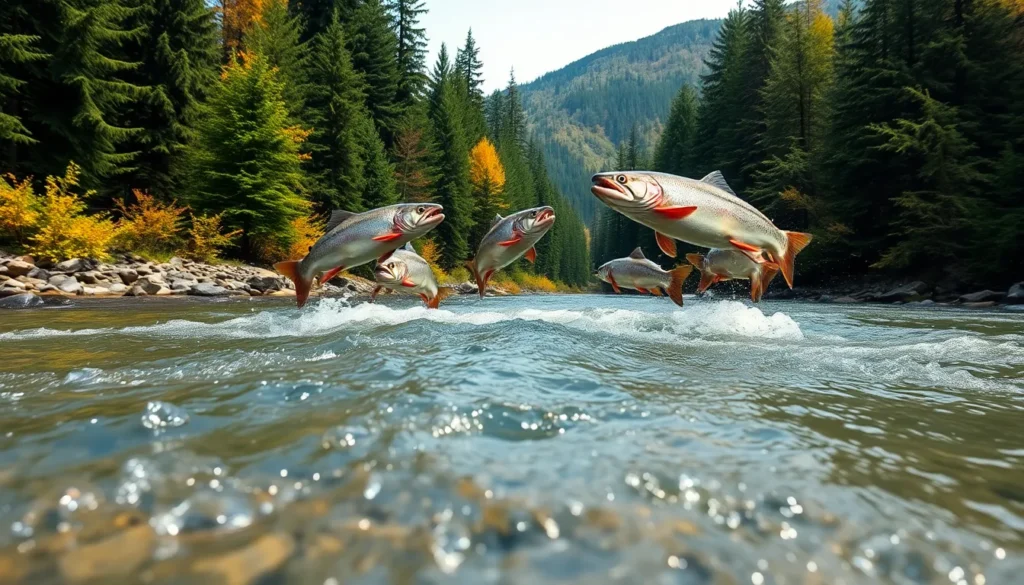
- Salmon are anadromous fish. They hatch in freshwater, migrate to the ocean to grow, then return to freshwater to spawn.
- Spawning usually occurs in the fall. Timing varies by species and location, but many salmon species spawn during autumn months.
- Salmon return to their natal streams. They use olfactory cues to navigate back to the exact stream where they were born.
- Spawning involves significant physical changes. Male salmon often develop hooked jaws called kypes and brighter colors during the spawning season.
- Salmon build nests called redds. Females dig shallow depressions in gravel beds where they deposit eggs.
- Spawning is energetically costly. Salmon stop feeding before migration and use stored energy reserves to complete the journey and spawning process.
- Many salmon die after spawning. Most Pacific salmon species are semelparous, dying shortly after reproduction.
- Some Atlantic salmon can spawn multiple times. Unlike most Pacific species, Atlantic salmon are often iteroparous, surviving to spawn again.
- Water temperature influences spawning timing. Cooler water temperatures help trigger migration and spawning behavior.
- Spawning often occurs in fast-flowing, oxygen-rich water. This environment supports egg development and oxygen supply to embryos.
- Salmon eggs incubate in gravel nests. The gravel protects eggs from predators and sediment while allowing water flow.
- Egg incubation duration depends on temperature. Colder waters prolong incubation, while warmer waters speed hatching.
- Salmon fry remain in freshwater before migrating. After hatching, juvenile salmon spend months to years in streams before heading to the ocean.
- Predation is high during spawning migrations. Bears, birds, and other animals prey on migrating salmon, especially during spawning runs.
- Salmon spawning supports biodiversity. Nutrients from decomposing salmon carcasses enrich freshwater ecosystems.
- Spawning migrations can cover hundreds of miles. Some salmon travel over 1,000 kilometers upstream to spawn.
- Spawning behavior is triggered by environmental cues. Photoperiod, water flow, and chemical signals influence timing and location.
- Artificial barriers impact salmon spawning. Dams and culverts can block access to spawning grounds, reducing populations.
- Conservation efforts focus on protecting spawning habitats. Restoring stream access and water quality helps maintain healthy salmon populations.
- Salmon spawning is culturally significant. Indigenous peoples have long relied on salmon runs for food and cultural practices.
- Studying salmon spawning informs fisheries management. Understanding spawning patterns helps regulate harvests and conserve stocks.
Habitat and Behavior
Salmon are primarily found in the northern Pacific and Atlantic oceans and the rivers that feed into them. Their life cycle includes distinct stages: freshwater hatching and juvenile development, ocean growth, and freshwater spawning migration. During spawning, salmon return from ocean environments to freshwater streams and rivers, often traveling great distances and overcoming obstacles such as waterfalls and rapids. They select spawning sites with clean, well-oxygenated gravel beds, where females dig redds to deposit eggs. Salmon spawning involves complex behaviors, including courtship and territoriality among males. After spawning, most Pacific salmon species die, completing their life cycle. Salmon depend on specific temperature and flow conditions in freshwater habitats, making them sensitive to environmental changes such as pollution, habitat fragmentation, and climate change.
Why This Animal Matters
Salmon play a critical ecological role by transferring nutrients from marine to freshwater ecosystems. Their spawning migrations provide food for a variety of predators, including bears, eagles, and humans. The decomposition of salmon carcasses enriches stream environments, supporting aquatic insects and plants, which in turn benefit other wildlife. Culturally, salmon are integral to many Indigenous communities, symbolizing resilience and providing sustenance. Economically, salmon fisheries support commercial and recreational industries in many regions. Conservation of salmon spawning habitats is vital for maintaining biodiversity, ecosystem health, and cultural heritage. Understanding salmon spawning behavior and challenges aids in developing effective management and conservation strategies to ensure the sustainability of salmon populations worldwide.
Common Misconceptions
Misconception: All salmon die immediately after spawning.
Correction: While most Pacific salmon species die after spawning, some Atlantic salmon can survive and spawn multiple times.
Misconception: Salmon lay their eggs anywhere in the water.
Correction: Salmon carefully select and prepare specific gravel beds in freshwater streams for egg deposition, known as redds.
Misconception: Salmon only spawn in the ocean.
Correction: Salmon hatch and spawn exclusively in freshwater, migrating to the ocean only to mature.
Misconception: Salmon can easily overcome any obstacle during migration.
Correction: Physical barriers like dams can prevent salmon from reaching spawning grounds, severely impacting populations.
Misconception: Salmon spawning is a simple process without ecological significance.
Correction: Salmon spawning is a complex behavior with significant ecological, cultural, and economic importance.
FAQ
Why do salmon return to their birthplace to spawn?
Salmon use a highly developed sense of smell to detect unique chemical cues in the water of their natal streams, enabling them to navigate back precisely to where they were born to reproduce.
Do all salmon die after spawning?
Most Pacific salmon species are semelparous, dying after spawning, but Atlantic salmon often survive to spawn multiple times, making them iteroparous.
How do environmental changes impact salmon spawning?
Changes such as water pollution, temperature shifts, and physical barriers like dams can disrupt migration routes, reduce suitable spawning habitat, and negatively affect salmon reproduction and survival.


Leave a Reply