
Short Answer
21 Facts About African Bullfrogs
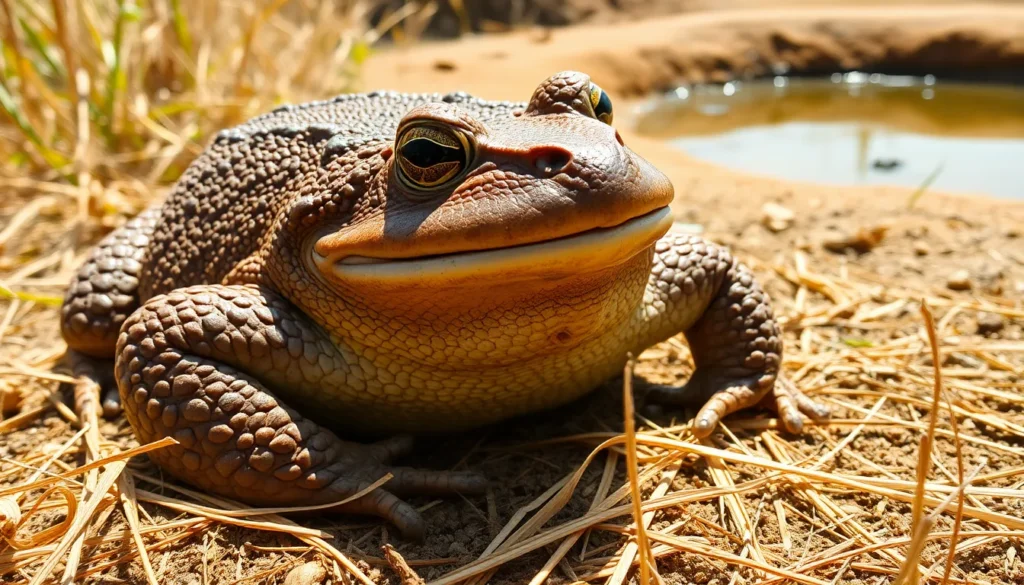
- Largest Frog in Africa: The African bullfrog (Pyxicephalus adspersus) is one of the largest frogs on the continent, with males reaching up to 9.5 inches (24 cm) in length and weighing over 1.4 kg (3 lbs).
- Sexual Dimorphism: Males are significantly larger than females, displaying distinct size and color differences, with males exhibiting a more robust build and olive-green to brown coloration.
- Distinctive Vocalizations: Male African bullfrogs produce deep, booming calls during mating season that can be heard over long distances to attract females.
- Burrowing Behavior: These frogs are fossorial, spending much of their time underground in burrows to avoid drought and predators.
- Estivation Capability: To survive dry seasons, African bullfrogs enter estivation, a dormant state where they remain buried in a mucus cocoon that helps retain moisture.
- Omnivorous Diet: African bullfrogs are opportunistic feeders consuming insects, small reptiles, rodents, and even other amphibians, including smaller frogs.
- Parental Care: Males guard the eggs and tadpoles aggressively, sometimes digging channels to help tadpoles reach water sources.
- Explosive Breeding: They breed in temporary rain pools formed after heavy rains, often engaging in mass breeding events.
- Rapid Tadpole Development: Tadpoles can develop quickly, sometimes in just a few weeks, to take advantage of transient water bodies.
- Predators and Threats: Natural predators include snakes, birds, and mammals. Habitat loss and collection for the pet trade pose additional risks.
- Defense Mechanisms: African bullfrogs can inflate their bodies to appear larger and may deliver painful bites when threatened.
- Longevity: In captivity, they can live up to 20 years, although life expectancy in the wild is typically shorter.
- Adaptation to Harsh Environments: Their ability to burrow and estivate allows them to survive in arid and semi-arid regions with unpredictable rainfall.
- Role in Ecosystem: They play a key role as both predator and prey, helping control insect populations and serving as food for larger animals.
- Scientific Research: African bullfrogs are studied for their unique reproductive behaviors and physiological adaptations to drought.
- Physical Appearance: They have a broad, flat body with large, muscular limbs and rough, warty skin.
- Temperature Regulation: By burrowing and estivation, they regulate body temperature and moisture levels in extreme climates.
- Cultural Significance: In some African cultures, they are considered symbols of fertility and prosperity.
- Conservation Status: Currently classified as Least Concern by the IUCN, though localized threats exist.
- Captive Care Challenges: They require large enclosures and specific humidity and temperature conditions to thrive in captivity.
- Unique Reproductive Role of Males: Males may guard multiple clutches of eggs laid by different females, demonstrating extensive parental investment.
Habitat and Behavior
African bullfrogs inhabit savannas, grasslands, and semi-arid regions across sub-Saharan Africa. They prefer areas with seasonal rainfall that create temporary ponds or pools for breeding. Their fossorial nature allows them to avoid desiccation by burrowing underground during dry periods. African bullfrogs are primarily nocturnal during the wet season but remain underground or inactive during the dry season. Their diet is highly varied, and their aggressive defense and parental care behaviors are notable among amphibians. During the breeding season, males vocalize loudly to attract females and defend territories near water sources.
Why This Animal Matters
The African bullfrog plays an important ecological role by controlling populations of insects and small vertebrates, contributing to ecosystem balance. Their burrowing activity helps aerate soil and supports nutrient cycling. Culturally, they hold significance in some African communities as symbols of fertility and resilience. Conservation-wise, although currently not endangered, they serve as indicators of environmental health, particularly in regions affected by habitat modification and climate variability. Their unique physiological adaptations also provide valuable insights for scientific studies on drought tolerance and amphibian ecology.
Common Misconceptions
Misconception: African bullfrogs are harmless and do not bite.
Correction: African bullfrogs can deliver strong bites and have sharp teeth-like structures; they use biting as a defense mechanism when threatened.
Misconception: All frogs require permanent water bodies to survive.
Correction: African bullfrogs can survive in arid environments by estivating underground during dry periods and only emerge to breed when temporary pools form.
Misconception: Male frogs do not care for their offspring.
Correction: Male African bullfrogs exhibit extensive parental care, including guarding eggs and tadpoles and creating channels to help tadpoles reach water.
FAQ
How big do African bullfrogs get?
Male African bullfrogs can grow up to 9.5 inches (24 cm) in length and weigh over 1.4 kg (3 lbs), making them one of the largest frogs in Africa.
What do African bullfrogs eat?
They are omnivorous and eat a variety of prey including insects, small reptiles, rodents, and other amphibians.
How do African bullfrogs survive dry seasons?
They survive by burrowing underground and entering estivation, a dormant state where they are encased in a mucus cocoon that retains moisture until rains return.


Leave a Reply