
Short Answer
21 Facts About Boa Constrictors
- Boa constrictors are non-venomous snakes. Unlike venomous snakes, boa constrictors subdue prey by constriction, squeezing until the prey can no longer breathe.
- They belong to the family Boidae. This family includes other large constrictor snakes, such as anacondas and pythons.
- Boa constrictors can grow quite large. Adults typically reach lengths of 3 to 13 feet (1 to 4 meters), depending on the subspecies and environment.
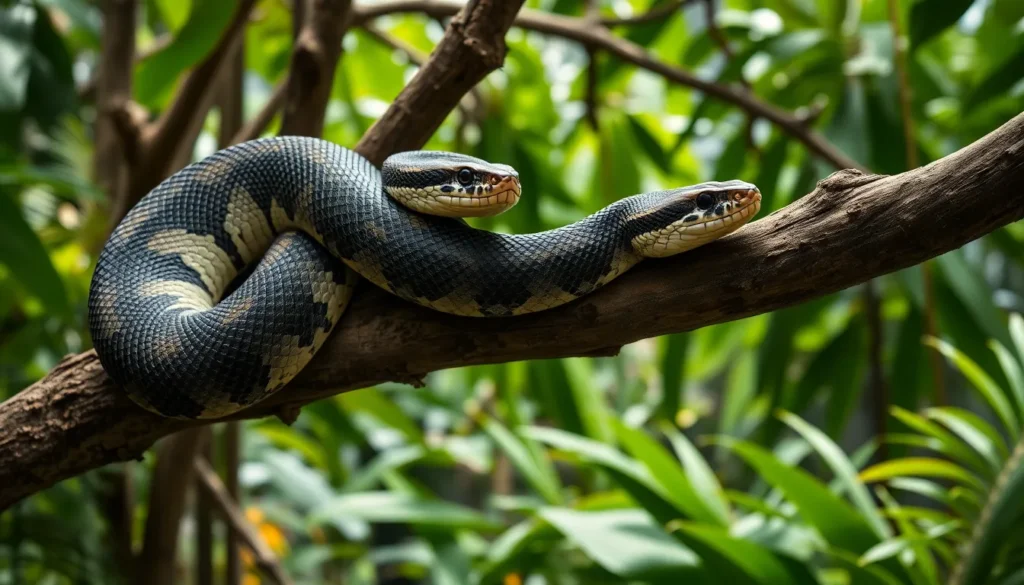
- They have distinct patterns on their skin. Their coloration usually consists of brown, gray, or cream backgrounds with saddle-shaped markings, which help camouflage them in their natural habitat.
- Boa constrictors are primarily nocturnal. They tend to hunt and be most active at night, using heat-sensing pits to detect warm-blooded prey.
- They are ambush predators. Boa constrictors often lie in wait for prey to come close before striking swiftly.
- Their diet mainly consists of mammals, birds, and reptiles. They eat rodents, bats, lizards, and sometimes larger prey such as monkeys or pigs.
- Boa constrictors kill by constriction. They wrap their muscular bodies around prey and tighten their coils with each breath the prey takes, leading to suffocation.
- They have heat-sensitive organs. Located along their jaws, these pit organs detect infrared radiation, enabling them to sense warm-blooded animals even in darkness.
- Boa constrictors give birth to live young. Unlike many snakes that lay eggs, boas are ovoviviparous, meaning the embryos develop inside eggs within the mother’s body, and she gives birth to fully formed snakes.
- They have a slow metabolism. Boa constrictors can survive for weeks or months between meals, depending on their size and activity level.
- Boa constrictors are found in a wide range of habitats. These include tropical rainforests, savannas, arid regions, and agricultural areas in Central and South America.
- They are excellent swimmers. Boa constrictors can move efficiently in water, which aids in hunting and escaping predators.
- Boa constrictors are solitary animals. They generally come together only for mating and spend the rest of their time alone.
- Their reproduction season varies by region. In tropical areas, breeding can occur year-round, while in other regions it may be seasonal.
- Boa constrictors have a lifespan of around 20 to 30 years in captivity. In the wild, their lifespan may be shorter due to predation and environmental factors.
- They play an important role in controlling rodent populations. By preying on small mammals, they help maintain ecological balance and reduce crop damage.
- Boa constrictors have been kept as pets. Due to their size and care requirements, they are suitable only for experienced reptile keepers.
- Boa constrictors have cultural significance in some indigenous communities. They appear in folklore and are sometimes considered symbols of power or spirituality.
- They are protected in some countries. Habitat loss and illegal pet trade have led to conservation efforts to monitor and preserve boa populations.
- Boa constrictors exhibit sexual dimorphism. Females are generally larger and heavier than males, which is common among many snake species.
Habitat and Behavior
Boa constrictors inhabit a wide range of environments across Central and South America, from tropical rainforests and savannas to semi-arid regions. They are adaptable snakes that can also be found near human settlements, often in agricultural areas where prey is abundant. Typically nocturnal, boa constrictors use their excellent camouflage and heat-sensing capabilities to hunt small to medium-sized mammals, birds, and reptiles. They are solitary creatures, interacting mostly during the breeding season. Boa constrictors are proficient climbers and swimmers, which allows them to exploit various habitats and escape predators. Their ambush hunting strategy involves patiently waiting for prey before striking and using their muscular bodies to constrict and suffocate it.
Why This Animal Matters
Boa constrictors play a significant ecological role by controlling populations of small mammals, which can otherwise become agricultural pests or spread disease. Their presence helps maintain the balance of food webs in their ecosystems. Culturally, boa constrictors are important in the folklore and traditions of several indigenous peoples, symbolizing strength and mystery. Conservation-wise, boa constrictors face challenges due to habitat destruction and illegal capture for the pet trade. Protecting these snakes contributes to preserving biodiversity and the health of tropical ecosystems.
Common Misconceptions
Misconception: Boa constrictors are venomous and dangerous to humans.
Correction: Boa constrictors are non-venomous and generally avoid humans. While they are capable of inflicting bites if threatened, they kill prey through constriction rather than venom.
Misconception: Boa constrictors are aggressive and attack unprovoked.
Correction: These snakes are typically shy and avoid confrontation. They usually strike only when threatened or cornered.
Misconception: Boa constrictors can crush human bones with their constriction.
Correction: While powerful, boa constrictors are not strong enough to crush large bones of humans; their constriction primarily causes suffocation in prey.
FAQ
Are boa constrictors dangerous to humans?
Boa constrictors are generally not dangerous to humans. They are non-venomous and tend to avoid people. While they can bite if threatened, attacks are rare and usually not serious.
How do boa constrictors kill their prey?
Boa constrictors kill prey by wrapping their bodies around it and constricting, which prevents the prey from breathing. This method leads to suffocation rather than crushing bones.
Do boa constrictors lay eggs?
No, boa constrictors are ovoviviparous, meaning they give birth to live young. The embryos develop inside eggs within the mother’s body until hatching occurs just before birth.

Leave a Reply