
Short Answer
21 Facts About Extinct Animals
- The dodo bird became extinct in the late 1600s. Native to Mauritius, the dodo was driven to extinction primarily due to human hunting and introduced species disrupting its habitat.
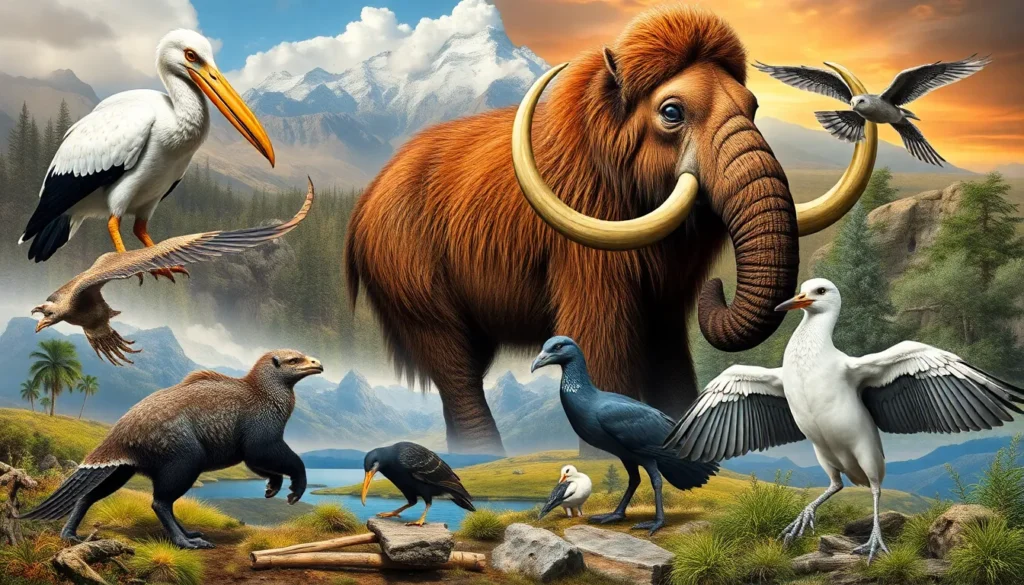
- The woolly mammoth roamed the Earth during the Ice Age. These large elephant relatives were adapted to cold environments and became extinct roughly 4,000 years ago.
- The thylacine, or Tasmanian tiger, was the largest carnivorous marsupial in modern times. It became extinct in the 20th century due to hunting and habitat loss.
- The passenger pigeon was once the most abundant bird species in North America. Its population declined rapidly due to overhunting and habitat destruction, leading to extinction by the early 1900s.
- The great auk was a flightless seabird that went extinct in the mid-19th century. It was hunted extensively for its feathers and meat.
- Extinct animals can be categorized into recent extinctions and prehistoric extinctions. Recent extinctions occurred within recorded human history, while prehistoric extinctions happened before human documentation.
- The moa were giant flightless birds native to New Zealand. They were hunted to extinction by the Māori by the 15th century.
- The Siberian unicorn, Elasmotherium, was a prehistoric rhinoceros species. It went extinct approximately 39,000 years ago and is known for its large single horn.
- The quagga was a subspecies of plains zebra with distinct striping patterns. It became extinct in the late 19th century due to excessive hunting.
- The Steller’s sea cow was a large marine mammal discovered in the 18th century. It was hunted to extinction within 27 years of its discovery.
- The extinction of many large animals coincided with the arrival of humans in new continents. This phenomenon is known as the Pleistocene megafaunal extinction.
- Extinct animals can be studied through fossil records and preserved specimens. These provide valuable information about their anatomy, ecology, and evolution.
- Some extinct species have close living relatives that help scientists understand their biology. For example, the dodo’s closest relative is the pigeon.
- Climate change has contributed to the extinction of several species. For instance, warming temperatures affected the habitat of the woolly mammoth.
- Human activities such as habitat destruction, hunting, and introduction of invasive species have accelerated extinctions. This trend continues to threaten biodiversity worldwide.
- De-extinction is a scientific concept aiming to revive extinct species using genetic technologies. However, it remains controversial and technically challenging.
- Extinct animals have significant cultural and symbolic roles in many societies. The dodo, for example, is often used as a symbol of extinction and environmental awareness.
- Some extinct species were key ecological players in their environments. Their loss has led to changes in ecosystem dynamics.
- Extinction events can be natural or influenced by external factors such as asteroid impacts. The dinosaurs’ extinction is widely attributed to an asteroid impact 66 million years ago.
- Preserving endangered species today helps prevent future extinctions. Conservation efforts are informed by studying past extinction patterns.
- Extinct animals continue to capture public imagination and inspire scientific research. They serve as reminders of the fragility of life on Earth.
Habitat and Behavior
Extinct animals inhabited diverse environments across the globe, ranging from tropical forests and islands to icy tundras and open plains. Their behaviors varied widely, influenced by their ecological niches. For example, the dodo lived on Mauritius, a tropical island with no natural predators, which contributed to its flightlessness and ground nesting habits. In contrast, the woolly mammoth roamed cold steppe-tundra ecosystems, grazing on grasses and shrubs. Many extinct animals adapted to specialized diets and habitats, which sometimes made them vulnerable to environmental changes or human interference. Their survival strategies included migration, social behaviors, and reproductive adaptations, though these were insufficient to prevent extinction under rapid environmental shifts or human pressures.
Why This Animal Matters
Extinct animals provide critical insights into Earth’s biological history, evolutionary processes, and the impacts of environmental change. They help scientists understand how species adapt or fail to adapt to changing conditions, informing current conservation strategies. Many extinct species played important ecological roles, such as seed dispersal, predator-prey relationships, and habitat modification, the loss of which can lead to ecosystem imbalances. Culturally, extinct animals often symbolize the consequences of human activity on nature, fostering awareness and advocacy for biodiversity preservation. Their stories remind humanity of the importance of sustainable coexistence with wildlife and the need to protect endangered species today.
Common Misconceptions
Misconception: The dodo was a clumsy, stupid bird.
Correction: The dodo was well-adapted to its island environment, and its extinction was mainly due to human activity and introduced predators rather than inherent weakness or stupidity.
Misconception: All extinct animals disappeared millions of years ago.
Correction: Many extinct animals, such as the thylacine and passenger pigeon, have become extinct within the last few centuries, often due to direct human impact.
Misconception: Extinct animals have no relevance to current ecosystems.
Correction: Extinct species often had important ecological roles, and their loss affects ecosystem stability and biodiversity, making their study relevant to ongoing conservation efforts.
Misconception: De-extinction will soon bring back extinct species like the woolly mammoth.
Correction: Although scientific advances are promising, de-extinction remains experimental and faces significant ethical, ecological, and technical challenges.
Misconception: Extinction is a natural process that does not concern humans.
Correction: While extinction is natural over geological timescales, current extinction rates are much higher due to human activities, posing a serious threat to global biodiversity.
FAQ
What factors contributed most to animal extinctions?
The primary factors include habitat destruction, overhunting, introduction of invasive species, and climate change, often accelerated by human activities.
Can extinct animals be brought back to life?
While scientific advances in genetics make de-extinction theoretically possible, it faces significant technical, ethical, and ecological challenges and has not yet been achieved.
Why is it important to study extinct animals?
Studying extinct animals helps us understand evolutionary history, ecosystem changes, and the impact of environmental and human factors, informing conservation efforts to protect existing species.


Leave a Reply