
Short Answer
21 Facts About Animal Courtship Rituals
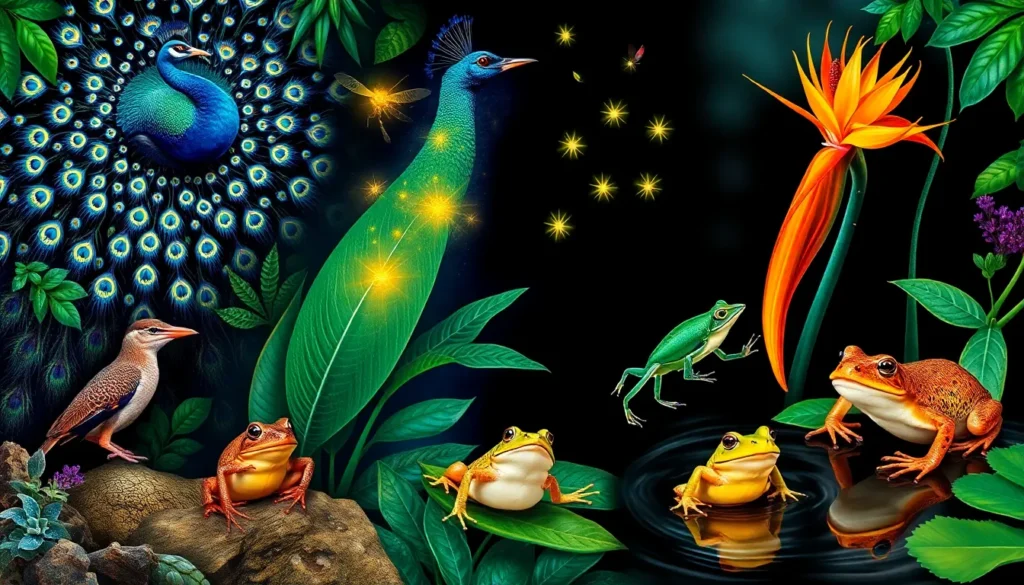
- Visual Displays Are Common: Many animals use bright colors, elaborate plumage, or physical displays to attract mates, such as the peacock’s tail feathers or the vibrant colors of some fish.
- Dance Rituals Are Widespread: Species like birds of paradise and some insects perform complex dances to demonstrate fitness and coordination to potential mates.
- Vocalizations Play a Major Role: Frogs, birds, and whales use calls or songs to communicate readiness to mate and to establish territory.
- Gift-Giving Enhances Attraction: Some animals, like certain spiders and birds, present food or objects to potential mates as part of courtship.
- Bioluminescence Can Be Used: Fireflies and some deep-sea creatures use light signals to attract mates in dark environments.
- Courtship Can Last for Extended Periods: For example, some albatross species engage in years-long pair bonding rituals before breeding.
- Physical Combat Is Sometimes Part of Courtship: Males of some species, such as deer or seals, engage in fights to establish dominance and win mates.
- Chemical Signals Are Crucial: Many insects and mammals release pheromones to communicate reproductive status and attract mates.
- Unique Structures Are Built: Male bowerbirds construct intricate bowers decorated with colorful objects to entice females.
- Mutual Courtship Occurs: In some species, both males and females participate actively in displays and rituals.
- Synchrony in Courtship: Some species synchronize their behaviors or reproductive cycles to increase mating success.
- Territorial Displays Can Be Part of Courtship: Animals may defend or display a territory as a sign of fitness to potential mates.
- Parental Investment Influences Courtship: Species with high parental care often have more elaborate courtship to ensure mate compatibility.
- Some Courtship Rituals Are Species-Specific: Unique behaviors help ensure mating occurs within the same species, preventing hybridization.
- Environmental Factors Affect Courtship: Seasonal changes, temperature, and habitat influence the timing and nature of courtship rituals.
- Non-Visual Senses Are Important: Tactile stimulation and vibrational signals can be part of courtship in some animals.
- Courtship Can Include Gift Exchange: In some bird species, males present stones or feathers to females as part of mating displays.
- Some Species Use Deceptive Courtship: Certain animals mimic others or use trickery to gain mating advantage.
- Courtship Can Influence Genetic Diversity: Mate choice during courtship can affect the genetic makeup of future generations.
- Learning Plays a Role: In some species, young animals learn courtship behaviors from adults.
- Human Observation Has Revealed New Insights: Advances in technology have allowed researchers to document complex courtship behaviors previously unknown.
Habitat and Behavior
Animal courtship rituals occur across nearly all habitats, from dense forests and open savannahs to aquatic environments and arid deserts. These behaviors are adapted to the specific ecological niches of species, enabling them to maximize reproductive success in their environments. For example, fireflies use bioluminescence in dark habitats, while birds of paradise perform elaborate dances in forest canopies. Courtship behaviors often involve communication methods suited to environmental conditions, including visual signals in open areas, vocalizations in dense habitats, and chemical cues in complex terrains. These rituals are integral to mating systems, influencing mate selection, pair bonding, and reproductive timing.
Why This Animal Matters
Courtship rituals are essential for the continuation of species, influencing genetic diversity and population dynamics. They play a critical ecological role by ensuring successful mating and reproduction, which maintains balanced ecosystems. Many courtship behaviors have cultural significance, inspiring human art, literature, and scientific curiosity. Additionally, understanding these rituals aids conservation efforts, as disruption to mating behaviors can threaten species survival. Studying courtship also provides insights into evolutionary biology, sexual selection, and animal communication.
Common Misconceptions
Misconception: All courtship rituals are simple and involve only physical displays.
Correction: Courtship rituals are often complex and can involve multiple sensory modalities, including visual, auditory, chemical, and tactile signals.
Misconception: Only males perform courtship displays.
Correction: In many species, both males and females actively participate in courtship behaviors.
Misconception: Courtship rituals are the same across all animal species.
Correction: Courtship behaviors are highly variable and species-specific, adapted to ecological and evolutionary contexts.
FAQ
What is the primary purpose of animal courtship rituals?
The primary purpose of animal courtship rituals is to attract a mate and increase the likelihood of successful reproduction. These behaviors help individuals demonstrate fitness, species identity, and readiness to reproduce.
Do all animals have the same courtship behaviors?
No, courtship behaviors vary widely among animal species and are adapted to their specific ecological and evolutionary contexts. Some rely on visual displays, others on vocalizations, chemical signals, or complex dances.
Can courtship rituals influence species survival?
Yes, effective courtship rituals are crucial for species survival because they facilitate successful mating and reproduction. Disruption of these behaviors due to environmental changes or human activity can threaten population viability.



Leave a Reply