
Short Answer
21 Facts About Remoras and Sharks
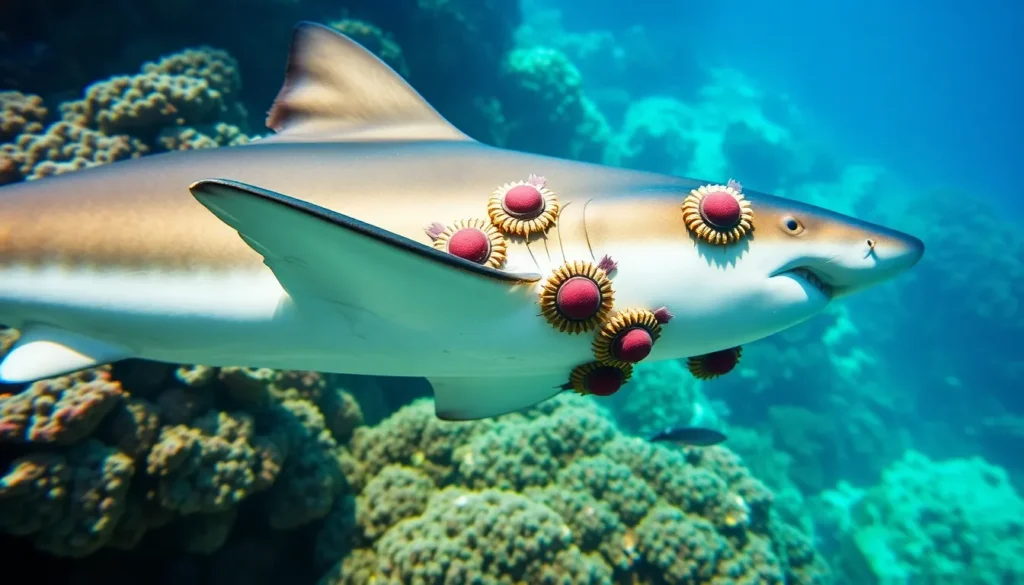
- Remoras are also known as suckerfish. They have a specialized suction disc on the top of their heads that allows them to attach securely to larger marine animals like sharks.
- Sharks and remoras have a commensal relationship. This means remoras benefit by hitching rides and feeding on leftover scraps, while sharks are generally neither harmed nor benefited.
- Remoras feed on parasites and dead skin found on sharks. This cleaning behavior can provide some health benefits to the shark.
- Remoras can reach lengths of up to 30 inches (75 cm). Despite their size, they rely on their host for movement and protection.
- Sharks are apex predators in marine ecosystems. Their presence helps maintain balance by controlling the population of prey species.
- There are over 500 species of sharks worldwide. They vary greatly in size, habitat, and behavior.
- Remoras use their suction disc to attach without causing injury to sharks. The disc is made of modified dorsal fin spines that create a vacuum effect.
- Sharks have highly developed senses. Their ability to detect electrical fields and vibrations makes them effective hunters.
- Remoras can detach and reattach to hosts as needed. This mobility allows them to switch hosts or escape predators.
- Sharks have been present in oceans for over 400 million years. They evolved long before dinosaurs.
- Remoras sometimes attach to other large marine animals. These include whales, turtles, and rays.
- Sharks have multiple rows of teeth that are replaced continuously. This adaptation helps them maintain effective feeding capabilities.
- Remoras serve an ecological role by cleaning parasites off their hosts. This mutualistic interaction can improve shark health.
- Sharks vary greatly in reproductive strategies. Some lay eggs (oviparous), while others give live birth (viviparous).
- Remoras are generally harmless to their hosts. They do not feed on shark tissue but rely on scraps and parasites.
- Sharks play a vital role in marine food webs. They help regulate species diversity and ocean health.
- Remoras can be found in tropical and subtropical waters worldwide. They prefer areas where large hosts are abundant.
- Sharks face numerous threats from human activities. These include overfishing, habitat loss, and pollution.
- Remoras have adapted to their lifestyle by evolving a flattened body. This shape facilitates attachment and reduces drag while attached to hosts.
- Shark populations are critical indicators of ocean ecosystem health. Declines in shark numbers can signal environmental imbalances.
- Both remoras and sharks contribute to marine biodiversity. Their interactions highlight complex ecological relationships in the ocean.
Habitat and Behavior
Remoras and sharks inhabit a range of marine environments, predominantly in tropical and subtropical waters. Sharks occupy diverse habitats, from shallow coastal zones to deep oceanic regions, adapting to various ecological niches. Remoras typically attach to sharks or other large marine animals, benefiting from the host’s mobility and protection. They feed on parasites, leftover food scraps, and dead skin, which contributes to maintaining the health of their hosts. Sharks are solitary or social depending on the species and exhibit complex hunting behaviors supported by acute sensory capabilities. Their roles as apex predators help regulate marine ecosystems by controlling prey populations and maintaining species balance.
Why This Animal Matters
Sharks are essential for healthy marine ecosystems, serving as apex predators that influence the structure and function of oceanic food webs. Their predation helps prevent the overpopulation of certain species, thereby maintaining biodiversity and ecosystem stability. Remoras, through their cleaning behavior, contribute to the well-being of their hosts, which can indirectly support shark populations. Both animals are indicators of ocean health and biodiversity. Conservation efforts targeting sharks also benefit remoras and other marine species, highlighting the interdependence within marine environments. Furthermore, sharks hold cultural significance in many coastal communities and are subjects of scientific research related to evolution, ecology, and marine biology.
Common Misconceptions
Misconception: Remoras harm sharks by attaching to them.
Correction: Remoras do not harm sharks; they feed on parasites and leftover food, often benefiting the shark by cleaning it.
Misconception: Sharks are mindless killers that attack humans frequently.
Correction: While sharks are predators, attacks on humans are rare and typically accidental. Most sharks avoid human contact.
Misconception: Remoras are parasites.
Correction: Remoras are commensal organisms. They benefit from the host without causing harm, unlike true parasites.
Misconception: All sharks live in deep ocean waters.
Correction: Sharks inhabit a wide range of environments, including shallow coastal areas, coral reefs, and open oceans.
Misconception: Remoras can only attach to sharks.
Correction: Remoras attach to various large marine animals such as whales, turtles, and rays, not exclusively sharks.
FAQ
What is the relationship between remoras and sharks?
Remoras and sharks share a commensal relationship where remoras attach to sharks to gain transportation and food scraps, while sharks are generally unaffected.
Do remoras harm sharks when they attach?
No, remoras do not harm sharks. They feed on parasites and leftover food on the shark's body and use their suction disc to attach without causing injury.
Why are sharks important to marine ecosystems?
Sharks are apex predators that help regulate the populations of other marine species, maintaining ecological balance and promoting healthy ocean ecosystems.




Leave a Reply