
Short Answer
21 Facts About Yellow-throated Martens
- Scientific Classification: The yellow-throated marten (Martes flavigula) belongs to the family Mustelidae, which includes weasels, otters, and ferrets.
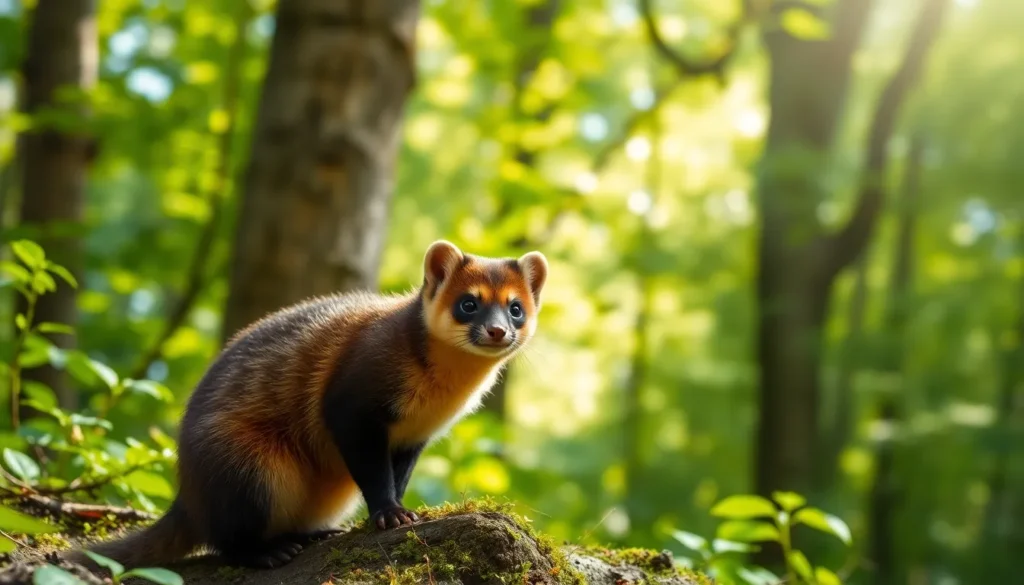
- Distinctive Appearance: It is named for its yellow or orange throat and chest, contrasting with a darker back and legs.
- Geographic Range: This species is native to parts of South and Southeast Asia, including India, China, Korea, and Russia’s Far East.
- Size and Weight: Yellow-throated martens typically weigh between 2 to 3.5 kilograms and measure about 50 to 70 centimeters in body length.
- Dietary Habits: They are omnivores, feeding on small mammals, birds, insects, fruits, and occasionally carrion.
- Activity Pattern: They are diurnal, active primarily during the day, unlike many other marten species that are nocturnal.
- Habitat Preference: Yellow-throated martens inhabit a variety of forest types, including temperate, subtropical, and tropical forests, often in mountainous regions.
- Agility and Movement: They are agile climbers and capable swimmers, helping them to hunt and evade predators.
- Social Behavior: Unlike many solitary mustelids, yellow-throated martens may be observed in pairs or small groups.
- Communication: They use a range of vocalizations, scent marking, and visual signals to communicate with one another.
- Reproduction: Females typically give birth to litters of 2 to 5 kits after a gestation period of about 9 months.
- Longevity: In the wild, they live approximately 7 to 10 years, though lifespan can be longer in captivity.
- Predators and Threats: They face threats from larger carnivores and human-related factors such as habitat loss and hunting.
- Role in Ecosystem: As both predators and seed dispersers, they help maintain ecological balance in their habitats.
- Adaptability: Yellow-throated martens can survive in various environments, including disturbed forests near human settlements.
- Conservation Status: They are currently listed as Least Concern by the IUCN but are locally threatened in some parts of their range.
- Fur Characteristics: Their fur is dense and waterproof, which aids in insulation and protection against weather.
- Historical Cultural Significance: In some Asian cultures, they are regarded as symbols of agility and bravery.
- Scientific Studies: Research on their behavior and ecology helps improve understanding of forest ecosystem dynamics.
- Human Interaction: They are generally wary of humans but may occasionally raid poultry farms, leading to conflict.
- Conservation Efforts: Protected areas and wildlife reserves contribute to their habitat preservation and population stability.
Habitat and Behavior
Yellow-throated martens are found predominantly in the forested regions across parts of Asia, including temperate broadleaf and mixed forests as well as subtropical and tropical forests. They prefer mountainous and hilly terrain but can adapt to lower elevations. These martens are diurnal and exhibit high levels of activity during daylight hours. Their behavior is characterized by agility in climbing trees and swimming, which facilitates hunting and evasion from predators. Unlike many solitary mustelids, yellow-throated martens sometimes form small social groups, possibly family units. They communicate using vocalizations, scent markings, and body language, which help establish territories and social bonds. Their omnivorous diet allows them to exploit a wide range of food sources, including small mammals, birds, insects, fruits, and carrion, making them opportunistic feeders that play a flexible role in their ecosystems.
Why This Animal Matters
Yellow-throated martens hold an important ecological role as mid-level predators and seed dispersers within their forest habitats. By preying on rodents and insects, they help control populations of potential pest species, thereby maintaining ecological balance. Their consumption of fruits also contributes to seed dispersal, supporting forest regeneration. Additionally, their presence is indicative of healthy forest ecosystems. Culturally, they have been recognized in folklore and traditional beliefs in parts of Asia, symbolizing traits such as agility and boldness. From a conservation perspective, while currently listed as Least Concern, ongoing habitat destruction and hunting pressures in certain areas underscore the need for monitoring and protective measures to ensure their populations remain stable.
Common Misconceptions
Misconception: Yellow-throated martens are dangerous to humans.
Correction: These martens are generally shy and avoid human contact. They rarely pose a threat to people and tend to flee if encountered.
Misconception: Yellow-throated martens are strictly carnivorous.
Correction: While they do hunt animals, they are omnivorous and consume a varied diet including fruits and insects.
Misconception: All martens are nocturnal.
Correction: Yellow-throated martens are primarily diurnal, active during daylight hours, differing from many other marten species.
Misconception: Yellow-throated martens are solitary animals.
Correction: Although often solitary, these martens have been observed in pairs or small groups, especially family units.
FAQ
What does the yellow-throated marten eat?
Yellow-throated martens have an omnivorous diet that includes small mammals, birds, insects, fruits, and occasionally carrion.
Are yellow-throated martens dangerous to humans?
They are generally shy and avoid humans, posing little to no threat and typically fleeing when encountered.
Where can yellow-throated martens be found?
They inhabit various forest types across parts of South and Southeast Asia, including India, China, Korea, and Russia's Far East.



Leave a Reply