
Short Answer
21 Facts About Vulturine Guineafowl
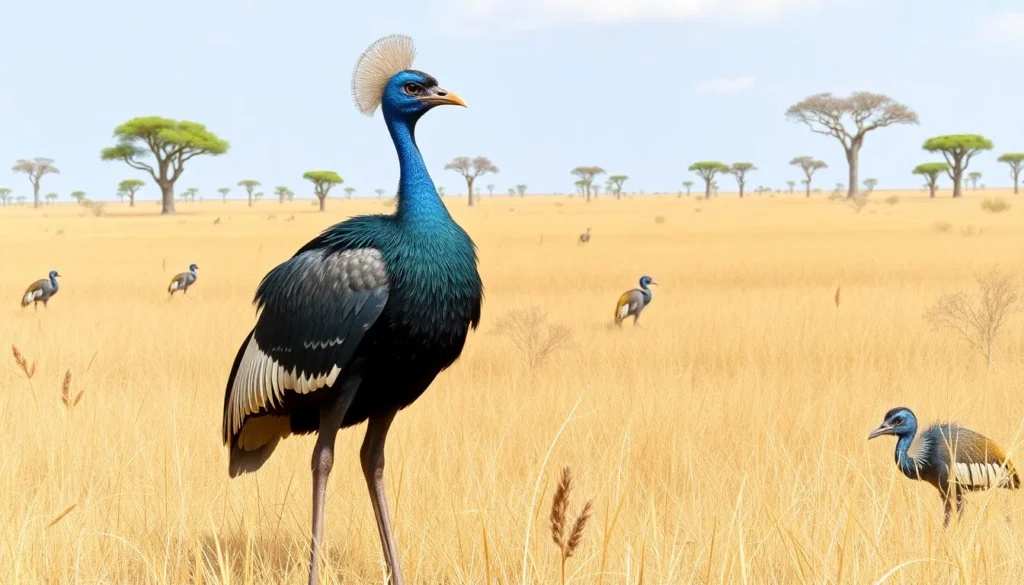
- Distinctive Appearance: The vulturine guineafowl (Acryllium vulturinum) is easily recognized by its bare blue face and long neck feathers that resemble a vulture, hence its name.
- Largest Guineafowl Species: It is the largest species in the guineafowl family, with adults measuring about 61 cm (24 in) in length.
- Native Range: This bird is native to northeastern Africa, primarily found in Kenya, Ethiopia, Somalia, and Tanzania.
- Habitat Preference: It prefers dry savanna and shrubland habitats, often near water sources but avoiding dense forests.
- Social Behavior: Vulturine guineafowl are highly social, living in large flocks that can number up to 25 or more individuals.
- Diet: Their diet mainly consists of seeds, small insects, and other invertebrates, which they forage for on the ground.
- Flight Capabilities: Although primarily terrestrial, they can fly short distances when threatened but prefer running to escape predators.
- Roosting Habits: They roost in trees at night to avoid ground predators, despite being ground feeders during the day.
- Communication: Vulturine guineafowl use a variety of calls and vocalizations to maintain contact within their flock and alert others to danger.
- Breeding Season: Breeding occurs during the rainy season when food is more abundant, aiding chick survival.
- Nesting: They build nests on the ground, usually hidden in dense vegetation to protect eggs from predators.
- Clutch Size: Typically, females lay between 4 to 8 eggs per breeding attempt.
- Chick Development: Chicks are precocial, leaving the nest shortly after hatching to follow their parents and flock members.
- Predators: Common predators include large birds of prey, snakes, and mammals such as jackals.
- Conservation Status: The IUCN currently lists the vulturine guineafowl as Least Concern due to its wide distribution and stable population.
- Role in the Ecosystem: By foraging on insects and seeds, they help control pest populations and contribute to seed dispersal.
- Cultural Significance: In some East African cultures, the vulturine guineafowl is noted for its striking appearance and is occasionally featured in traditional stories.
- Adaptations: Their long legs and strong feet aid in running swiftly across open terrain to evade predators.
- Relationship with Humans: They are not commonly hunted but may be affected by habitat loss due to agricultural expansion.
- Longevity: In the wild, they can live up to 10 years, although exact lifespan data is limited.
- Research Importance: Their social structure and foraging behavior offer valuable insights into avian ecology and group dynamics.
Habitat and Behavior
The vulturine guineafowl inhabits dry savannas and open shrublands in northeastern Africa, favoring areas with scattered trees and bushes. These birds are highly social, forming large flocks that forage together during the day. They mainly feed on seeds, insects, and small invertebrates found on the ground. When threatened, they rely on running rather than flying, although they roost in trees at night to avoid predators. Their vocal communication helps maintain group cohesion and alert others to potential dangers. Breeding occurs seasonally, with nests built on the ground in concealed locations. Chicks are precocial, quickly becoming mobile after hatching and integrating into the flock.
Why This Animal Matters
The vulturine guineafowl plays an important ecological role by controlling insect populations and contributing to seed dispersal within its habitat. Its presence indicates healthy savanna ecosystems. Culturally, it holds significance in some local traditions due to its unique appearance. Although currently not threatened, its habitats face pressures from human activities such as agriculture and land development, making conservation awareness important. Studying its social and foraging behaviors also aids ornithologists in understanding complex avian group dynamics and adaptations to arid environments.
Common Misconceptions
Misconception: The vulturine guineafowl is a type of vulture.
Correction: Despite its name and vulture-like appearance, it is a member of the guineafowl family, which is distinct from vultures and belongs to the order Galliformes.

Misconception: Vulturine guineafowl are poor flyers.
Correction: While they prefer running to escape danger, they are capable of short flights, particularly to reach roosting sites in trees.
Misconception: They only eat seeds.
Correction: Their diet is varied, including seeds, insects, and small invertebrates, making them omnivorous ground foragers.
FAQ
What does the vulturine guineafowl eat?
The vulturine guineafowl primarily feeds on seeds, insects, and small invertebrates that it forages from the ground.
Where can vulturine guineafowl be found?
They are native to northeastern Africa, including countries like Kenya, Ethiopia, Somalia, and Tanzania, and inhabit dry savannas and shrublands.
Are vulturine guineafowl good flyers?
While they are capable of short flights, especially to reach roosting trees, vulturine guineafowl generally prefer running to escape predators.
Leave a Reply