
Short Answer
21 Facts About Red-crowned Cranes
- Scientific Name
Red-crowned cranes are scientifically known as Grus japonensis, belonging to the family Gruidae. - Physical Appearance
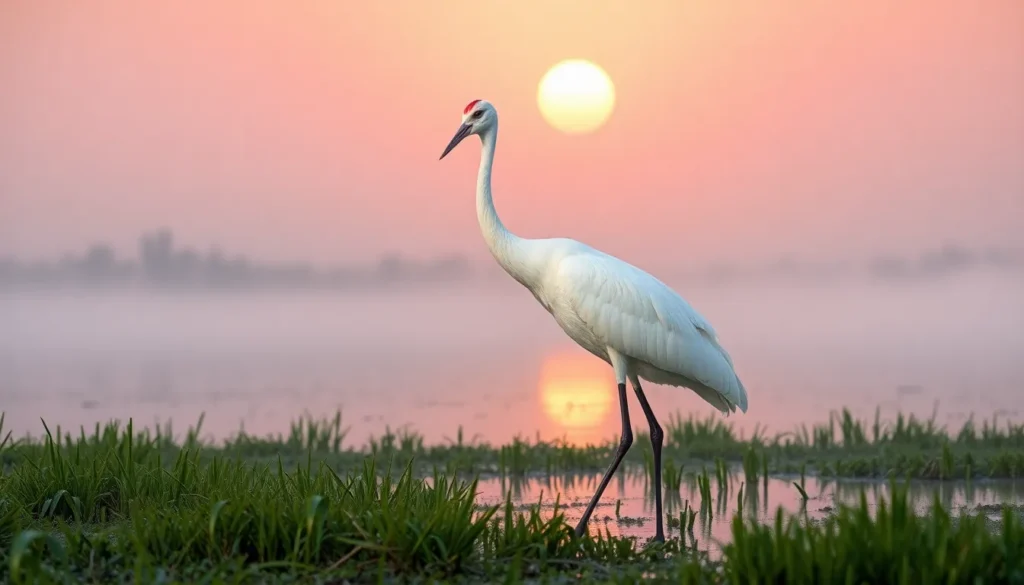
They are among the largest crane species, standing about 150 cm tall with a wingspan over 220 cm, characterized by white plumage and a distinctive red patch on the crown of their head. - Red Crown Origin
The red patch on their head is bare skin that becomes brighter during the breeding season due to increased blood flow. - Longevity
In the wild, red-crowned cranes can live up to 30 years, with some living longer in captivity. - Distribution
These cranes are native to East Asia, primarily found in parts of Russia, China, Japan, and Korea. - Habitat Preference
They prefer wetlands, marshes, and riverbanks, which provide abundant food and nesting sites. - Diet
Red-crowned cranes are omnivorous, feeding on aquatic plants, insects, fish, amphibians, and small mammals. - Migration Patterns
Some populations are migratory, traveling between breeding grounds in Russia and wintering areas in China and Japan. - Monogamous Nature
These cranes are generally monogamous, forming long-term pair bonds that may last for life. - Elaborate Courtship
They perform complex and graceful courtship dances including bowing, jumping, and calling. - Nesting
Nests are typically built in wetlands using reeds and grasses, where the female usually lays two eggs. - Chick Rearing
Both parents actively care for the chicks, which are precocial and leave the nest shortly after hatching. - Population Status
The species is classified as Endangered by the IUCN due to habitat loss and human disturbance. - Conservation Efforts
Multiple international programs focus on habitat preservation and breeding to support population recovery. - Cultural Symbolism
In East Asian cultures, the red-crowned crane symbolizes longevity, fidelity, and good fortune. - National Symbol
The red-crowned crane is considered a national treasure in Japan and is featured in various art forms and folklore. - Role in Ecosystem
As a top wetland predator and scavenger, they help maintain balanced aquatic ecosystems. - Vocalizations
They communicate through a variety of trumpeting calls that can carry over long distances. - Threats
Major threats include habitat destruction, pollution, and collisions with power lines. - Captive Breeding
Zoos and conservation centers worldwide participate in captive breeding to ensure species survival. - Symbol in Popular Media
Red-crowned cranes often appear in films, literature, and artworks symbolizing peace and beauty.
Habitat and Behavior
Red-crowned cranes inhabit wetland ecosystems such as marshes, riverbanks, and flooded meadows primarily across East Asia. They require large, undisturbed wetland areas for feeding and nesting. These cranes are known for their elaborate mating dances that reinforce pair bonds and territorial claims. They forage for a varied diet that includes aquatic plants, small animals, and insects. Migration behavior varies among populations, with northern birds migrating south for winter while others remain resident. Their social behavior includes strong pair bonds and some seasonal flocking outside of the breeding season. Nesting involves constructing elevated platforms in wetlands, with both parents cooperating in incubation and chick rearing.
Why This Animal Matters
Ecologically, red-crowned cranes play an important role as indicators of wetland health and biodiversity. Their presence reflects the integrity of aquatic ecosystems, which are vital for many other species. Culturally, these cranes have deep symbolic significance in East Asian traditions, representing longevity, fidelity, and prosperity. This symbolism has contributed to their protection and reverence in countries like Japan and China. Conservation-wise, the red-crowned crane serves as a flagship species for wetland conservation efforts, highlighting the importance of preserving critical habitats amid increasing human development and climate change. Protecting this species also supports broader biodiversity and ecosystem services in their native regions.
Common Misconceptions
Misconception: Red-crowned cranes are aggressive birds.
Correction: While they can be territorial during breeding, they are generally peaceful and avoid conflict where possible.

Misconception: All red-crowned cranes migrate long distances.
Correction: Some populations are resident and do not migrate, depending on regional climate and habitat conditions.
Misconception: The red patch on their head is made of feathers.
Correction: The red patch is exposed skin that changes color due to blood flow, not feathers.
Misconception: Red-crowned cranes are commonly found throughout Asia.
Correction: Their distribution is limited to specific wetland regions in East Asia, making them relatively rare and localized.
Misconception: They only eat fish.
Correction: Red-crowned cranes have a varied diet including plants, insects, amphibians, and small mammals, not just fish.
FAQ
What is the red-crowned crane's natural habitat?
Red-crowned cranes inhabit wetlands, marshes, and riverbanks primarily in East Asia, where they find food and nesting sites.
Are red-crowned cranes endangered?
Yes, the red-crowned crane is classified as Endangered due to habitat loss, pollution, and other human-induced factors.
Do red-crowned cranes migrate?
Some populations of red-crowned cranes migrate seasonally between breeding and wintering grounds, while others remain resident year-round depending on their location.



Leave a Reply