
Short Answer
21 Facts About Oystercatchers
- Distinctive Appearance
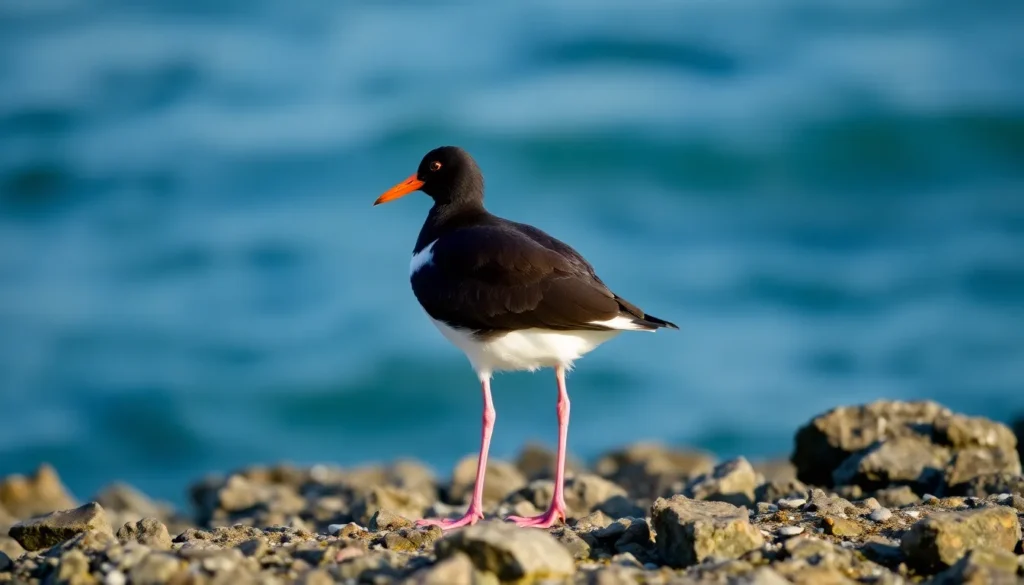
Oystercatchers are easily recognizable by their black and white plumage and long, bright orange-red bills used for feeding. - Species Diversity
There are approximately 11 species of oystercatchers worldwide, mainly distributed across coastal regions of Europe, Asia, Africa, Australia, and the Americas. - Feeding Adaptations
Their strong, pointed bills are adapted to pry open or hammer mollusk shells, such as oysters, mussels, and cockles. - Diet
While mollusks are a primary food source, oystercatchers also eat worms, crustaceans, and other small invertebrates. - Habitat Preference
They typically inhabit coastal shorelines, estuaries, mudflats, and sandy beaches but some species can be found inland near freshwater bodies. - Territorial Behavior
Oystercatchers are territorial, especially during the breeding season, defending nesting sites aggressively from other birds. - Monogamous Pairing
Many oystercatcher species form long-term monogamous pairs that often last for multiple breeding seasons. - Nesting
They usually nest on the ground in simple scrapes lined with vegetation or shells, often close to the water’s edge. - Eggs and Incubation
Oystercatchers lay 2 to 4 eggs, which both parents incubate for about 24 to 28 days. - Chick Development
Chicks are precocial, meaning they are relatively mature and mobile shortly after hatching, but they remain dependent on parents for feeding initially. - Vocalizations
Oystercatchers are known for their loud, piping calls used to communicate between mates and to warn intruders. - Longevity
Some oystercatcher species have been recorded living up to 30 years in the wild. - Migratory Patterns
Certain oystercatcher populations migrate seasonally between breeding and wintering grounds, while others are largely sedentary. - Population Status
The conservation status varies by species, with some populations stable and others threatened by habitat loss and human disturbance. - Adaptation to Human Activity
Oystercatchers can be sensitive to coastal development but may adapt to managed reserves and protected areas. - Ecological Role
By preying on shellfish and other invertebrates, oystercatchers help regulate intertidal ecosystem dynamics. - Breeding Displays
They perform elaborate courtship displays including bill fencing, vocal duets, and mutual preening. - Flight Characteristics
Oystercatchers have strong, direct flight with rapid wingbeats and often fly low over water surfaces. - Distinctive Legs and Feet
They have relatively long, pinkish legs and three forward-pointing toes that assist in walking on soft substrates. - Historical Cultural Significance
Oystercatchers have featured in folklore and coastal traditions, symbolizing shore life and sometimes serving as indicators of healthy marine environments. - Research Importance
Oystercatchers are studied for insights into coastal ecology, feeding adaptations, and the impact of human activity on shorebird populations.
Habitat and Behavior
Oystercatchers are primarily found along coastal shorelines, estuaries, and mudflats where they forage for bivalve mollusks and other invertebrates. They prefer habitats with easy access to tidal zones, which expose their prey during low tide. Behaviorally, oystercatchers are territorial birds, especially during the breeding season. They establish and defend nesting territories on open ground, often in areas with sparse vegetation or rocky shores. Their feeding technique involves using their specialized bill to either hammer or pry open shells, showcasing remarkable adaptability to different prey types. Many species are monogamous and maintain pair bonds throughout the year. Vocal communication is important for maintaining territory and pair cohesion. Depending on the species and location, some oystercatchers migrate seasonally, while others remain resident year-round. These behaviors enable them to successfully exploit their coastal niches and survive in environments that can be dynamic and challenging.
Why This Animal Matters
Oystercatchers play a significant ecological role in coastal ecosystems by controlling populations of mollusks and other invertebrates, thereby influencing the structure and health of intertidal communities. Their presence can indicate the overall condition of coastal habitats, making them valuable species for environmental monitoring. Culturally, oystercatchers have been part of coastal folklore and are often appreciated for their striking appearance and behaviors by birdwatchers and naturalists. Conservation of oystercatcher species is important as some populations face threats from habitat loss due to coastal development, pollution, and disturbance from human recreational activities. Protecting these birds contributes to the broader efforts of preserving coastal biodiversity and maintaining the balance of marine ecosystems.
Common Misconceptions
Misconception: Oystercatchers eat only oysters.
Correction: Despite their name, oystercatchers feed on a variety of shellfish and invertebrates, including mussels, cockles, worms, and crabs, not exclusively oysters.
Misconception: Oystercatchers use their bills only to hammer shells.
Correction: They employ different techniques depending on the prey, including prying shells open or stabbing soft-bodied animals, demonstrating behavioral flexibility.
Misconception: All oystercatcher species migrate.
Correction: Some oystercatcher populations are migratory, but others remain resident year-round, depending on geographic location and environmental conditions.
Misconception: Oystercatchers are aggressive towards humans.
Correction: While they can be territorial and may defend nests, oystercatchers generally avoid humans and only show aggression when their breeding sites are threatened.
Misconception: Oystercatchers are related to oyster farming.
Correction: Oystercatchers are wild shorebirds and have no direct relationship to oyster aquaculture or farming activities.
FAQ
What do oystercatchers eat?
Oystercatchers primarily feed on bivalve mollusks such as oysters, mussels, and cockles, but they also consume worms, crustaceans, and other small invertebrates found in coastal environments.
Where do oystercatchers live?
Oystercatchers are found along coastal shorelines, estuaries, mudflats, and sandy beaches worldwide, with some species also inhabiting inland freshwater habitats.
Are oystercatchers threatened or endangered?
The conservation status varies by species; while some populations are stable, others face threats from habitat loss, human disturbance, and environmental changes, necessitating protective measures in certain regions.


Leave a Reply