
Short Answer
21 Facts About Red Wolves
- Scientific Classification: Red wolves belong to the species Canis rufus, a distinct canid native to the southeastern United States.
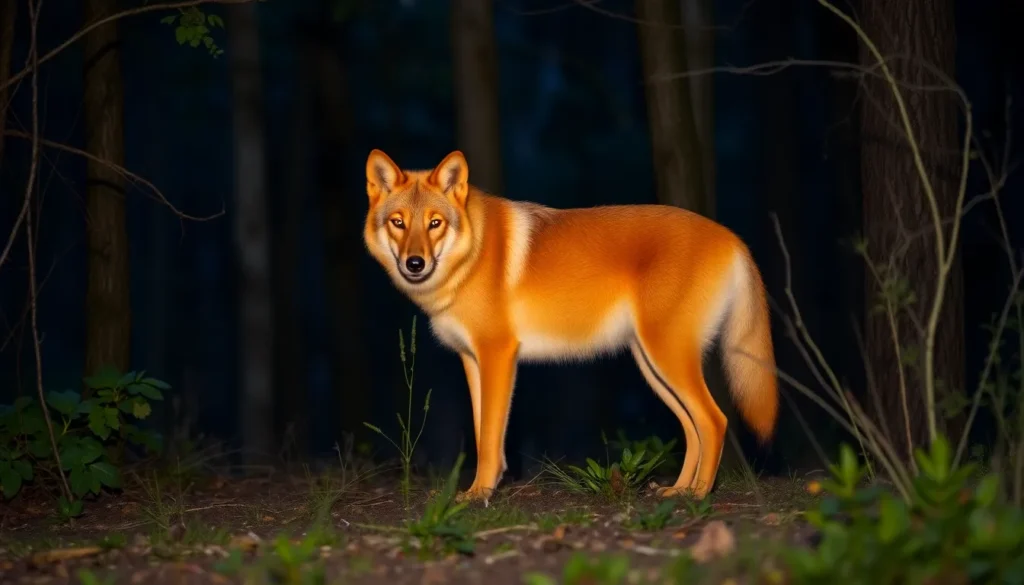
- Appearance: They have a reddish-tawny coat with gray, black, and white markings, and are generally smaller than gray wolves but larger than coyotes.
- Size: Adult red wolves typically weigh between 45 and 80 pounds (20 to 36 kg) and measure about 4 to 5 feet in length including the tail.
- Social Structure: Red wolves are social animals that live in family packs usually consisting of a breeding pair and their offspring.
- Diet: Their diet is varied and opportunistic, including small mammals, deer, birds, and occasionally amphibians and reptiles.
- Reproduction: Breeding pairs are generally monogamous, and pups are born after a gestation of about 60 to 63 days.
- Range: Historically, red wolves ranged across the southeastern United States, including states like North Carolina, Texas, and Louisiana.
- Extinction in the Wild: By the 1970s, red wolves were declared extinct in the wild due to habitat loss, predator control programs, and hybridization with coyotes.
- Captive Breeding: A successful captive breeding program began in the 1970s to save the species from total extinction.
- Reintroduction: Red wolves were reintroduced into the wild in North Carolina’s Alligator River National Wildlife Refuge starting in 1987.
- Hybridization Threat: Hybridization with coyotes remains a significant threat to the genetic integrity of red wolves.
- Conservation Status: The International Union for Conservation of Nature (IUCN) lists the red wolf as Critically Endangered.
- Communication: Red wolves use howls, barks, and scent marking to communicate and establish territory.
- Territorial Behavior: Packs defend territories that can range from 10 to 38 square miles depending on prey availability.
- Lifespan: In the wild, red wolves live approximately 6 to 7 years, while in captivity, they may live up to 15 years.
- Genetic Uniqueness: Genetic studies suggest red wolves are a distinct species, although their exact evolutionary origins remain debated.
- Dietary Adaptability: They can adjust their diet based on prey abundance, which historically included raccoons, rabbits, and deer.
- Role in Ecosystem: As apex predators in their habitat, red wolves help control populations of smaller mammals and maintain ecological balance.
- Legal Protection: They are protected under the U.S. Endangered Species Act, which supports recovery efforts.
- Public Awareness: Efforts to increase public understanding and reduce human-wolf conflicts are part of ongoing conservation strategies.
- Population Size: As of the early 2020s, fewer than 20 red wolves are estimated to remain in the wild, with several hundred in captivity.
Habitat and Behavior
Red wolves historically inhabited a variety of habitats including forests, swamps, and coastal prairies in the southeastern United States. They prefer areas with dense cover and access to prey such as white-tailed deer and small mammals. Behaviorally, red wolves are highly social and form packs led by a dominant breeding pair. They communicate through vocalizations such as howls and barks, and use scent marking to delineate territory boundaries. Red wolves are primarily nocturnal hunters but can be active during the day, especially in undisturbed areas. Their adaptability in diet and habitat use has been key to their survival, although habitat fragmentation and human activity have severely restricted their range.
Why This Animal Matters
Red wolves play a vital ecological role as apex predators by regulating populations of prey species, thus maintaining healthy ecosystems and preventing overgrazing or imbalances. Their presence contributes to biodiversity and supports ecosystem functions such as nutrient cycling. Culturally, red wolves hold significance for indigenous peoples and local communities, symbolizing wilderness and the natural heritage of the southeastern United States. Conservation of red wolves also highlights broader challenges in wildlife management, including habitat preservation, species recovery, and the complexity of hybridization with related species. Protecting red wolves helps raise awareness of endangered species and the importance of preserving natural habitats.
Common Misconceptions
Misconception: Red wolves are just coyotes with red fur.
Correction: Red wolves are a distinct species with unique genetic, morphological, and behavioral characteristics that differentiate them from coyotes.
Misconception: Red wolves are aggressive threats to humans.
Correction: Red wolves are generally shy and avoid human contact; there are no documented cases of red wolves attacking humans.
Misconception: Red wolves were deliberately eradicated everywhere.
Correction: While predator control programs contributed to their decline, habitat loss and hybridization also played significant roles in their population decrease.
Misconception: Captive breeding has fully restored red wolf populations.
Correction: Although captive breeding has prevented extinction, wild populations remain critically low and face ongoing threats.
Misconception: Red wolves can easily adapt to any environment.
Correction: Red wolves require specific habitat conditions and sufficient prey populations, making habitat conservation essential for their survival.
FAQ
Are red wolves the same as gray wolves?
No, red wolves are a distinct species with different size, coloration, behavior, and genetic makeup compared to gray wolves.
Why are red wolves endangered?
Red wolves became endangered due to habitat destruction, predator control programs, and hybridization with coyotes, which diluted their genetic lineage.
Can red wolves be found in the wild today?
Yes, small populations exist primarily in eastern North Carolina thanks to reintroduction efforts, but they remain critically endangered.



Leave a Reply