
Short Answer
21 Facts About Luna Moths
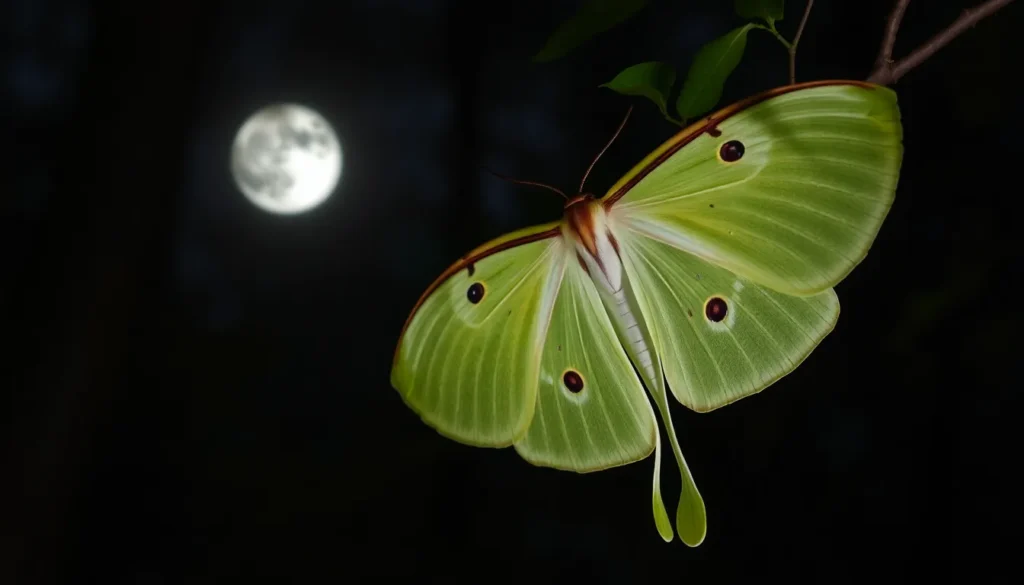
- Scientific Classification: Luna moths belong to the species Actias luna in the family Saturniidae, known as giant silk moths.
- Appearance: They are pale green with long, tapering hindwing tails and eyespots on both forewings and hindwings.
- Size: Luna moths have a wingspan ranging from 8 to 11.5 centimeters (3 to 4.5 inches).
- Lifecycle Duration: The adult luna moth lives only about one week, during which it does not eat.
- Feeding Habits: Adult luna moths do not have mouthparts and thus do not feed; they rely on fat reserves accumulated during the larval stage.
- Larval Stage: Caterpillars feed on the leaves of various trees including hickory, walnut, sweet gum, and birch.
- Metamorphosis: They undergo complete metamorphosis: egg, larva, pupa, and adult stages.
- Geographical Range: Luna moths are found throughout North America, from Canada to the southern United States.
- Nocturnal Behavior: They are primarily active at night and are attracted to light sources.
- Wing Tails Function: Their long tails may help deflect bat echolocation, aiding in predator avoidance.
- Reproduction: After emerging, adults focus solely on mating and laying eggs to continue the species.
- Eggs: Females lay clusters of pale green eggs on the undersides of leaves.
- Pupal Cocoon: The pupa is encased in a silken cocoon usually attached to tree bark or leaves.
- Predators: Birds, bats, and small mammals prey on luna moths at various stages.
- Defense Mechanisms: The moth’s eyespots and wing tails help deter or confuse predators.
- Population Cycles: Populations may fluctuate with environmental conditions and availability of host plants.
- Pollination: Unlike many moths, luna moths do not pollinate since adults do not feed.
- Cultural Significance: Luna moths are often symbols of transformation and renewal in various cultures due to their metamorphosis.
- Conservation Status: They are not currently listed as endangered but habitat loss can impact local populations.
- Scientific Study: Luna moths are studied for their silk production and unique adaptations among moths.
- Attractiveness to Collectors: Their striking appearance makes them a popular subject for photographers and collectors, though wild capture should be done responsibly.
Habitat and Behavior
Luna moths inhabit deciduous woodlands and forests across much of North America. They prefer areas where host trees such as hickory, walnut, sweet gum, and birch are common, as their larvae feed exclusively on these leaves. The moths are nocturnal, emerging at night to mate and lay eggs. Their adult stage is brief, lasting only about a week, during which time they do not eat. The long tails on their hindwings are believed to confuse echolocating bats, serving as an anti-predation adaptation. Larvae grow rapidly, shedding skin multiple times before pupating inside silken cocoons attached to foliage or bark. Luna moths are solitary except during mating periods and are attracted to artificial lights, which can sometimes disrupt their natural behavior.
Why This Animal Matters
Luna moths play a role in forest ecosystems primarily through their larvae, which serve as a food source for various predators and help in controlling host tree foliage. Although adult moths do not feed and thus do not act as pollinators, they contribute to biodiversity and serve as indicators of environmental health. Their striking appearance has inspired cultural symbolism related to transformation and rebirth in art and folklore. From a scientific perspective, luna moths are studied for their silk and for insights into moth evolution and adaptation, particularly their anti-predator defenses. Conservation of their woodland habitats ensures the survival of this species and maintains the ecological balance within their native ranges.
Common Misconceptions
Misconception: Luna moths are harmful pests that damage crops.
Correction: Luna moth larvae feed primarily on leaves of specific trees in natural habitats and are not considered agricultural pests.
Misconception: Adult luna moths live for several months.
Correction: Adults live only about one week, focusing on reproduction and do not feed during this time.
Misconception: Luna moths can sting or bite.
Correction: Luna moths do not have stingers or biting mouthparts and are harmless to humans.
Misconception: The long tails on their wings are purely decorative.
Correction: The tails are functional adaptations that help disrupt bat echolocation, aiding in predator avoidance.
FAQ
How long do luna moths live as adults?
Adult luna moths typically live for about one week. During this time, they do not eat but focus on reproduction.
What do luna moth caterpillars eat?
Luna moth caterpillars feed on the leaves of deciduous trees such as hickory, walnut, sweet gum, and birch.
Why do luna moths have long tails on their wings?
The long tails on luna moths’ hindwings help confuse the echolocation signals of predatory bats, aiding in predator avoidance.
Leave a Reply