
Short Answer
21 Facts About Nurse Sharks
- Distinctive Appearance
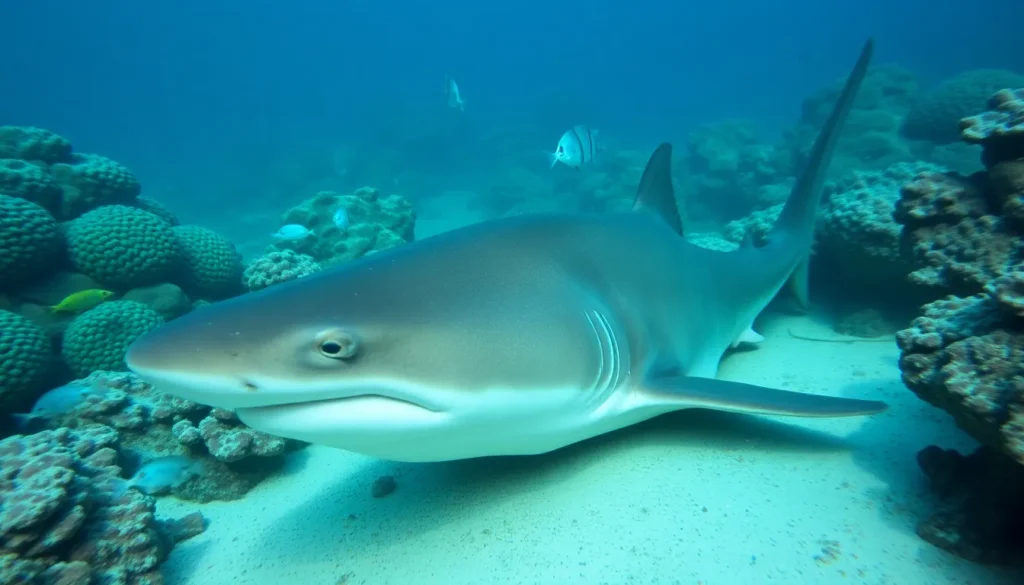
Nurse sharks have a broad, flat head, two dorsal fins, and barbels near their mouths which help them locate prey. - Slow-Moving Bottom Dwellers
They are generally slow swimmers and prefer to rest on the seabed during the day. - Nocturnal Hunters
Nurse sharks are mostly active at night, feeding primarily on bottom-dwelling fish and invertebrates. - Use of Suction Feeding
They use powerful suction to extract prey from crevices and holes in reefs. - Relatively Docile Nature
While they can bite if provoked, nurse sharks are generally considered non-aggressive to humans. - Large Size
Adult nurse sharks typically reach lengths of 2.1 to 3.2 meters (7 to 10.5 feet). - Wide Distribution
They inhabit tropical and subtropical waters of the Atlantic and Eastern Pacific Oceans. - Habitats
Commonly found in coral reefs, sandy flats, and mangrove areas close to shore. - Resting Behavior
They can often be seen resting in groups during the day in shallow waters. - Reproduction
Nurse sharks are ovoviviparous, meaning their eggs hatch inside the female’s body and the young are born live. - Gestation Period
The gestation period lasts around 6 months, with females giving birth to 20 to 30 pups. - Longevity
Nurse sharks can live for about 25 to 30 years in the wild. - Electroreceptive Organs
Like other sharks, nurse sharks have ampullae of Lorenzini, which detect electrical signals from prey. - Teeth Arrangement
They have multiple rows of small, serrated teeth adapted for crushing rather than tearing. - Social Behavior
While often solitary during feeding, they may aggregate in groups while resting. - Conservation Status
They are classified as “Vulnerable” by the IUCN due to habitat loss and fishing pressures. - Human Interaction
Nurse sharks are sometimes kept in public aquariums due to their relatively calm disposition. - Role in Ecosystem
They help control populations of reef fish and invertebrates, maintaining ecosystem balance. - Camouflage
Their coloration helps them blend into sandy and rocky bottoms, aiding in ambush hunting and predator avoidance. - Non-Migratory
Nurse sharks tend to have small home ranges, rarely migrating long distances. - Historic Name Origin
The name “nurse shark” may derive from old English or Scandinavian words related to sea floor dwelling or possibly from their slow-moving nature resembling a nurse’s calm demeanor.
Habitat and Behavior
Nurse sharks are found primarily in warm, shallow coastal waters ranging from the western Atlantic Ocean, including the southeastern United States, the Caribbean, and South America, to the eastern Pacific Ocean. They prefer environments such as coral reefs, rocky areas, seagrass beds, and mangrove swamps. These sharks are benthic, meaning they live near or on the ocean floor. They spend much of their day resting in groups under ledges or in caves, becoming active mostly at night when they hunt. Their diet consists mainly of small fish, crustaceans, mollusks, and occasionally stingrays. Nurse sharks use their strong suction feeding method to extract prey hidden in crevices. Although generally slow-moving, they can swim swiftly if needed. Their social behavior includes both solitary hunting and communal resting, which helps reduce predation risk.
Why This Animal Matters
Nurse sharks play an important ecological role as mid-level predators in reef environments. By feeding on a variety of bottom-dwelling organisms, they help maintain the balance of species populations and contribute to the overall health of coral reef ecosystems. Additionally, nurse sharks serve as prey for larger sharks and marine mammals, making them an integral part of the food web. Culturally, nurse sharks are often admired by divers and marine enthusiasts for their distinctive appearance and generally peaceful demeanor. Their presence is also an indicator of healthy reef systems, which are vital for marine biodiversity. However, nurse sharks face threats from habitat degradation, fishing, and human disturbance, underscoring the need for conservation efforts to ensure their populations remain stable.
Common Misconceptions
Misconception: Nurse sharks are dangerous and aggressive toward humans.
Correction: Nurse sharks are generally docile and avoid confrontation. Bites are rare and usually occur only when the shark is provoked or handled improperly.
Misconception: Nurse sharks can only live in saltwater environments.
Correction: While primarily marine, nurse sharks can tolerate low salinity levels and are sometimes found in brackish waters near estuaries.
Misconception: Nurse sharks constantly swim and must keep moving to breathe.
Correction: Unlike some shark species, nurse sharks can pump water over their gills while resting on the bottom, allowing them to remain stationary for extended periods.
FAQ
Are nurse sharks dangerous to humans?
Nurse sharks are generally not dangerous to humans. They are slow-moving and usually docile, though they may bite if provoked or handled improperly.
What do nurse sharks eat?
Nurse sharks feed mainly on fish, crustaceans, and mollusks found on or near the ocean floor. They use suction to capture prey from crevices.
Where can nurse sharks be found?
Nurse sharks inhabit warm, shallow coastal waters in the tropical and subtropical Atlantic and Eastern Pacific Oceans, often near coral reefs and mangroves.





Leave a Reply