
Short Answer
21 Facts About Antelope
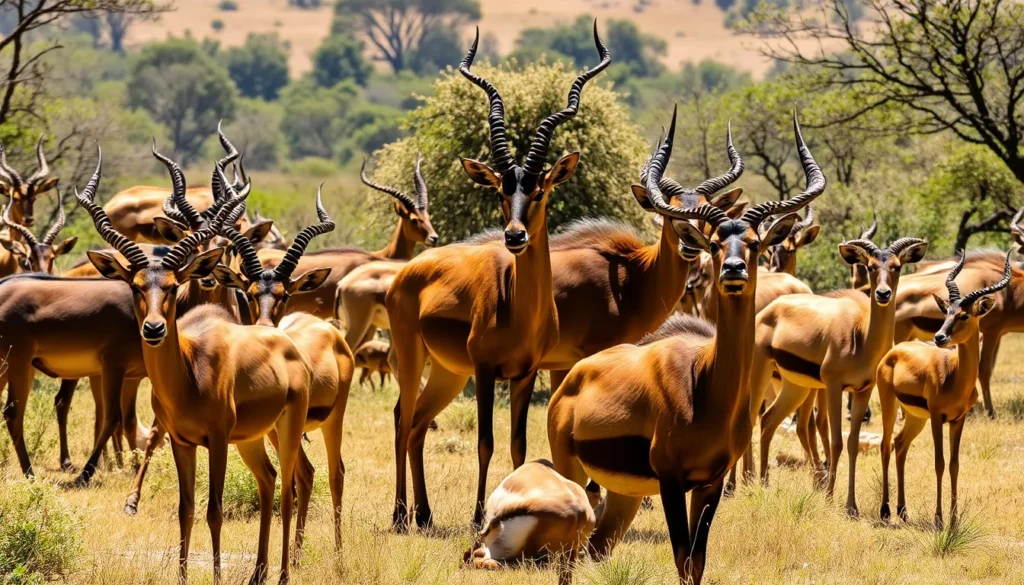
- Diverse Family: Antelopes belong to the family Bovidae, which includes over 90 species ranging from small duikers to large elands.
- Wide Distribution: Most antelope species are native to Africa, with a few found in parts of Asia, including the Indian subcontinent and the Middle East.
- Varied Sizes: Antelope species range significantly in size, from the tiny royal antelope weighing about 5 kg to the giant eland which can weigh over 900 kg.
- Speed and Agility: Many antelope species are known for their speed and agility, with some like the pronghorn capable of reaching speeds up to 88 km/h (55 mph).
- Horns: Most antelopes possess horns rather than antlers, which are usually permanent and found in both sexes or only males depending on the species.
- Herbivorous Diet: Antelopes primarily feed on grasses, leaves, shoots, and sometimes fruits, adapting their diet to the local vegetation.
- Social Structures: Antelope social behavior varies widely; some species form large herds, while others are solitary or live in small groups.
- Communication: Antelopes use a variety of vocalizations, body postures, and scent markings to communicate and establish territory.
- Reproduction: Most species have a defined breeding season, and females usually give birth to a single calf after a gestation period of 6 to 9 months.
- Predation and Defense: Antelopes are prey for many large carnivores and use speed, alertness, and sometimes camouflage to avoid predators.
- Adaptations to Environment: Some antelope species are adapted to arid environments, able to survive with minimal water by obtaining moisture from their food.
- Migration: Certain species, such as the blue wildebeest, undertake long seasonal migrations in search of food and water.
- Conservation Status: While some species are abundant, others like the saiga antelope are critically endangered due to habitat loss and hunting.
- Ecological Role: Antelopes play a key role as herbivores in their ecosystems, influencing vegetation dynamics and serving as prey for predators.
- Cultural Significance: Antelopes appear in various African and Asian cultures’ folklore, art, and symbolism, often representing grace and agility.
- Scientific Study: Antelopes have been subjects of ecological, behavioral, and evolutionary studies due to their diversity and ecological roles.
- Horns and Human Use: In some cultures, antelope horns are used for ceremonial purposes or as traditional medicine, impacting certain populations.
- Adaptations to Predation: Some species have specialized behaviors such as stotting—jumping with stiff legs—to signal fitness to predators.
- Unique Species: The gerenuk is notable for its long neck and ability to stand on hind legs to reach higher foliage.
- Taxonomy Complexity: Classification of antelope species is complex and sometimes debated, as “antelope” is a common name rather than a strict taxonomic group.
- Human Impact: Habitat fragmentation, poaching, and competition with livestock are ongoing threats to many antelope species worldwide.
Habitat and Behavior
Antelopes inhabit a wide range of environments including savannas, grasslands, woodlands, mountains, and deserts. Their adaptability allows them to exploit various ecological niches, from dense forests to open plains. Behaviorally, antelopes exhibit diverse social structures that range from solitary lifestyles to large migratory herds. Their survival strategies include keen senses of sight and hearing to detect predators, swift running capabilities, and in some species, cryptic coloring to blend with their surroundings. Feeding behavior is generally selective, with many species adapting their diet seasonally based on available vegetation. Breeding strategies also vary, with some species establishing territories and engaging in ritualized displays to attract mates.
Why This Animal Matters
Antelopes play a crucial ecological role as primary consumers in many ecosystems, helping to maintain vegetation balance and supporting predator populations. Their grazing and browsing habits influence plant community composition and nutrient cycling. Beyond ecology, antelopes hold cultural and economic significance in many regions through eco-tourism and traditional uses. Conservation of antelope species is important as many face threats from human activities, making them indicators of habitat health and biodiversity. Protecting antelopes contributes to broader efforts in wildlife preservation and sustainable land management.
Common Misconceptions
Misconception: All antelopes are large and fast animals.
Correction: Antelope species vary widely in size and speed, with some being small and adapted to slower, more secretive lifestyles.
Misconception: Antelopes are a single species.
Correction: The term “antelope” refers to many species across various genera within the Bovidae family, not a single species.
Misconception: Antelopes only live in Africa.
Correction: While the majority live in Africa, several antelope species are native to Asia as well.
Misconception: Antelopes have antlers like deer.
Correction: Antelopes have permanent horns made of keratin, unlike deer which shed antlers seasonally.
FAQ
What distinguishes antelopes from deer?
Antelopes have permanent horns made of keratin that are not shed annually, whereas deer have antlers that are shed and regrown each year. Additionally, antelopes belong to different genera and families and have different evolutionary histories.
Are all antelope species fast runners?
While many antelope species are known for speed and agility to evade predators, not all are exceptionally fast. Some species rely on camouflage or living in dense habitats rather than speed.
Why are some antelope species endangered?
Antelope species face threats from habitat loss, hunting, poaching, and competition with livestock. These pressures have caused population declines in some species, leading to endangered or critically endangered statuses.



Leave a Reply