
Short Answer
21 Facts About Animal Sleep Patterns
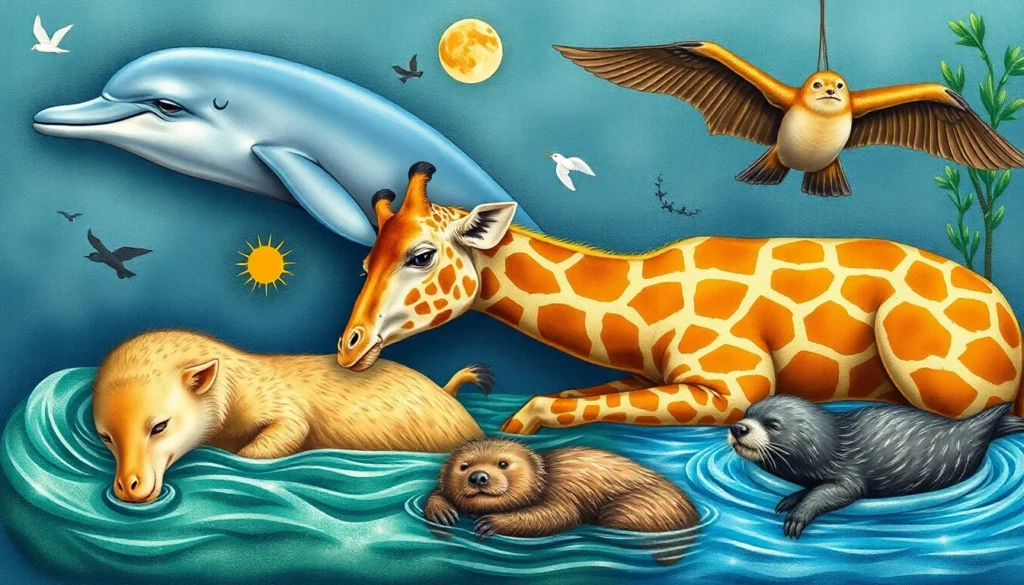
- Dolphins sleep with one hemisphere awake. Unlike humans, dolphins exhibit unihemispheric slow-wave sleep, allowing them to stay partially alert to breathe and watch for predators.
- Giraffes sleep very little. Giraffes typically sleep only 4.6 hours per day, often in short naps, likely due to their vulnerability when lying down.
- Some birds can sleep while flying. Certain migratory birds engage in unihemispheric sleep to maintain flight and navigate over long distances.
- Bats are among the longest sleepers. Some bat species sleep up to 20 hours a day, conserving energy during inactive periods.
- Elephants sleep standing up or lying down. While elephants often sleep standing to stay alert, they lie down for deeper REM sleep but only for short durations.
- Sharks have continuous swimming and rest patterns. Many sharks must swim constantly but enter rest states with reduced activity, though true sleep is debated.
- Sloths have slow and fragmented sleep. Sloths can sleep up to 15-20 hours but in short, irregular bouts due to their slow metabolism.
- Some fish exhibit sleep-like states. Fish do not have eyelids but reduce activity and responsiveness during rest periods resembling sleep.
- Owls have deep nocturnal sleep cycles. As nocturnal predators, owls sleep during the day to conserve energy for nighttime hunting.
- Dogs and cats have polyphasic sleep patterns. They sleep multiple times a day in short periods, contrasting with the monophasic sleep of humans.
- Honeybees experience rest phases. Though not true sleep, bees have periods of immobility and reduced responsiveness important for memory consolidation.
- Marine mammals surface to breathe during sleep. Species like seals and whales manage sleep with brief awakenings to breathe at the surface.
- Reptiles show slow-wave sleep but limited REM. Some reptiles have sleep phases similar to mammals, but REM sleep is either absent or minimal.
- Some rodents use burrows for safe sleep. Burrowing provides protection during vulnerable sleep periods, enabling longer rest.
- Fish schools may synchronize rest. Certain fish species rest simultaneously to reduce predation risk.
- Fruit flies have circadian sleep patterns. Even insects like fruit flies follow daily rhythms regulating rest and activity cycles.
- Camels sleep less in desert environments. To conserve water and energy, camels have adapted to sleep fewer hours than many mammals.
- Sea otters float on their backs while sleeping. They often wrap themselves in kelp to avoid drifting while resting at the water surface.
- Frogs enter torpor-like states. Some amphibians reduce metabolism and responsiveness in cold conditions, resembling sleep.
- Some animals exhibit REM sleep similar to humans. Mammals and birds show rapid eye movement phases associated with dreaming and brain activity.
- Sleep duration and patterns are highly species-specific. Evolution has shaped diverse sleep adaptations reflecting ecological niches and survival strategies.
Habitat and Behavior
Animal sleep patterns are closely linked to their habitats and behavioral adaptations. For example, aquatic mammals like dolphins and whales have adapted to sleep with one brain hemisphere active to maintain breathing and predator awareness. Terrestrial animals such as giraffes and elephants balance the need for rest with vulnerability to predators, often sleeping lightly or standing to stay alert. Nocturnal animals, including owls and many rodents, shift their sleep cycles to daylight hours, while migratory birds can sleep during flight through unihemispheric sleep. Environmental factors like temperature, predation risk, and food availability also influence sleep duration and patterns, leading to a wide variety of rest strategies across species.
Why This Animal Matters
Understanding animal sleep patterns provides insight into evolutionary biology, neurobiology, and ecology. Sleep adaptations reveal how species optimize energy use, avoid predators, and maintain physiological functions. These patterns also inform conservation efforts by highlighting species’ vulnerabilities linked to rest behaviors. Additionally, studying diverse sleep mechanisms in animals contributes to medical and scientific knowledge about sleep disorders and brain function in humans. Recognizing the ecological roles of animals with unique sleep habits helps in preserving biodiversity and ecosystem balance.
Common Misconceptions
Misconception: All animals sleep the same way humans do.
Correction: Animal sleep varies widely, with some species exhibiting unihemispheric sleep, polyphasic patterns, or sleep-like rest states that differ fundamentally from human sleep.
Misconception: Fish do not sleep because they lack eyelids.
Correction: Many fish enter rest phases characterized by reduced movement and responsiveness, which function similarly to sleep despite the absence of eyelids.
FAQ
Do all animals sleep?
Most animals exhibit some form of sleep or rest, although the duration, depth, and characteristics vary widely among species. Even animals without eyelids enter periods of reduced activity that function similarly to sleep.
What is unihemispheric sleep?
Unihemispheric sleep is a unique sleep pattern where one half of the brain sleeps while the other half remains awake. This adaptation is common in aquatic mammals like dolphins and some birds, allowing them to remain alert for breathing or predator detection.
Why do some animals sleep so little?
Animals like giraffes and elephants sleep less due to ecological pressures such as predation risk and the need to feed for long periods. Their sleep is often fragmented and lighter to maintain awareness and safety.


Leave a Reply