
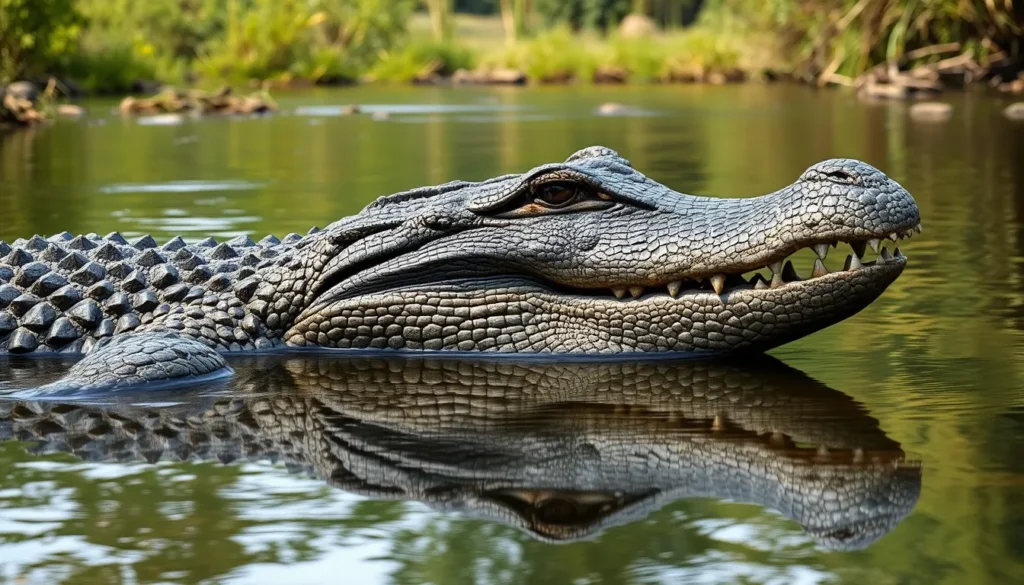
Short Answer
21 Facts About Nile Crocodiles
- Largest crocodile species in Africa. Nile crocodiles can grow up to 20 feet (6 meters) in length, making them the largest crocodilian species on the continent.
- Impressive lifespan. These reptiles can live up to 70-100 years in the wild under favorable conditions.
- Strong bite force. Nile crocodiles have one of the strongest bite forces among living animals, allowing them to easily capture and kill prey.
- Ambush predators. They rely on stealth and patience, often waiting submerged near the water’s edge to surprise prey.
- Dietary variety. Their diet includes fish, birds, mammals, and occasionally large animals such as zebras or buffalo.
- Temperature-dependent sex determination. The sex of Nile crocodile hatchlings depends on the temperature of the nest during incubation.
- Parental care. Female Nile crocodiles guard their nests and assist hatchlings to water, a rare behavior among reptiles.
- Excellent swimmers. Equipped with webbed feet and a powerful tail, they can swim swiftly and stay submerged for extended periods.
- Territorial behavior. Males maintain territories especially during the breeding season, often engaging in aggressive displays.
- Vocal communication. Nile crocodiles produce various sounds such as hisses, growls, and bellows to communicate.
- Ancient lineage. They belong to a group of reptiles that has existed relatively unchanged for about 200 million years.
- Critical role in ecosystems. As apex predators, they help regulate prey populations and maintain aquatic ecosystem balance.
- Wide distribution. Found throughout much of sub-Saharan Africa and Madagascar, they inhabit rivers, lakes, and marshes.
- Cold-blooded metabolism. Being ectothermic, their activity levels depend on environmental temperatures.
- Can perform the ‘death roll.’ This spinning maneuver helps subdue and dismember large prey.
- Threatened by habitat loss. Despite being widespread, local populations are affected by human encroachment and pollution.
- Hunted historically for leather. Their skin was and still is valued in the leather industry, leading to conservation efforts.
- Can survive long periods without food. Nile crocodiles can endure months without eating by slowing their metabolism.
- Breeding season linked to rainfall. Reproductive timing often coincides with rainy seasons to increase hatchling survival.
- Distinctive physical features. They have robust bodies, armored scales, and a powerful tail adapted for aquatic life.
- Interaction with humans. While attacks are rare, Nile crocodiles are responsible for more fatal attacks on humans than any other crocodile species.
Habitat and Behavior
Nile crocodiles inhabit freshwater environments across sub-Saharan Africa, including rivers, lakes, marshes, and sometimes brackish waters. They prefer areas with abundant prey and suitable basking sites. These reptiles are primarily nocturnal hunters, using stealth and camouflage to ambush prey. During the day, they often bask to regulate body temperature. Territorial behavior is common among males, especially during the mating season. Females build nests on riverbanks and protect their eggs and hatchlings from predators. Nile crocodiles are opportunistic feeders with diets ranging from fish and birds to large mammals. They are excellent swimmers and can stay underwater for up to an hour when hunting or avoiding threats.
Why This Animal Matters
Nile crocodiles play a significant ecological role as apex predators, controlling the populations of various aquatic and terrestrial species and thus maintaining ecosystem balance. Their presence indicates healthy freshwater systems. Culturally, they have been featured in African folklore, mythology, and art for centuries. Conservation-wise, they serve as flagship species for wetland protection efforts, though they face threats from habitat degradation, hunting, and human conflict. Understanding their biology and behavior helps in developing informed conservation strategies and mitigating human-wildlife conflicts.
Common Misconceptions
Misconception: Nile crocodiles always attack humans on sight.
Correction: While Nile crocodiles can be dangerous and have caused fatal attacks, they do not typically attack humans unless provoked or threatened, or when humans enter their territory.
Misconception: All crocodiles are the same species.
Correction: Nile crocodiles are one of many species worldwide, each with distinct behaviors, sizes, and habitats.
Misconception: Crocodiles are slow and clumsy.
Correction: Nile crocodiles are capable of rapid bursts of speed both in water and on land, especially when ambushing prey.
FAQ
How large can Nile crocodiles grow?
Nile crocodiles can grow up to 20 feet (6 meters) in length, with most adults averaging between 13 to 16 feet.
Are Nile crocodiles dangerous to humans?
Yes, Nile crocodiles are considered one of the most dangerous crocodile species and have been responsible for more fatal attacks on humans than any other crocodile species, though attacks are relatively rare and usually occur when humans enter crocodile habitats.
What do Nile crocodiles eat?
Their diet is diverse, including fish, birds, mammals, and occasionally large animals such as zebras or buffalo, depending on availability.


Leave a Reply