
Short Answer
21 Facts About Zebra Finches
- Scientific Classification
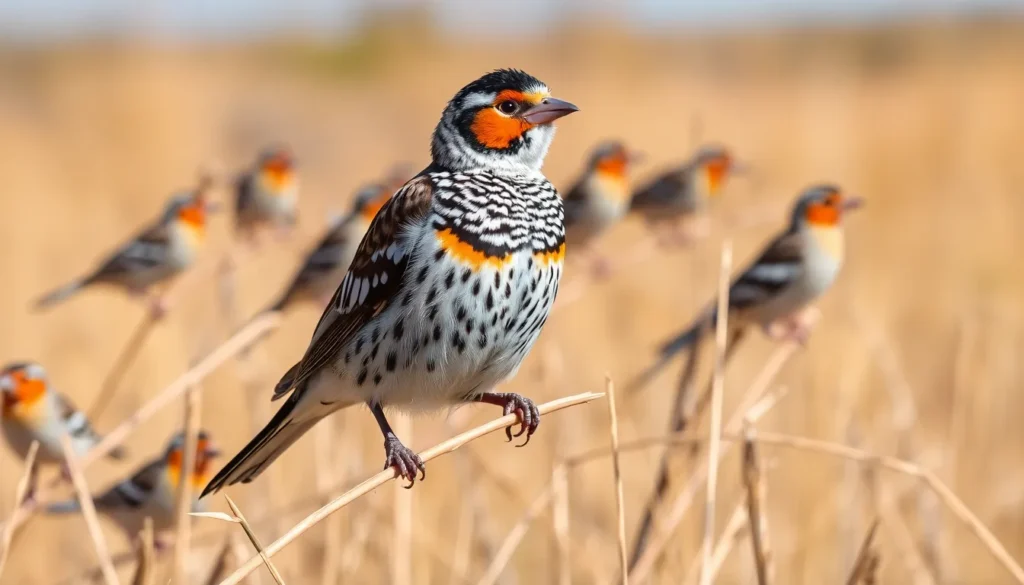
Zebra finches belong to the family Estrildidae and the genus Taeniopygia, with the scientific name Taeniopygia guttata. - Distinctive Appearance
They have characteristic black and white stripes on their throat and chest, with males displaying bright orange cheek patches and females generally having duller plumage. - Native Range
They are native to Australia, particularly arid and semi-arid regions, as well as some surrounding islands. - Social Birds
Zebra finches are highly social and usually live in large flocks, which helps them avoid predators and find food. - Diet
Their diet mainly consists of grass seeds, but they may also eat insects and other small invertebrates. - Breeding
They are prolific breeders, capable of producing multiple clutches per year, often building dome-shaped nests in shrubs or tree hollows. - Vocal Communication
Males produce complex songs used to attract females and establish territory, and each bird has a unique song pattern. - Lifespan
In the wild, zebra finches typically live around 2 to 5 years, though in captivity they can live longer, sometimes up to 9 years. - Adaptability
They adapt well to various environmental conditions, particularly dry climates, and can survive in areas with scarce water sources. - Scientific Research Subjects
Zebra finches are widely used in studies of animal behavior, neurobiology, and vocal learning due to their well-documented song learning and social behaviors. - Sexual Dimorphism
Differences between males and females include coloration and song production, with only males singing complex songs. - Egg Incubation
Both parents share incubation duties, which typically last about 12 to 14 days before hatching. - Fledging
Chicks leave the nest roughly 3 weeks after hatching but remain dependent on parents for food for some time. - Communication Beyond Song
They also use visual signals and calls to communicate within flocks and between mates. - Territorial Behavior
Males can be territorial during breeding seasons but generally are tolerant of other finches outside that period. - Domestication
Zebra finches have been kept as pets worldwide and bred in captivity for more than a century. - Conservation Status
They are currently classified as Least Concern by the IUCN due to their widespread range and stable population. - Predators
Common predators include larger birds, snakes, and introduced mammals, which they avoid through flocking behavior. - Flight Pattern
Their flight is quick and direct, often in short bursts between perches. - Molting
Zebra finches undergo periodic molting, replacing old feathers to maintain flight and insulation efficiency. - Color Variants
Selective breeding in captivity has produced various color morphs, including white and pied varieties not commonly found in the wild.
Habitat and Behavior
Zebra finches inhabit dry grasslands, savannas, and shrublands primarily in Australia, favoring open areas with access to water sources. They are highly social birds that live in large flocks, which provide safety in numbers and improve foraging success. Their behavior includes complex vocalizations, with males singing to attract mates and maintain pair bonds. Breeding often occurs year-round when conditions are favorable, especially after rains. They build dome-shaped nests from grasses and feathers, usually in shrubs or small trees. They survive in harsh environments by efficiently utilizing limited water and food resources and by being nomadic, moving in response to resource availability.
Why This Animal Matters
Zebra finches play an important ecological role as seed dispersers and as prey for a variety of predators. Their presence helps maintain the balance of grassland ecosystems. Culturally, they are popular in aviculture and have contributed significantly to scientific understanding of vocal learning, social behavior, and neurobiology. Their ease of breeding and care in captivity has made them a model organism in behavioral and genetic research. Conservation-wise, their stable populations act as indicators of ecosystem health in arid Australian regions.
Common Misconceptions
Misconception: Zebra finches are only found in Australia.
Correction: While native to Australia, zebra finches have also been introduced to other regions, including parts of Asia and islands in the Indian Ocean.
Misconception: Only male zebra finches sing.
Correction: While males produce the complex songs used to attract mates, females also produce calls and simpler vocalizations important for communication.
Misconception: Zebra finches require constant access to water.
Correction: Zebra finches are adapted to arid environments and can survive for extended periods with limited water by obtaining moisture from their food.
FAQ
Where do zebra finches naturally live?
Zebra finches are native to Australia, primarily inhabiting arid and semi-arid grasslands and shrublands, but they are also found on some nearby islands.
Do both male and female zebra finches sing?
Only male zebra finches produce the complex songs used for mating and territorial purposes, while females typically produce simpler calls for communication.
Why are zebra finches commonly used in scientific research?
They are a model species for studying vocal learning, neurobiology, and social behaviors due to their well-documented song patterns, ease of breeding in captivity, and social nature.





Leave a Reply