
Short Answer
21 Facts About Kiwis (Birds)
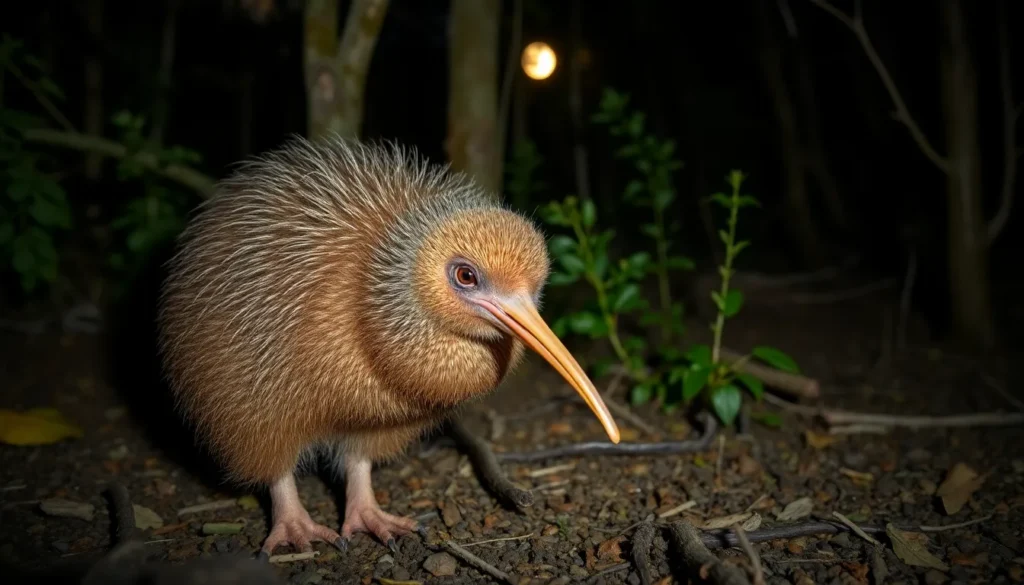
- Kiwis are flightless birds native to New Zealand. They belong to the genus Apteryx and are unique to the region, having evolved without natural mammalian predators.
- They are nocturnal creatures. Kiwis are primarily active at night, which helps them avoid predators and forage for food.
- Kiwis have hair-like feathers. Unlike typical bird feathers, kiwi feathers are more like fur, which provides effective camouflage and insulation.
- Kiwis have a highly developed sense of smell. Their nostrils are located at the tip of their long beaks, a rare feature among birds that aids in detecting prey underground.
- They are among the smallest ratites. Ratites are large, flightless birds; however, kiwis are much smaller than their relatives like ostriches and emus.
- Kiwis lay one of the largest eggs relative to body size. Their eggs can be up to 20% of the female’s body weight, which is unusually large for birds.
- There are five recognized species of kiwis. These include the North Island brown kiwi, great spotted kiwi, little spotted kiwi, rowi, and tokoeka.
- Kiwis have strong legs and sharp claws. Their legs are powerful for digging and defending themselves despite their small size.
- Kiwis are territorial birds. They use calls and scent markings to establish and defend their territory, often living alone or in pairs.
- They primarily feed on invertebrates. Their diet includes worms, insects, and other small creatures they locate by probing soil with their beaks.
- Kiwis are poor visioned but excellent at touch and smell. Their eyesight is limited, so they rely more on tactile and olfactory senses to navigate and find food.
- Kiwis have a long lifespan for birds their size. Some species can live up to 25-50 years in the wild, which is relatively long for small birds.
- They play a vital role in New Zealand’s ecosystem. By foraging and digging, kiwis contribute to soil health and insect population control.
- Kiwis are considered a national symbol of New Zealand. They hold cultural significance for Māori and are an iconic representation of the country worldwide.
- Many kiwi species are endangered or vulnerable. Habitat loss and introduced predators such as stoats and dogs threaten their populations.
- Conservation efforts include predator control and captive breeding. Programs aim to protect kiwi habitats and increase population numbers.
- Kiwis have a unique mating system. Some species form monogamous pairs that may last for life, sharing incubation and chick-rearing duties.
- The kiwi’s ancestors date back millions of years. They are believed to have evolved from flying birds that arrived in New Zealand before it separated from other land masses.
- Kiwis have no wings or only vestigial wings. Their wings are tiny and hidden beneath their feathers, making them completely flightless.
- They have a specialized beak adapted for probing. The long beak with sensory pits allows them to detect prey underground without seeing it.
- Kiwis contribute to ecotourism in New Zealand. Many people visit the country hoping to see these rare birds in their natural habitat.
Habitat and Behavior
Kiwis inhabit a variety of forested and scrubland environments throughout New Zealand. They prefer dense vegetation where they can forage for invertebrates in the soil and leaf litter. Being nocturnal, they avoid daytime predators and human activity. Their behavior is characterized by solitary or paired living, territoriality, and the use of vocalizations and scent marking for communication. Kiwis forage by probing the ground with their long beaks, relying heavily on their sense of smell and touch. They are ground dwellers, using their strong legs for digging burrows and defense.
Why This Animal Matters
Kiwis are ecologically important as soil aerators and controllers of invertebrate populations. Their unique evolutionary history makes them valuable for scientific study related to island biogeography and adaptation. Culturally, kiwis are a national symbol of New Zealand, representing the country’s natural heritage and identity. Conservation of kiwis highlights broader environmental challenges such as invasive species management and habitat preservation. Protecting kiwis contributes to maintaining biodiversity and ecosystem health in New Zealand.
Common Misconceptions
Misconception: Kiwis are the same as the kiwi fruit.
Correction: The kiwi bird and the kiwi fruit are unrelated; the bird is a flightless animal native to New Zealand, while the fruit is an edible berry originally from China.

Misconception: Kiwis can fly.
Correction: Kiwis are flightless birds with vestigial wings not capable of flight.
Misconception: Kiwis are rodents or mammals because of their fur-like feathers.
Correction: Despite their appearance, kiwis are birds, and their feathers, though hair-like, are distinct from mammalian fur.
FAQ
Why are kiwis flightless?
Kiwis evolved in New Zealand, an environment with few mammalian predators before human arrival. With no strong need for flight, their wings became vestigial over millions of years.
How do kiwis find food without good eyesight?
Kiwis rely on their highly developed sense of smell and touch, using their long beaks with sensory pits to detect prey underground.
What threats do kiwis face in the wild?
Kiwis are threatened primarily by introduced predators such as stoats, dogs, and cats, as well as habitat loss due to human activities.

Leave a Reply