
Short Answer
21 Facts About Insects
- Insects are the most diverse group of animals on Earth. There are over one million described species, and scientists estimate that millions more remain undiscovered.
- Insects have three main body segments. These include the head, thorax, and abdomen, which help in specialized functions such as feeding, locomotion, and reproduction.
- They possess six legs. As members of the class Insecta, all insects have three pairs of jointed legs attached to the thorax.
- Many insects undergo metamorphosis. This process involves distinct life stages such as egg, larva, pupa, and adult, allowing adaptation to different environments during development.
- Insects have compound eyes. These eyes consist of multiple small lenses, providing a wide field of vision and sensitivity to movement.
- Some insects can fly at remarkable speeds. For example, certain species of dragonflies can reach speeds up to 35 miles per hour.
- Insects communicate using various methods. These include chemical signals (pheromones), sounds, light signals (bioluminescence), and touch.
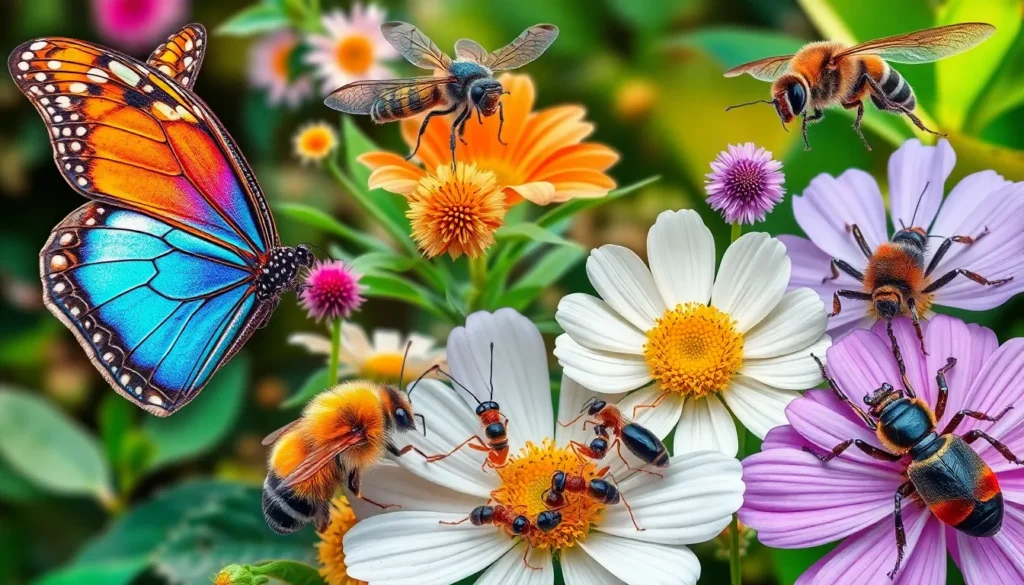
- Bees and other pollinators play a crucial role in ecosystems. They assist in the reproduction of many plants by transferring pollen.
- Insects can live in almost every habitat on Earth. From deserts to rainforests, and even aquatic environments, they have adapted to diverse ecological niches.
- Some insects exhibit social behavior. Examples include ants, termites, and certain bees, which live in organized colonies with division of labor.
- Insects have an exoskeleton made of chitin. This hard outer covering provides protection and structural support but requires molting for growth.
- Many insects are capable of remarkable camouflage. They can mimic leaves, bark, or other natural elements to avoid predators.
- Insects have existed for hundreds of millions of years. Fossils indicate that they appeared around 400 million years ago during the Devonian period.
- Some insects can survive extreme conditions. For example, tardigrades (though not insects but related micro-animals) and certain beetles can endure desiccation and freezing.
- Insects are a vital food source. Many animals, including birds, amphibians, and mammals, rely on insects as primary nutrition.
- Fireflies produce light through bioluminescence. This chemical reaction is used for mating signals and predator deterrence.
- Certain insects have been used in biological control. Ladybugs, for example, help manage pest populations in agriculture.
- Some species, like locusts, can form swarms that cause significant agricultural damage. Swarming behavior is triggered by environmental and population factors.
- Insects are sensitive to environmental changes. Declines in insect populations can indicate broader ecological issues.
- Humans have used insects for centuries. This includes honey production, silk harvesting from silkworms, and as subjects in scientific research.
- Insect diversity contributes significantly to global biodiversity. They play essential roles in nutrient cycling, soil aeration, and ecosystem stability.
Habitat and Behavior
Insects inhabit virtually every terrestrial and freshwater ecosystem, from tropical rainforests and deserts to wetlands and urban areas. Their ability to adapt to diverse environments is supported by specialized physiological and behavioral traits. For example, aquatic insects have gills or other adaptations for underwater respiration, while desert insects often have mechanisms to conserve water. Behaviorally, insects may be solitary or social, with social species like ants and bees exhibiting complex colony structures and cooperative behaviors. Many insects are nocturnal to avoid predators and extreme temperatures, while others are active during the day. Feeding habits vary widely, including herbivory, predation, parasitism, scavenging, and detritivory.
Why This Animal Matters
Insects are critical components of ecosystems worldwide. They contribute to pollination, which is essential for the reproduction of many plants and crops. Insects also aid decomposition by breaking down organic matter, recycling nutrients back into the soil. As a food source, they support diverse animal populations. Culturally, insects have influenced art, literature, and mythology in many societies. Economically, insects contribute to agriculture through pollination and pest control but can also cause damage as pests. Conservation of insect biodiversity is increasingly recognized as vital due to their sensitivity to environmental changes and their foundational role in maintaining ecosystem health.
Common Misconceptions
Misconception: All insects are harmful or pests.
Correction: While some insects can damage crops or spread disease, many provide essential ecosystem services such as pollination, decomposition, and natural pest control.

Misconception: Insects are simple creatures with limited behavior.
Correction: Many insects exhibit complex behaviors including social organization, communication, problem-solving, and tool use.
Misconception: Insects are only found in warm climates.
Correction: Insects are found worldwide, including cold and arid environments, with adaptations that allow survival under diverse conditions.
Misconception: All insects have wings.
Correction: While many adult insects have wings, some species and life stages are wingless, such as worker ants and flea larvae.
FAQ
What defines an insect?
Insects are defined as arthropods with a three-part body (head, thorax, abdomen), six legs, compound eyes, and usually two antennae and wings.
How do insects contribute to pollination?
Many insects, such as bees, butterflies, and beetles, transfer pollen from one flower to another while feeding on nectar, facilitating plant reproduction.
Are all insects harmful to humans?
No, while some insects can be pests or disease vectors, the majority are beneficial or harmless, contributing to ecosystems and human agriculture.


Leave a Reply