
Short Answer
21 Facts About Aardvarks
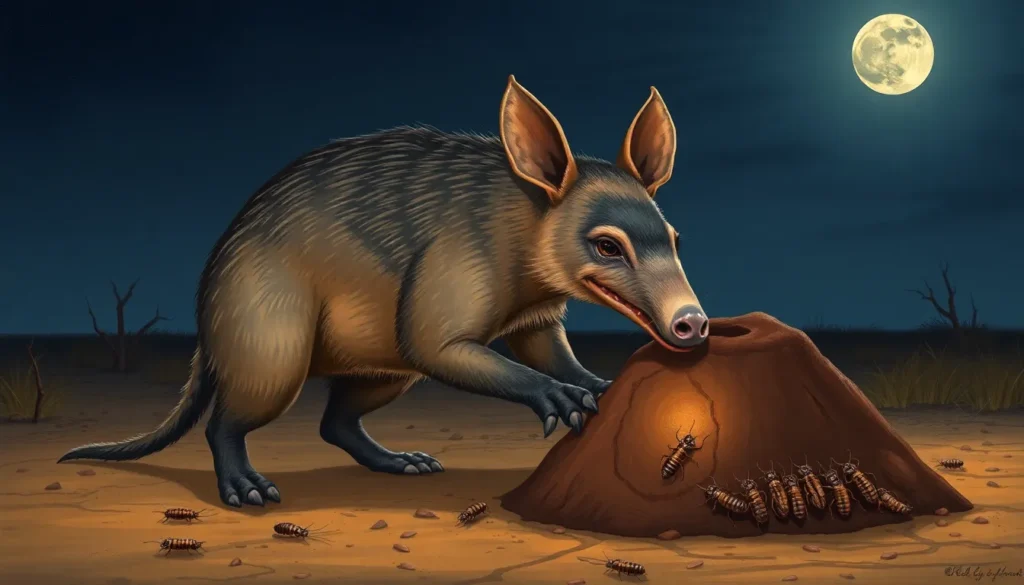
- Aardvarks are nocturnal mammals. They are primarily active at night to avoid predators and the daytime heat.
- The name ‘aardvark’ means ‘earth pig’ in Afrikaans. This refers to their burrowing habits and pig-like snout.
- Aardvarks are native to sub-Saharan Africa. They inhabit a wide variety of environments including savannas, grasslands, woodlands, and bushland.
- They belong to the order Tubulidentata. Aardvarks are the only living species in this order, making them evolutionarily unique.
- Aardvarks have strong, powerful claws. These are used to dig into termite mounds and ant nests as well as to create burrows.
- They primarily feed on ants and termites. Their sticky tongues can be up to 30 cm (12 in) long, enabling them to collect insects efficiently.
- Aardvarks have a keen sense of smell. This helps them locate insect nests even when hidden underground.
- They have a pig-like snout but are not related to pigs. Their closest relatives are thought to be elephants and manatees within the superorder Afrotheria.
- Aardvarks are solitary animals. They generally live alone except during mating or when a mother is raising young.
- They can run quite fast. When threatened, aardvarks can sprint quickly to escape predators.
- Aardvarks dig extensive burrow systems. These burrows provide shelter from heat and predators and can be quite complex.
- Their teeth are unique. Aardvark teeth lack enamel and have a distinctive tubular structure that continuously grows.
- Aardvarks have poor eyesight. They rely more on smell and hearing to navigate and find food.
- They have thick skin. This helps protect them from insect bites and predators.
- Aardvark reproduction involves a gestation period of about seven months. Typically, a single offspring is born.
- The young aardvark is weaned at about three months but stays with the mother for up to six months.
- Aardvarks contribute to ecosystem engineering. Their burrows provide habitats for other animals, such as reptiles and small mammals.
- They play a role in controlling termite and ant populations. This helps maintain ecological balance in their habitats.
- Aardvarks are sometimes called ‘antbears’. This nickname refers to their insectivorous diet and bear-like body shape.
- They are classified as Least Concern by the IUCN. However, habitat loss and hunting in some regions pose localized threats.
- Aardvarks have cultural significance in some African folklore. They are often depicted as shy, nocturnal creatures with mysterious qualities.
Habitat and Behavior
Aardvarks inhabit most of sub-Saharan Africa, from savannas to woodlands and grasslands. They prefer environments where ant and termite populations thrive because these insects constitute their primary diet. Aardvarks are nocturnal, spending daylight hours resting in burrows to avoid heat and predators. Burrows are dug using their strong claws and can be extensive, serving as a refuge for themselves and other species. Their solitary nature means they tend to forage alone at night, relying heavily on their sense of smell to locate insect nests. They can consume thousands of insects each night, using their long, sticky tongue to collect prey efficiently. When threatened, aardvarks can run quickly and retreat into their burrows for protection.
Why This Animal Matters
Aardvarks play an essential ecological role by controlling termite and ant populations, which can otherwise damage vegetation and wooden structures. Their burrowing behavior also creates habitats for other animals, contributing to biodiversity. Despite being elusive, they have cultural significance in various African communities, often symbolizing traits like shyness and nocturnal mystery. From a conservation perspective, aardvarks are currently not endangered, but their dependence on healthy insect populations and specific habitats means they can be vulnerable to environmental changes such as habitat destruction and pesticide use. Protecting aardvark habitats helps maintain ecosystem balance and supports other species sharing the same environment.
Common Misconceptions
Misconception: Aardvarks are related to pigs.
Correction: Despite their pig-like snout, aardvarks are not related to pigs. Their closest relatives are thought to be elephants and manatees within the superorder Afrotheria.
Misconception: Aardvarks eat only ants.
Correction: While ants are a major part of their diet, aardvarks also feed extensively on termites and sometimes other insects.
Misconception: Aardvarks are aggressive animals.
Correction: Aardvarks are generally shy and solitary, avoiding confrontation and using burrows or speed to evade predators rather than aggression.
FAQ
What do aardvarks eat?
Aardvarks primarily eat ants and termites, using their long, sticky tongue to gather insects from nests and mounds.
Are aardvarks related to pigs?
No, despite their pig-like snout, aardvarks are not related to pigs. Their closest relatives are elephants and manatees within the superorder Afrotheria.
Where do aardvarks live?
Aardvarks are found throughout sub-Saharan Africa in habitats such as savannas, grasslands, woodlands, and bushland where ants and termites are abundant.



Leave a Reply