
Short Answer
The Golden Snub-Nosed Monkey, often regarded as one of nature’s avian wonders, flutters through the dense canopies of China’s mountain ranges like a shimmering gold leaf dancing in a gentle breeze. With its vibrant fur and inquisitive gaze, this remarkable primate captivates the heart and mind, embodying an existence that is both enchanting and enigmatic. As we delve into the intricacies of its life, we uncover seven captivating facts that not only illuminate the world of this extraordinary creature but also showcase the importance of understanding and preserving its delicate habitat.
1. A Unique Physical Appearance
The Golden Snub-Nosed Monkey is a visual masterpiece of the animal kingdom. Its most distinguishing feature is the strikingly bright golden-yellow fur that cloaks its body, resembling a sunbeam filtered through the leaves of a forest. This distinctive coloration serves a purpose beyond mere allure, offering warmth in the chilling temperatures of its high-altitude habitat. The captivating facial features, including its flattened nose and large, expressive blue eyes, evoke a sense of curiosity. It is as if nature harbored an artist’s brush and dabbed on a palette of gold and azure to create not just a creature but an emblem of wonder.
2. An Impressive Diet
The dietary preferences of the Golden Snub-Nosed Monkey are as sophisticated as its appearance. This frugivorous primate primarily delights in a buffet of leaves, fruits, flowers, and seeds, showcasing an impressive palate adapted to its arboreal lifestyle. What’s particularly intriguing is its ability to thrive on foods that are notably toxic to other creatures, such as certain types of willow leaves. The monkey’s digestive system is akin to a finely tuned instrument, capable of processing toxins with enviable efficiency, allowing it to live in harmony with the often harsh elements of its high-altitude environment.
3. Social Structures and Behaviors
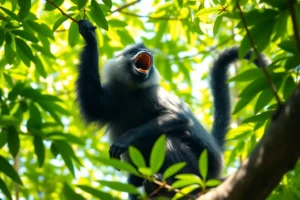
Cloaked in the mystery of its solitary existence, the Golden Snub-Nosed Monkey is, in fact, a social being. Living in troops that can reach up to 400 members, these monkeys exhibit complex social behaviors reminiscent of grand orchestras where each individual plays its part. They communicate through a rich tapestry of vocalizations, facial expressions, and postures, creating an intricate language that binds their community. The strength of their social bonds is palpable, and conflicts are typically resolved through displays of affection rather than aggression, demonstrating an advanced level of social intelligence.
4. Habitat and Distribution
These magnificent primates make their abode in the mist-shrouded forests of central and southwest China, thriving in the rugged, mountainous regions where the air is crisp and the landscape is steep. This habitat, often compared to a celestial sanctuary, is adorned with towering conifers and lush undergrowth, providing both nourishment and shelter. However, as the world outside encroaches upon their home, the Golden Snub-Nosed Monkey faces an increasing threat. The symphony of its habitat is shadowed by logging and agriculture, echoing a call for conservation efforts that resonate through the hearts of those who cherish biodiversity.
5. Conservation Status
Despite its ethereal beauty, the population of the Golden Snub-Nosed Monkey is dwindling, placing it on the list of endangered species. The primary culprits include habitat destruction and poaching, risks that loom like dark clouds over this golden treasure. Conservation initiatives are currently in place, aiming to safeguard the remaining populations and restore their habitats. These efforts shine a beacon of hope in the dismal landscape of extinction, reminding us that protection and preservation of this species must parallel our admiration for its unique existence.
6. Mating Rituals and Reproduction
The courtship display of the Golden Snub-Nosed Monkey rivals that of the most extravagant ballroom dance, embodying a dance of courtship that is both ritualistic and tender. Males often engage in vocal competitions that resonate through the mountains, striving to prove their worth to potential mates. Once a bond is formed, usually during the mildest months of spring, females generally give birth to a single offspring after a gestation period of approximately 5-6 months. The rearing of the young is a communal affair, with both parents playing integral roles in nurturing and protecting their offspring from the perils lurking in their mountainous domain.
7. Cultural Significance
The Golden Snub-Nosed Monkey holds a revered status in Chinese culture, often symbolizing strength, agility, and vitality. Its image graces various forms of art, from ancient folklore to modern media, depicting the extraordinary connection between humans and nature. This cultural significance extends beyond mere representation; it underscores the vital role that the Golden Snub-Nosed Monkey plays as a barometer of environmental health and a reminder of the delicate balance of nature. As such, its existence implores society to tread lightly upon the Earth, cultivating an awareness that reverberates through generations.
In conclusion, the Golden Snub-Nosed Monkey is not merely a creature of the forest but a vivid testament to the beauty and fragility of biodiversity. With its striking appearance, rich social life, and critical conservation status, this extraordinary primate bridges the gap between admiration and responsibility. As we reflect on these seven remarkable facts, we are reminded that our fascination with the natural world must be coupled with actions that ensure its preservation for future generations. Like a golden flame flickering in the twilight, the Golden Snub-Nosed Monkey calls us to cherish and protect the wonders of our planet, emanating a powerful message that resonates well beyond its high-altitude home.
FAQ
What is the Golden Snub-Nosed Monkey?
It is a primate species known for its distinctive golden fur and flattened nose, native to China's mountainous forests.
Where does the Golden Snub-Nosed Monkey live?
It lives in the high-altitude, misty forests of central and southwest China.
Why is it called the Golden Snub-Nosed Monkey?
Because of its bright golden-yellow fur and its characteristic flattened, snub-shaped nose.
What threats does the Golden Snub-Nosed Monkey face?
Major threats include habitat destruction due to logging and agriculture, as well as poaching.
What conservation efforts exist for this species?
There are ongoing initiatives to protect its habitat and reduce poaching, aiming to stabilize and increase its population.


Leave a Reply