
Short Answer
The vast expanse of the night sky holds profound mysteries and enchanting wonders that beckon both the casual observer and the avid astronomer. When gazing up at the shimmering canvas of the Milky Way, one cannot help but feel a tantalizing curiosity about the cosmic secrets that lie just beyond reach. This article delves into the myriad facets of the Milky Way, unveiling its intricacies while promising a shift in perspective that invites deeper appreciation for the cosmos above us.
1. The Celestial Architecture of the Milky Way
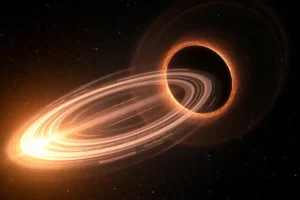
To fully appreciate the Milky Way, one must first understand its structure. Our galaxy is a barred spiral galaxy, a term that hints at its elegant, twisted form. Encompassed within its sweeping arms are billions of stars, interstellar gas, and dust, all held together by the invisible force of gravity. At its heart lies a supermassive black hole, Sagittarius A*, which exerts a gravitational pull so immense that it captivates the orbits of surrounding stars, imbuing the galactic core with a certain dynamism.
The Milky Way spans approximately 100,000 light-years in diameter. Its spirals are not merely aesthetic; they host different populations of stars and stellar nurseries. Understanding this architecture allows stargazers to delineate between clusters and the sprawling celestial tapestry visible on clear, dark nights.
2. Stars: The Twinkling Beacons
The allure of the night sky primarily stems from stars. The Milky Way is home to an estimated 100 to 400 billion stars, each with its own distinctive characteristics. Some stars, like our Sun, are main-sequence stars that sustain nuclear fusion in their cores, providing warmth and light. Others have reached the end of their life cycles, transforming into supernovae, neutron stars, or white dwarfs. This diversity offers a beguiling narrative of creation, evolution, and demise, inviting us to ponder our place in the grand scheme.
As you gaze into the starry wonders, consider the star clusters within the Milky Way. Open clusters, such as the Pleiades, are relatively young and closely knit, while globular clusters, like Omega Centauri, are ancient and densely packed with stars. These clusters serve as cosmic laboratories for studying the formation and lifecycle of stars, enriching our understanding of stellar phenomena.
3. The Galactic Halo and Dark Matter
Beyond the luminous stars and vibrant spirals lies the galactic halo, a region that extends far past the visible bounds of the Milky Way. This elusive halo, largely composed of dark matter—an invisible substance that neither emits nor absorbs light—holds approximately 90% of the galaxy’s total mass. Dark matter’s mysterious nature presents a compelling enigma for researchers, with its presence inferred only through gravitational interactions.
The study of dark matter reshapes our understanding of galactic formation and evolution. Its impact stretches beyond the Milky Way, influencing the behavior of galaxies and galaxy clusters within the larger cosmic web. Recognizing this hidden layer of our galaxy encourages a profound sense of humility and curiosity about the unseen forces shaping the universe.
4. Nebulae: The Birthplaces of Stars
As you explore the Milky Way, one cannot overlook the captivating beauty of nebulae, the interstellar clouds of gas and dust that serve as the cradles of stars. Each nebula is a stunning testament to the awe of cosmic creation. The Orion Nebula, classical in its splendor, bursts with color and vibrancy, illuminated by the young stars forming within its gaseous depths.
Nebulae can be classified into several categories, including emission nebulae, reflection nebulae, and planetary nebulae. The processes occurring within these stellar nurseries offer fundamental insights into the genesis of stars and the cyclical nature of matter in the universe. Gazing upon a nebula evokes a sense of wonderment and invites contemplation about the intricate dance of life and death in the cosmos.
5. The Milky Way’s Companion Galaxies
The Milky Way does not exist in isolation; it is part of a dynamic trio known as the Local Group. This collection includes the Andromeda Galaxy, which is on a collision course with our own, and the Triangulum Galaxy, a smaller yet beautifully structured entity. The gravitational interactions between these galaxies are pivotal in shaping their eventual fate. Over billions of years, they will merge, leading to an entirely new formation in the void.
The concept of galactic neighbors enriches our perception of the Milky Way, revealing that we are part of a larger community within the universe. This realization ignites curiosity about the nature of intergalactic relationships and the potential for other life forms existing within these myriad cosmic landscapes.
6. Cultural Significance and Folklore
The Milky Way has been a source of inspiration and reverence throughout human history. Various cultures have woven its essence into their myths, legends, and cosmologies. Indigenous peoples in North America, for instance, consider the Milky Way as a celestial river, while other civilizations have likened it to a pathway for the deceased to traverse the heavens. Such narratives not only highlight humanity’s connection to the cosmos but also showcase the diverse perspectives that emerge from observing these celestial wonders.
By reflecting on the stories crafted around the Milky Way, one is reminded of the significance of the night sky as a canvas for imagination and cultural expression. It rekindles curiosity about how our own stories may evolve as exploration of the universe continues.
Conclusion
Standing beneath the vast tapestry of the Milky Way evokes both awe and wonder, igniting a profound curiosity about the universe that envelops us. From its intricate structure to the mesmerizing phenomena of stars and nebulae, the secrets contained within our galaxy inspire a deeper contemplation of existence. As you explore these celestial wonders, remember that the night sky above is not merely an aesthetic marvel; it is a realm steeped in mystery, waiting for the inquisitive mind to decipher its enigma further.
FAQ
What is the Milky Way?
The Milky Way is a barred spiral galaxy that contains billions of stars, including our Sun, along with interstellar gas, dust, and dark matter.
How big is the Milky Way?
The Milky Way spans approximately 100,000 light-years in diameter.
What is at the center of the Milky Way?
At the center of the Milky Way lies a supermassive black hole known as Sagittarius A*.
What is dark matter in the context of the Milky Way?
Dark matter is an invisible substance that makes up about 90% of the Milky Way's total mass and affects the galaxy through its gravitational pull.
What are nebulae?
Nebulae are interstellar clouds of gas and dust within the Milky Way that serve as the birthplaces of stars.
Does the Milky Way have companion galaxies?
Yes, the Milky Way is part of the Local Group, which includes companion galaxies like Andromeda and the Triangulum Galaxy.




Leave a Reply