
Short Answer
21 Facts About Yellowjackets
- Yellowjackets are social wasps. Unlike solitary wasps, yellowjackets live in large colonies with a queen, workers, and males.
- They belong to the genus Vespula and Dolichovespula. These genera include the majority of yellowjacket species found in North America and Europe.
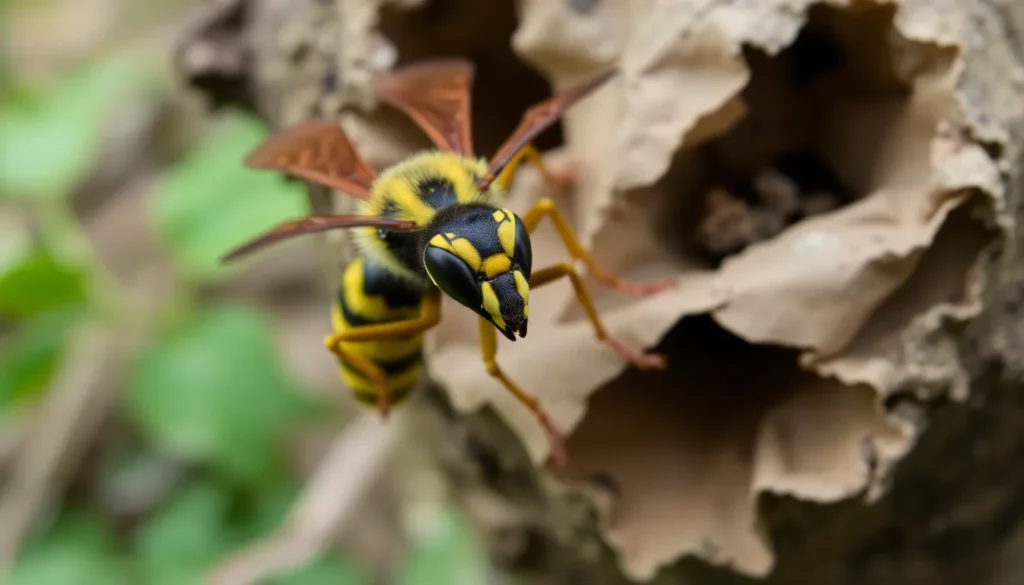
- Yellowjackets have distinctive black and yellow coloration. Their bold patterns serve as a warning to potential predators.
- They are often confused with bees. Despite their appearance, yellowjackets are wasps and have a smoother body without the dense hair typical of bees.
- Yellowjackets are predators and scavengers. They feed on various insects and also scavenge human food, especially sugary substances.
- Their nests are usually built underground or in cavities. Some species nest in hollow trees, wall voids, or man-made structures.
- Yellowjackets are important natural pest controllers. By preying on many insect species, they help regulate populations of potential crop pests.
- Their stings can be painful and cause allergic reactions. Yellowjackets can sting multiple times as their stingers are not barbed like bees’.
- They become more aggressive in late summer and fall. This behavior is linked to changes in colony dynamics and food availability.
- Yellowjacket colonies die off in winter. Only fertilized queens survive by hibernating until spring.
- Queens establish new colonies each spring. They begin by building a small paper nest and laying the first generation of workers.
- Yellowjackets communicate using pheromones. These chemical signals help coordinate colony defense and foraging.
- They produce paper nests by chewing wood fibers. The resulting material is similar to paper and is used to construct layered nest walls.
- Yellowjackets can travel several hundred meters to forage. They are highly mobile and can locate food sources efficiently.
- Some species of yellowjackets exhibit parasitic behavior. For example, the parasitic yellowjacket lays eggs in the nests of other species.
- Yellowjackets have complex social structures. Division of labor occurs among colony members including foragers, defenders, and nest maintenance workers.
- They can recognize nestmates through chemical cues. This helps prevent intruders from entering the colony.
- Yellowjackets are attracted to sweet foods and proteins. This attraction often brings them into conflict with humans during outdoor activities.
- They play a role in pollination, though limited. While not primary pollinators, yellowjackets do visit flowers and can contribute to pollination.
- Yellowjackets have been studied for insights into social insect behavior. Their communication and colony organization provide valuable scientific information.
- Control of yellowjacket populations requires careful consideration. Because of their ecological role, indiscriminate extermination can have unintended consequences.
Habitat and Behavior
Yellowjackets inhabit temperate regions primarily across North America and parts of Europe and Asia. They prefer environments that offer suitable nesting sites such as underground burrows, hollow trees, or man-made structures like wall voids. Their nests are constructed from chewed wood fibers mixed with saliva, forming a papery structure with multiple layers and chambers.
As social insects, yellowjackets exhibit complex behaviors including cooperative brood care, division of labor, and colony defense. Workers forage for food, which includes insects, nectar, and human food scraps. They are particularly drawn to sugary substances and proteins, leading to frequent encounters with humans during late summer and fall when natural food sources decline.
Yellowjackets communicate primarily through pheromones to coordinate defense and foraging activities. They are known for their aggressive defense of the nest, and their ability to sting multiple times makes them effective protectors. Colonies typically persist for one season, with only fertilized queens overwintering to start new colonies in spring.
Why This Animal Matters
Yellowjackets play a significant role in ecosystems as both predators and scavengers. By preying on other insects, they help control populations of pest species that can damage crops and gardens. Their scavenging activities contribute to nutrient recycling by breaking down organic matter.
Although their stings can be a nuisance to humans, yellowjackets contribute to biodiversity and provide valuable insights into social insect biology. Their complex social structures and communication methods have been subjects of scientific research, informing broader understanding of insect behavior and evolution.
From a conservation perspective, yellowjackets are generally not threatened, but changes in land use and pesticide application can impact their populations. Maintaining balanced ecosystems includes recognizing the ecological importance of these wasps despite their sometimes negative interactions with people.
Common Misconceptions
Misconception: All yellowjackets are aggressive and attack without provocation.
Correction: Yellowjackets generally sting in defense of their nests or when provoked, but they do not attack humans unprovoked.
Misconception: Yellowjackets are the same as bees.
Correction: Yellowjackets are wasps, not bees, and differ in body structure, behavior, and nesting habits.
Misconception: Yellowjackets die after stinging, like honeybees.
Correction: Unlike honeybees, yellowjackets can sting multiple times as their stingers lack barbs that get stuck in skin.
Misconception: All yellowjackets nest underground.
Correction: While many yellowjackets nest underground, some species build nests in trees, shrubs, or man-made structures.
Misconception: Yellowjackets serve no beneficial purpose.
Correction: Yellowjackets are important predators of pest insects and contribute to natural pest control and ecological balance.
FAQ
Are yellowjackets dangerous to humans?
Yellowjackets can sting and their stings are painful, sometimes causing allergic reactions. However, they generally sting only in defense of their nests or if directly threatened.
How can you tell a yellowjacket from a bee?
Yellowjackets have smooth, shiny bodies with bright black and yellow markings and narrow waists, while bees are usually hairy and have more muted colors.
Do yellowjackets have a role in pollination?
Although not primary pollinators, yellowjackets do visit flowers and can contribute to pollination to a limited extent.



Leave a Reply