
Short Answer
21 Facts About Wolf Spiders
- Diverse Family: Wolf spiders belong to the family Lycosidae, which includes over 2,300 species worldwide.
- Excellent Vision: They have eight eyes arranged in three rows that provide sharp vision, essential for hunting prey.
- Ground Hunters: Unlike many spiders, wolf spiders do not spin webs to catch prey but actively chase and pounce on insects.
- Robust and Agile: They have strong legs and can run quickly to capture prey or escape predators.
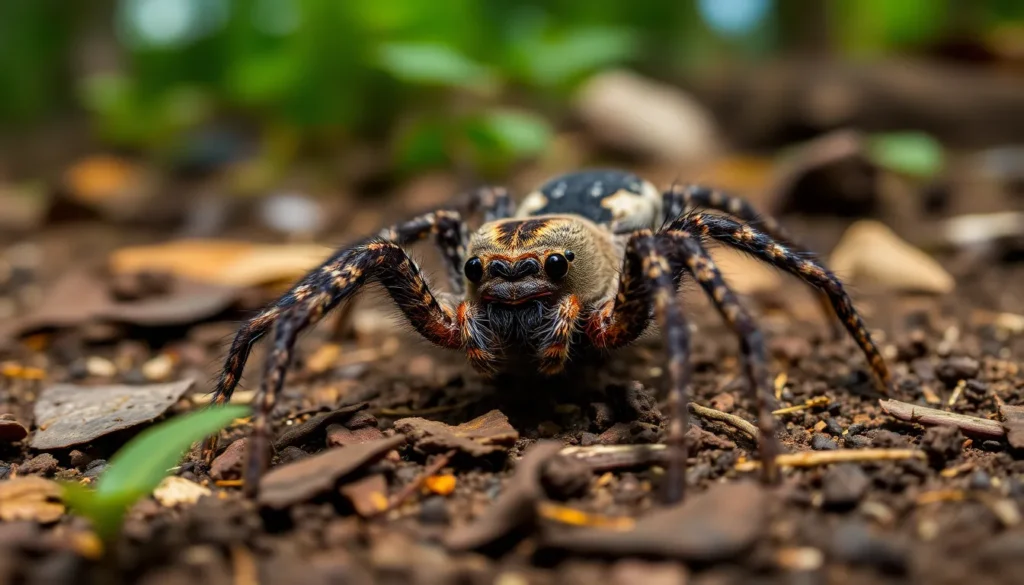
- Camouflage: Their coloration often blends with their natural environment, aiding in stealth and protection.
- Global Distribution: Wolf spiders are found on every continent except Antarctica, adapting to a variety of habitats.
- Solitary Lifestyle: They are solitary hunters and generally avoid social interactions except during mating.
- Maternal Care: Female wolf spiders carry their egg sacs attached to their spinnerets until the spiderlings hatch.
- Spiderling Transport: After hatching, young wolf spiders climb onto their mother’s back, where they stay for several weeks.
- Varied Sizes: Wolf spiders range in size from a few millimeters to over 35 millimeters in body length.
- Nocturnal and Diurnal: Some species are active during the day, while others hunt primarily at night.
- Venomous but Mild: Wolf spiders have venom to subdue prey, but their bites are generally not dangerous to humans.
- Vibratory Communication: They use vibrations on the ground to communicate, especially during courtship.
- Habitat Variety: They inhabit grasslands, forests, deserts, and even suburban areas.
- Adapted to Burrows: Many species dig burrows or use existing crevices as shelters.
- Important Predators: Wolf spiders help control insect populations, benefiting ecosystems and agriculture.
- Longevity: Some wolf spiders live up to two years, which is relatively long for spiders.
- Distinct Hunting Strategy: Unlike web-building spiders, wolf spiders rely on speed and stealth to catch prey.
- Unique Eye Arrangement: Their eye pattern helps distinguish them from other spider families.
- Non-aggressive to Humans: Wolf spiders rarely bite people and usually only do so if provoked.
- Scientific Interest: Their behaviors and adaptations make wolf spiders subjects of ecological and behavioral studies.
Habitat and Behavior
Wolf spiders are found in diverse environments worldwide, ranging from forests and grasslands to deserts and urban gardens. They prefer habitats where they can hunt efficiently on the ground, often hiding under rocks, leaves, or in burrows. Unlike web-building spiders, wolf spiders actively pursue prey such as insects and other small arthropods. Their keen eyesight and strong legs allow them to detect and chase prey quickly. Wolf spiders are solitary and territorial, with most species being nocturnal hunters. Females demonstrate notable maternal care by carrying their egg sacs and spiderlings, which is relatively uncommon among spiders. These spiders rely on camouflage and stealth for protection and predation, making them effective ground predators.
Why This Animal Matters
Wolf spiders play a crucial role in ecosystems by helping to control populations of insects and other invertebrates. This natural pest control benefits agriculture and reduces the need for chemical pesticides. Their presence indicates a healthy environment, as they contribute to biodiversity and food web dynamics. Culturally, wolf spiders are often subjects of fascination and myth, though sometimes feared due to misconceptions. From a scientific perspective, their distinct hunting techniques, maternal behaviors, and adaptations provide valuable insights into arachnid biology and ecology. Despite their fearsome appearance, wolf spiders generally pose little threat to humans, and their conservation is important for maintaining balanced ecosystems.
Common Misconceptions
Misconception: Wolf spiders are highly dangerous to humans.
Correction: While wolf spiders possess venom, their bites are typically mild and rarely harmful to humans unless allergic reactions occur.
Misconception: All spiders build webs to catch prey.
Correction: Wolf spiders do not spin webs to capture prey; instead, they hunt actively by chasing or ambushing.
Misconception: Wolf spiders are aggressive and will attack unprovoked.
Correction: These spiders tend to avoid humans and bite only when threatened or handled roughly.
Misconception: Wolf spiders carry their young in their mouths.
Correction: Female wolf spiders carry their egg sacs attached to their spinnerets and spiderlings ride on the mother’s back after hatching.
Misconception: Wolf spiders are rare and endangered.
Correction: Many wolf spider species are widespread and common, although habitat destruction can affect local populations.
FAQ
Are wolf spiders dangerous to humans?
Wolf spiders have venom for subduing prey, but their bites are generally mild and not considered dangerous to humans. They usually bite only when provoked.
Do wolf spiders build webs?
No, wolf spiders do not build webs to catch prey. Instead, they actively hunt on the ground by chasing or ambushing insects.
How do wolf spiders care for their young?
Female wolf spiders carry their egg sacs attached to their spinnerets and, after hatching, the spiderlings climb onto the mother's back where they remain for several weeks.






Leave a Reply