
Short Answer
21 Facts About Siamese Cats
- Ancient Origin: Siamese cats originate from Thailand, formerly known as Siam, and are one of the oldest and most recognizable Asian cat breeds.
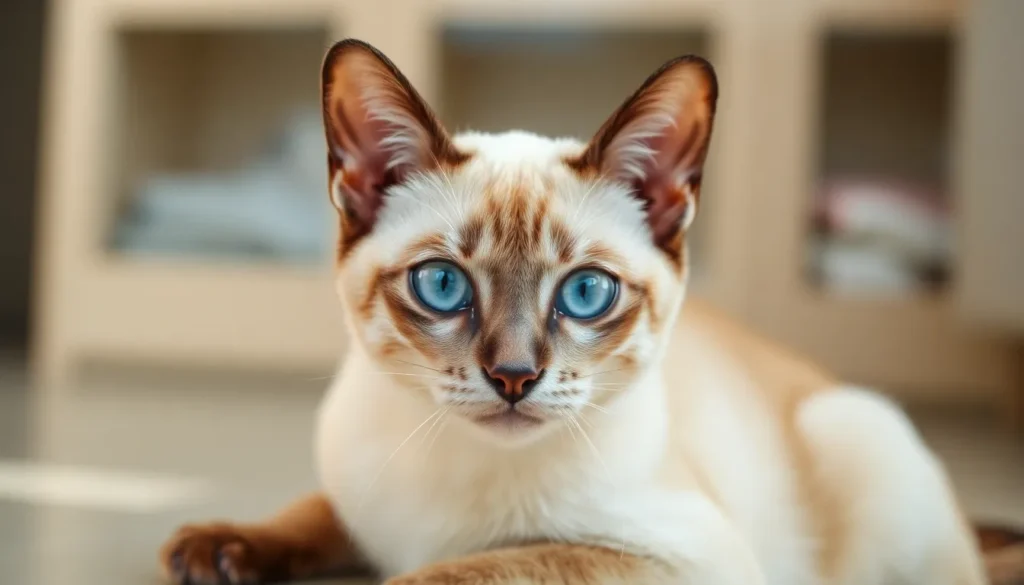
- Distinctive Color Points: They have a unique color pattern with darker coloration on their ears, face, paws, and tail called “points,” which contrasts with their lighter body fur.
- Blue Almond-Shaped Eyes: Siamese cats are known for their striking almond-shaped blue eyes, a defining trait of the breed.
- Vocal and Social: These cats are notably vocal and use a wide range of sounds to communicate with humans, often described as “talkative.”
- Sleek Body Type: Traditionally, Siamese cats have a slender, elongated body with long legs, a wedge-shaped head, and large ears.
- Temperature-Sensitive Coloring: Their point coloration is temperature-dependent; cooler parts of their body tend to be darker, caused by a form of partial albinism.
- Intelligence: Siamese cats are highly intelligent and curious, often engaging in interactive play and problem-solving activities.
- Breed Development: The modern Siamese breed was established in the late 19th and early 20th centuries through selective breeding in Europe and America.
- Affectionate Nature: They are known for forming strong bonds with their owners, often following them around and seeking attention.
- Varieties of Point Colors: While the traditional points are seal, blue, chocolate, and lilac, other recognized variations include red, cream, and tortie points.
- Influence on Other Breeds: Siamese cats have contributed genetically to the development of various other breeds, such as the Oriental Shorthair and Balinese.
- Health Considerations: Some Siamese cats may be predisposed to genetic health issues such as respiratory problems, dental disease, and progressive retinal atrophy.
- Historical Symbolism: In Thailand, Siamese cats were considered royal cats and were believed to bring good luck and protect homes.
- Distinctive Meow: Their vocalizations are often described as a loud, low-pitched, and almost human-like meow, which differs from many other cat breeds.
- Active and Playful: They require mental and physical stimulation and enjoy interactive toys and games.
- Adaptability: Siamese cats adapt well to indoor living and are suitable for apartment life, provided they receive sufficient attention and enrichment.
- Long Lifespan: With proper care, Siamese cats typically live between 12 to 20 years.
- Popular in Media: Siamese cats have appeared in various films and literature, often portrayed with their characteristic vocal and social behaviors.
- Recognition by Cat Associations: The breed is recognized by major cat registries worldwide, including the Cat Fanciers’ Association (CFA) and The International Cat Association (TICA).
- Distinct from Colorpoint Shorthair: While similar, the Colorpoint Shorthair is a separate breed developed by crossing Siamese with other cats to introduce new colors.
- Grooming Needs: Their short coat requires minimal grooming, though regular brushing helps reduce shedding and maintain coat health.
Habitat and Behavior
Siamese cats were originally native to the royal palaces and temples of Thailand, where they lived primarily indoors or in close proximity to humans. Today, they are kept worldwide as domestic pets. They thrive in indoor environments with ample social interaction and mental stimulation. Behaviorally, Siamese cats are highly social, often forming close attachments to their owners and other pets. They are active and playful, requiring regular engagement to prevent boredom. Their vocal nature makes them communicative companions, and they often seek attention through their distinctive meows. Due to their intelligence and curiosity, Siamese cats may explore various household areas and enjoy interactive play with toys or puzzle feeders.
Why This Animal Matters
Siamese cats hold both ecological and cultural significance. Ecologically, as domesticated cats, they play a role in controlling pests such as rodents in human environments. Culturally, they are important symbols in Thai history and folklore, traditionally regarded as sacred or lucky animals. The breed’s distinctive appearance and personality have influenced cat breeding worldwide, contributing to the development of multiple related breeds. Additionally, their popularity has increased awareness and appreciation for feline diversity, impacting pet ownership trends globally. Conservation-wise, while Siamese cats themselves are not endangered, understanding their genetic lineage helps maintain breed health and diversity.
Common Misconceptions
Misconception: Siamese cats are aggressive or unfriendly.
Correction: Siamese cats are generally affectionate and social, often displaying a strong bond with humans rather than aggressive behavior.
Misconception: All Siamese cats have the same appearance.
Correction: There are variations within the breed, including differences in body type and point color, such as traditional (apple head) versus modern (wedge-shaped head) Siamese.
Misconception: Siamese cats are hypoallergenic.
Correction: Siamese cats are not hypoallergenic; they produce allergens like most cats, although some individuals may react differently.
FAQ
Are Siamese cats easy to care for?
Siamese cats have short coats that require minimal grooming, but they need significant social interaction and mental stimulation to remain happy and healthy.
Why do Siamese cats have darker points on their bodies?
The darker points are due to a temperature-sensitive enzyme that affects pigment production, causing cooler areas like the ears, paws, and tail to be darker than the warmer central body.
Do Siamese cats make good pets for families?
Yes, Siamese cats are affectionate and social, often bonding closely with family members. However, their vocal and active nature means they do best in households that can provide attention and interaction.



Leave a Reply