
Short Answer
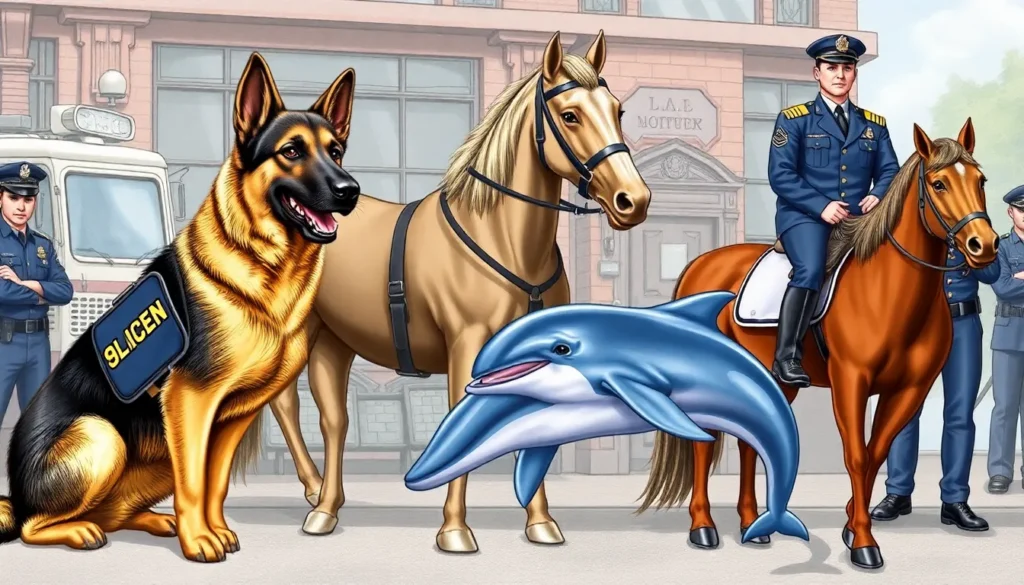
21 Facts About Police and Military Animals
- Dogs are the most commonly used police and military animals. Their keen sense of smell, intelligence, and trainability make them invaluable for tasks such as tracking, detection, and apprehension.
- German Shepherds and Belgian Malinois are the preferred police and military dog breeds. These breeds are favored due to their agility, stamina, and work ethic.
- Military horses have been used for centuries. Before mechanized vehicles, horses were essential for cavalry units, reconnaissance, and transport.
- Dolphins have been trained by navies. Navies, particularly the US Navy, have used dolphins for underwater mine detection and object recovery.
- Military and police animals undergo specialized training. This training can include obedience, scent detection, attack or defense skills, and environmental acclimatization.
- Dogs can detect explosives and narcotics with high accuracy. Their olfactory abilities surpass machines in many detection tasks.
- Animals have saved countless human lives. Police and military animals have helped prevent attacks, locate missing persons, and find hidden threats.
- Military animals often retire with honors. Many countries have formal retirement procedures and awards for service animals.
- Some animals serve as mascots and morale boosters. Beyond operational roles, animals like dogs and horses often improve troop morale.
- Military working dogs typically serve for 8 to 10 years. Their careers end when they retire due to age or health.
- War horses had to display bravery and calmness under fire. Their temperament was critical to prevent panic during battle.
- Animals have been used for communication. Carrier pigeons played significant roles in wartime message delivery before modern communications.
- Police horses are used for crowd control. Mounted police units provide visibility and mobility during protests and large events.
- Military dolphins are trained to recognize unauthorized divers. This capability helps protect naval assets from underwater threats.
- Training methods emphasize positive reinforcement. Modern animal training for military and police roles focuses on humane techniques.
- K-9 units are specialized teams pairing dogs with human handlers. Handlers develop close bonds with their dogs for effective teamwork.
- Animals have been part of military history for millennia. From ancient times to modern conflicts, animals have contributed significantly to warfare.
- Some police forces use birds of prey. In certain regions, falcons and hawks assist in controlling pest bird populations at airports.
- Animals require ongoing care and veterinary support. Their health and wellbeing are essential to operational readiness.
- Military animals sometimes face ethical and welfare challenges. Organizations advocate for improved conditions and treatment of working animals.
- Technology complements but does not replace animal roles. While machines assist, the unique abilities of animals remain critical in many scenarios.
Habitat and Behavior
Police and military animals typically live in controlled environments such as kennels, stables, or naval facilities during their service. Their natural habitats vary depending on species; for example, horses are domesticated descendants of wild equines, while dogs are domesticated canids bred for various traits. These animals are trained to adapt to diverse environments, including urban settings, rugged terrains, and aquatic zones, depending on their operational roles. Behaviorally, these animals exhibit high trainability, discipline, and responsiveness to handlers. Their survival in duty conditions depends on careful management, including nutrition, exercise, and health care, ensuring they remain fit for their demanding tasks.
Why This Animal Matters
Police and military animals play critical roles in public safety, national security, and humanitarian efforts. Ecologically, they represent the enduring relationship between humans and animals in cooperative roles. Culturally, these animals often symbolize loyalty, bravery, and partnership, sometimes becoming famous icons or recipients of honors. Their conservation relevance is tied to responsible breeding and welfare practices, ensuring that working animal populations remain healthy and sustainable. Moreover, their roles often demonstrate the importance of animal cognition and capabilities in specialized human endeavors.
Common Misconceptions
Misconception: Police and military animals are aggressive by nature.
Correction: These animals are selectively bred and trained to be controlled, responsive, and disciplined, not inherently aggressive. Aggression is a trained response used only when necessary.
Misconception: Technology will soon replace all animal roles in police and military work.
Correction: While technology aids many tasks, animals’ unique sensory abilities and adaptability ensure their continued importance alongside technological tools.
Misconception: All police and military animals have short service lives.
Correction: Service length varies by species, task, and health; some animals serve for many years and retire with care.
FAQ
What types of animals are commonly used in police and military roles?
Dogs are the most common, especially breeds like German Shepherds and Belgian Malinois. Other animals include horses for mounted units, dolphins for naval operations, and historically, carrier pigeons for communication.
How are police and military animals trained?
They undergo specialized training focused on obedience, detection, protection, and acclimatization to various environments, primarily using positive reinforcement techniques to encourage desired behaviors.
Do these animals receive care after retirement?
Yes, many police and military animals retire with honors and receive ongoing care from their handlers or adoption programs to ensure their welfare after service.





Leave a Reply