
Short Answer
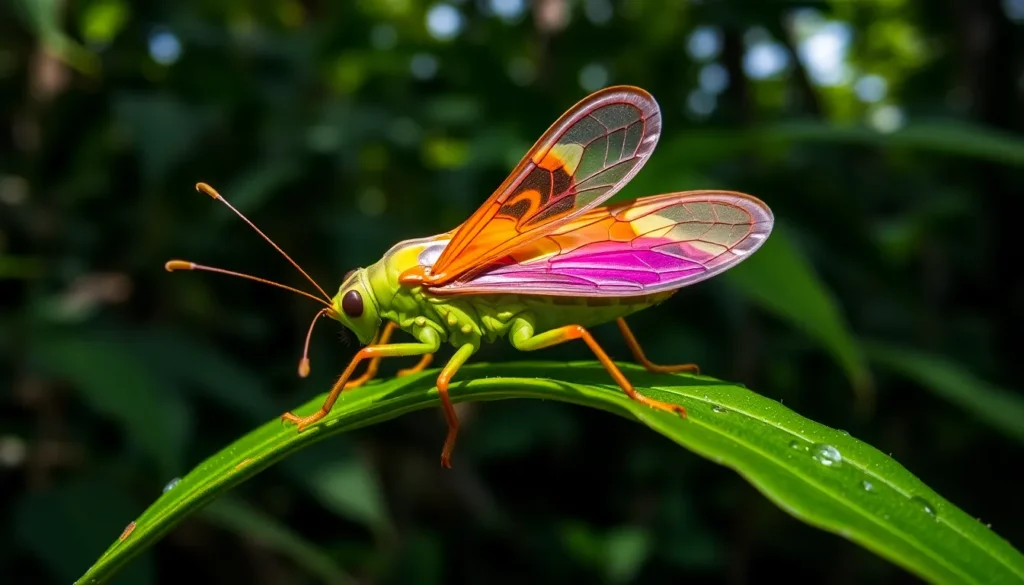
21 Facts About Planthoppers
- Planthoppers belong to the superfamily Fulgoroidea. They are classified within the order Hemiptera, which includes true bugs.
- There are over 12,000 known species of planthoppers. They exhibit a wide range of sizes, shapes, and colors across different habitats worldwide.
- Planthoppers are known for their exceptional jumping ability. They can leap several times their body length, aided by specialized hind legs and a spring-like mechanism.
- Many planthoppers produce waxy secretions. These secretions can cover their bodies, providing protection from predators and preventing desiccation.
- Planthoppers feed primarily on plant sap. Using piercing-sucking mouthparts, they extract nutrients from phloem or xylem vessels.
- Some species are agricultural pests. They can damage crops by feeding and transmitting plant pathogens, such as viruses and phytoplasmas.
- Planthoppers exhibit complex communication. Many use substrate-borne vibrations to communicate with conspecifics for mating or territorial purposes.
- They have a distinctive head morphology. Some species possess elongated or bulbous heads, sometimes referred to as “lantern bugs” in certain groups.
- Planthopper nymphs often have filamentous wax tails. These structures may aid in predator deterrence or camouflage.
- They undergo incomplete metamorphosis. Their life cycle includes egg, nymph, and adult stages without a pupal phase.
- Planthoppers have symbiotic relationships with bacteria. These endosymbionts help supplement their diet by producing essential nutrients.
- They can be found on a wide variety of plants. Many are host-specific, while others have a broader range of host plants.
- Planthoppers serve as prey for various predators. Birds, spiders, and predatory insects commonly feed on them.
- Some species exhibit mimicry or camouflage. Their coloration and shapes can resemble leaves, twigs, or other insects to avoid detection.
- Planthoppers contribute to nutrient cycling. By feeding on plants and excreting honeydew, they influence microbial communities and plant health.
- Honeydew produced by planthoppers attracts ants. Ants often protect planthoppers from predators in exchange for this sugary resource.
- Planthoppers can transmit plant diseases. Certain species are vectors for pathogens that cause significant agricultural losses.
- They have a fossil record dating back to the Jurassic period. This indicates their long evolutionary history and diversification.
- Planthoppers’ jumping mechanism is a subject of biomechanical research. Studying their leg structure helps scientists understand energy storage and release in small animals.
- Some species are studied for their unique wing patterns and structures. This research aids in understanding insect evolution and taxonomy.
- Planthoppers are sometimes used as bioindicators. Their presence and abundance can reflect ecosystem health and biodiversity.
Habitat and Behavior
Planthoppers inhabit a wide range of environments, from tropical rainforests to temperate regions, wherever host plants are available. They are typically found on the stems, leaves, or roots of plants depending on the species. Planthoppers are primarily phytophagous, feeding on plant sap, which they access through specialized mouthparts adapted for piercing and sucking. Their behavior includes short, powerful jumps to escape predators and communicate via substrate vibrations. Many species produce waxy secretions that can serve as protective coatings or camouflage. They often live in close association with ants, which tend to them for the honeydew they excrete. Planthopper nymphs and adults occupy different microhabitats and may have distinct behaviors related to feeding and reproduction.
Why This Animal Matters
Planthoppers play significant roles in ecosystems as herbivores, prey, and participants in mutualistic relationships with ants. They influence plant health both directly through feeding and indirectly by transmitting plant pathogens. Their honeydew supports ant populations and various microorganisms, contributing to nutrient cycling. Economically, some species are important agricultural pests, affecting crops such as rice, sugarcane, and potatoes. Conversely, their sensitivity to environmental changes makes them useful bioindicators for monitoring ecosystem health. Planthoppers also provide valuable insight into insect evolution, biomechanics, and chemical ecology, making them relevant for scientific research.
Common Misconceptions
Misconception: Planthoppers are harmless and do not affect crops.
Correction: While many planthoppers have minimal impact, some species are significant agricultural pests that damage crops and transmit plant diseases.

Misconception: All planthoppers look alike and are easy to identify.
Correction: Planthoppers are highly diverse in appearance, with thousands of species exhibiting a wide variety of shapes, sizes, and colors, making identification complex.
Misconception: Planthoppers produce light like fireflies (lantern bugs).
Correction: Despite the name “lantern bugs” for some species, planthoppers do not emit light; the name arises from their unusual head shapes that resemble lanterns.
FAQ
What do planthoppers eat?
Planthoppers primarily feed on plant sap, which they extract using their specialized piercing-sucking mouthparts from the phloem or xylem of host plants.
Are planthoppers harmful to crops?
Some planthopper species are harmful to agriculture because they feed on crops and can transmit plant pathogens, leading to significant damage and yield losses.
How do planthoppers communicate?
Many planthopper species communicate using substrate-borne vibrations transmitted through plant stems or leaves, which are used in mating calls and territorial behavior.


Leave a Reply