
Short Answer
21 Facts About Jackrabbits
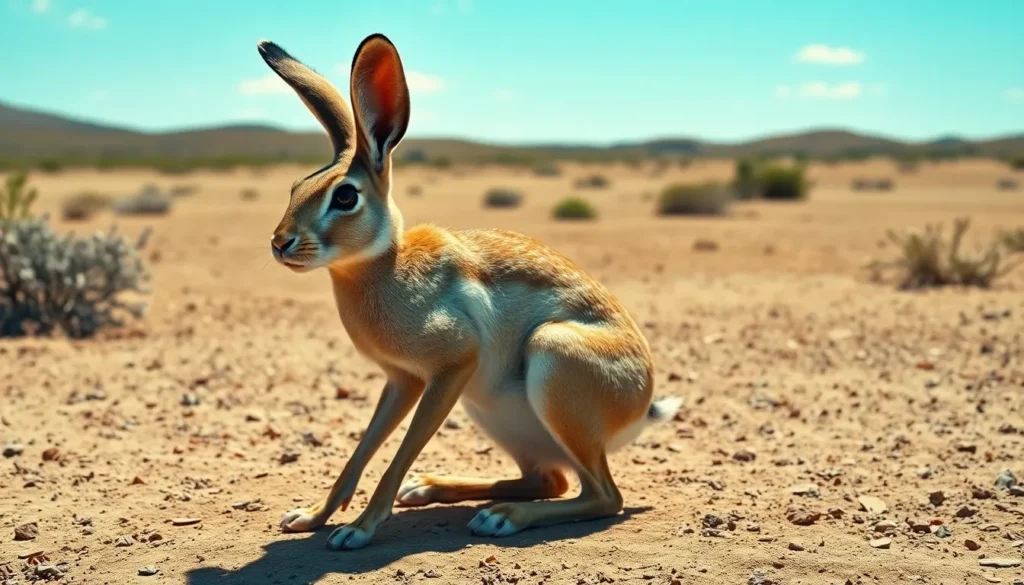
- Jackrabbits are not rabbits but hares. Unlike rabbits, jackrabbits belong to the genus Lepus and generally have longer ears and legs.
- They are native to North America. Jackrabbits are commonly found in the western and southwestern United States, Mexico, and parts of Canada.
- Jackrabbits have exceptionally long ears. Their ears can be up to 4 inches (10 cm) long and help regulate body temperature by dissipating heat.
- They are among the fastest land mammals in their environment. Jackrabbits can reach speeds of up to 45 miles per hour (72 km/h) to evade predators.
- They rely on powerful hind legs for speed and agility. Their strong legs enable them to make quick, bounding leaps to escape threats.
- Jackrabbits have excellent vision. Their large eyes are positioned to provide a wide field of view, aiding in predator detection.
- They are primarily herbivores. Their diet consists of grasses, shrubs, and other vegetation, which varies seasonally.
- Jackrabbits are mostly active during dawn and dusk. This crepuscular activity helps them avoid the hottest parts of the day and many predators.
- They do not dig extensive burrows. Instead, jackrabbits use shallow depressions called forms for resting and shelter.
- Jackrabbits have a high reproductive rate. Females can produce multiple litters per year, each containing several leverets (young hares).
- They have a unique way of surviving in arid environments. Jackrabbits can conserve water by obtaining moisture from their food and limiting activity during extreme heat.
- Jackrabbits communicate using body language. They use ear positioning and foot thumping to signal danger to others.
- Their fur changes with the seasons in some species. For example, the snowshoe hare, a relative of the jackrabbit, changes from brown to white, although this is less common in true jackrabbits.
- Jackrabbits are important prey species. They are a significant food source for predators such as coyotes, eagles, and bobcats.
- Jackrabbits have adapted to a wide range of habitats. They inhabit deserts, grasslands, and open forests.
- They possess keen hearing to detect predators early. Their large ears can pick up faint sounds from a considerable distance.
- Jackrabbits can survive cold winters. Some species have thick fur to protect against harsh weather conditions.
- Their large ears also help in thermoregulation. Blood vessels close to the ear surface allow heat to dissipate efficiently.
- Jackrabbits play an essential role in seed dispersal. By consuming various plants, they help in the propagation of local flora.
- They are solitary animals for the most part. Jackrabbits generally do not form social groups except during mating season.
- Several jackrabbit species face habitat threats. Urban development, agriculture, and climate change impact their populations in some regions.
Habitat and Behavior
Jackrabbits inhabit a variety of ecosystems primarily across North America, favoring open areas such as deserts, plains, and grasslands. They are well adapted to environments where cover is sparse, relying on their speed and agility to escape predators. Jackrabbits are mostly crepuscular, being most active during dawn and dusk to avoid extreme temperatures and predation. They do not burrow but use shallow forms or natural cover for rest. Their diet is herbivorous and varies with the availability of vegetation, including grasses, herbs, and shrubs. Behaviorally, they communicate through body signals, including ear movements and foot thumping, to warn of danger. Jackrabbits are generally solitary animals except during mating periods.
Why This Animal Matters
Jackrabbits play a vital ecological role as both herbivores and prey within their ecosystems. By feeding on various plants, they influence vegetation dynamics and contribute to seed dispersal, promoting plant diversity. They also serve as an important food source for multiple predators, supporting balanced food webs. Culturally, jackrabbits feature in the folklore and traditions of Indigenous peoples of North America and have been subjects of scientific study due to their unique adaptations. Conservation-wise, some jackrabbit species face habitat pressures, making them relevant for monitoring environmental changes and biodiversity health.
Common Misconceptions
Misconception: Jackrabbits are a type of rabbit.
Correction: Despite their name, jackrabbits are actually hares, which differ anatomically and behaviorally from true rabbits.
Misconception: Jackrabbits dig burrows like rabbits.
Correction: Jackrabbits do not dig extensive burrows; they rest in shallow depressions called forms or use natural cover.
Misconception: Jackrabbits are nocturnal.
Correction: Jackrabbits are primarily crepuscular, being most active at dawn and dusk rather than during the night.
Misconception: Their large ears are only for hearing.
Correction: In addition to hearing, their large ears help regulate body temperature by releasing excess heat.
FAQ
Are jackrabbits the same as rabbits?
No, jackrabbits are actually hares, which differ from rabbits in size, behavior, and physiology. Hares generally have longer ears and legs and do not burrow like rabbits.
How fast can jackrabbits run?
Jackrabbits can run at speeds up to 45 miles per hour (72 km/h), which helps them evade predators in their open habitat.
What do jackrabbits eat?
Jackrabbits are herbivores that primarily consume grasses, herbs, and shrubs. Their diet varies seasonally depending on available vegetation.





Leave a Reply