
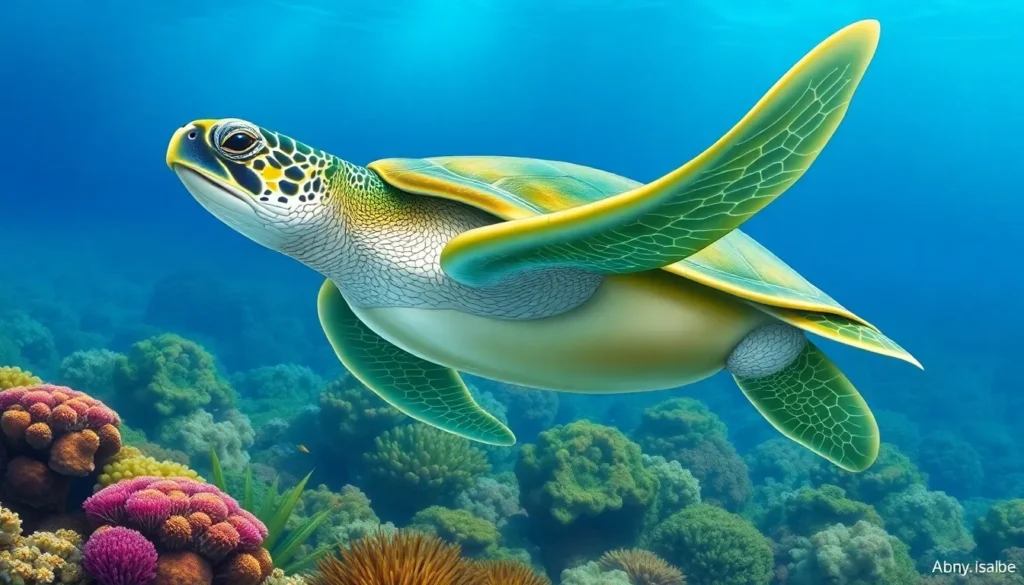
Short Answer
21 Facts About Green Sea Turtles
- Green Sea Turtles Are Named for Their Fat: Unlike their shell color, green sea turtles get their name from the greenish color of their body fat, which results from their herbivorous diet.
- They Are One of the Largest Sea Turtles: Adult green sea turtles typically weigh between 150 and 400 pounds (68 to 181 kg) and can reach up to 5 feet (1.5 meters) in length.
- Herbivorous Diet: Unlike many other sea turtles, green sea turtles primarily feed on seagrasses and algae, which influences their green-colored fat.
- Long Lifespan: Green sea turtles can live up to 80 years or more in the wild, although exact lifespans remain difficult to determine.
- Migratory Behavior: They undertake long migrations between feeding grounds and nesting beaches, sometimes spanning thousands of miles.
- Nesting Females Return to Birth Beaches: Female green sea turtles exhibit natal homing by returning to the same beaches where they were born to lay eggs.
- Temperature-Dependent Sex Determination: The sex of hatchlings is determined by the incubation temperature of the eggs, with warmer sands generally producing females.
- Threatened Species: Green sea turtles are classified as endangered due to threats such as habitat loss, poaching, bycatch, and pollution.
- Hard Shell Structure: Their carapace is smooth and heart-shaped, providing protection and streamlined swimming capabilities.
- Powerful Flippers: Their strong, paddle-like flippers enable efficient swimming over long distances in the ocean.
- Juvenile Diet Differs: Young green sea turtles are omnivorous, feeding on invertebrates and plants before transitioning to a mainly herbivorous diet as adults.
- Role in Seagrass Ecosystems: By grazing on seagrasses, green sea turtles help maintain healthy seagrass beds, which are important marine habitats.
- Solitary But Social: They are mostly solitary but can be seen feeding or basking in groups in some areas.
- Slow Growth Rate: Green sea turtles grow slowly and reach sexual maturity between 20 and 50 years of age.
- Air-Breathing Reptiles: Despite their aquatic lifestyle, green sea turtles must surface to breathe air through their lungs.
- Use of Earth’s Magnetic Field: They are believed to navigate the oceans using geomagnetic cues to find feeding and nesting sites.
- Predators Include Sharks and Large Fish: Eggs and hatchlings are vulnerable to predation by birds, crabs, and mammals, while adults face threats mainly from large sharks.
- Important Cultural Symbol: In many coastal cultures, green sea turtles hold spiritual, symbolic, and subsistence value.
- Conservation Efforts: International laws protect green sea turtles, and many organizations work to conserve their habitats and reduce human impacts.
- Temperature and Climate Impact: Rising temperatures and sea level changes pose future challenges for their nesting success and habitat availability.
- Unique Respiratory Adaptations: They can hold their breath underwater for several hours when resting, but typically surface every few minutes when active.
Habitat and Behavior
Green sea turtles inhabit tropical and subtropical oceans worldwide, primarily in coastal areas with abundant seagrass beds and coral reefs. They are found in the Atlantic, Pacific, and Indian Oceans and often frequent lagoons, bays, and shallow coastal waters. These turtles are known for their extensive migrations between feeding grounds and nesting beaches, sometimes traveling thousands of kilometers. They are mostly solitary creatures except during mating and nesting seasons. Their diet shifts from omnivorous in juvenile stages to primarily herbivorous as adults. Green sea turtles are air-breathing reptiles but are highly adapted for aquatic life, using their large flippers for swimming and their streamlined shells for efficient movement through water. They nest on sandy beaches, where females dig nests to lay eggs, which incubate for about two months before hatching.
Why This Animal Matters
Green sea turtles play a crucial ecological role by maintaining healthy seagrass beds and coral reefs, which support diverse marine life. Their grazing helps promote seagrass growth and nutrient cycling, benefiting the overall ecosystem. Culturally, green sea turtles are significant in many coastal communities, symbolizing endurance, longevity, and connection to the ocean. Conservation of green sea turtles is vital because their populations are indicators of ocean health, and their decline signals broader environmental issues such as habitat degradation, pollution, and climate change. Efforts to protect green sea turtles contribute to biodiversity preservation and the sustainability of marine environments.
Common Misconceptions
Misconception: Green sea turtles are green because their shells are green.
Correction: Their shell color is usually brown or olive, but their body fat is green due to their diet of seagrasses and algae.
Misconception: All sea turtles eat only plants.
Correction: While green sea turtles are mostly herbivorous as adults, juvenile green sea turtles have a more varied diet that includes invertebrates.
Misconception: Green sea turtles can breathe underwater.
Correction: Like all reptiles, they breathe air and must surface regularly, although they can hold their breath for extended periods.
FAQ
What do green sea turtles eat?
Adult green sea turtles primarily feed on seagrasses and algae, making them mostly herbivorous. Juveniles have a more varied diet that includes invertebrates.
How do green sea turtles navigate during migration?
Green sea turtles are believed to use the Earth's magnetic field as a guide to navigate between feeding grounds and nesting beaches, along with other environmental cues.
Why are green sea turtles endangered?
Green sea turtles face threats from habitat loss, poaching, accidental capture in fishing gear (bycatch), pollution, and climate change, all of which contribute to their endangered status.



Leave a Reply