
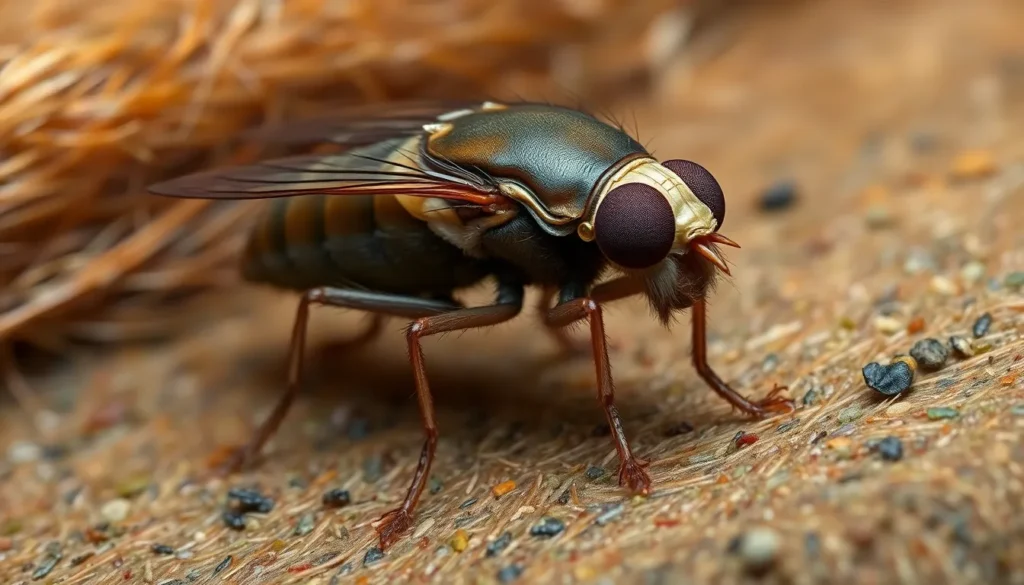
Short Answer
21 Facts About Fleas
- Fleas are wingless insects. Unlike many other insects, fleas do not have wings but are exceptional jumpers, enabling them to move quickly between hosts.
- They belong to the order Siphonaptera. This order includes over 2,500 known species of fleas worldwide.
- Fleas are external parasites. They feed on the blood of mammals and birds by piercing the skin of their hosts.
- They have specialized mouthparts. Fleas possess mouthparts adapted to pierce skin and suck blood efficiently.
- Fleas can jump up to 200 times their body length. This makes them some of the best jumpers in the animal kingdom relative to size.
- They have strong legs. Their hind legs are highly developed to facilitate jumping.
- Fleas undergo complete metamorphosis. Their life cycle includes egg, larva, pupa, and adult stages.
- Flea larvae are blind and avoid light. They usually remain hidden in the environment, feeding on organic debris and adult flea feces.
- Flea pupae can remain dormant for months. This allows them to survive unfavorable conditions until a host is nearby.
- Fleas can transmit diseases. Historically, fleas were vectors of the bubonic plague by carrying Yersinia pestis bacteria.
- Fleas prefer warm and humid environments. These conditions favor their development and reproduction.
- They can infest a variety of hosts. While some species specialize in particular hosts, others can feed on multiple mammals and birds.
- Flea bites cause itching and irritation. Their saliva contains anticoagulants and enzymes that can trigger allergic reactions in hosts.
- Fleas have a flattened body. This shape helps them move easily through the fur or feathers of their hosts.
- They are found worldwide. Fleas inhabit nearly every continent except Antarctica.
- Fleas are very small. Most adult fleas measure about 1.5 to 3.3 millimeters in length.
- They have simple eyes or none at all. Fleas rely more on detecting vibrations and carbon dioxide than vision.
- Fleas can survive for weeks without feeding. Some species can endure long periods without a blood meal during unfavorable conditions.
- Fleas use sensory organs to detect hosts. They sense heat, carbon dioxide, and vibrations to locate animals to feed on.
- Female fleas lay several eggs daily. A single female can lay up to 50 eggs per day, contributing to rapid infestations.
- Fleas have been around for millions of years. Fossil evidence shows that fleas existed during the Jurassic period, demonstrating their long evolutionary history.
Habitat and Behavior
Fleas live in environments that provide easy access to their hosts and suitable conditions for their life cycle stages. They are commonly found in areas inhabited by mammals and birds, such as homes with pets, nests, burrows, and animal resting places. Adult fleas live on their hosts, feeding on blood, while eggs, larvae, and pupae typically reside in the host’s environment, such as bedding, carpets, or soil. Fleas are nocturnal feeders, often most active at night. Their behavior revolves around locating a host through sensory cues like carbon dioxide emissions, body heat, and vibrations. Once on a host, they use their powerful legs to navigate through fur or feathers and remain attached while feeding. Their remarkable jumping ability allows them to move between hosts or escape threats quickly.
Why This Animal Matters
Fleas play a complex role in ecosystems and human history. Ecologically, they serve as parasites that influence host populations and behavior, sometimes affecting the health and dynamics of wildlife communities. Their presence can indicate the health of certain animal populations or habitats. Historically, fleas have had a significant impact on human society by transmitting diseases like the bubonic plague, which caused widespread pandemics. Understanding fleas is important for controlling infestations in pets and homes, reducing the risk of disease transmission, and maintaining animal welfare. While often considered pests, fleas also contribute to the biodiversity of parasitic insects and the study of host-parasite relationships.
Common Misconceptions
Misconception: Fleas can jump several feet into the air.
Correction: Fleas can jump impressive distances relative to their size, typically up to about 7-8 inches (18-20 cm), but not several feet.
Misconception: Fleas only infest dirty or unsanitary places.
Correction: Fleas can infest any environment where suitable hosts live, including clean homes, as long as there is access to animals to feed on.
Misconception: Fleas live on humans the same way they do on animals.
Correction: While fleas can bite humans, they generally do not live on people but prefer animal hosts for feeding and reproduction.
Misconception: Fleas die quickly once off their host.
Correction: Some flea stages, especially pupae, can survive for months off a host until conditions improve or a host returns.
Misconception: Flea infestations only affect pets.
Correction: Fleas can affect wildlife and occasionally humans, impacting health and comfort across multiple species.
FAQ
Can fleas live on humans?
Fleas can bite humans and feed on their blood but typically do not live on humans. They prefer animal hosts for sustained feeding and reproduction.
How do fleas jump so far?
Fleas have strong hind legs equipped with resilient protein structures called resilin, which store and release energy, enabling them to jump great distances relative to their size.
Are fleas dangerous to pets?
Yes, fleas can cause irritation, allergic reactions, and transmit diseases or tapeworms to pets, making flea control important for animal health.




Leave a Reply