
Short Answer
21 Facts About Amur Leopards
- Critically Endangered Status
The Amur leopard (Panthera pardus orientalis) is classified as Critically Endangered by the International Union for Conservation of Nature (IUCN) due to its extremely low population numbers. - Geographic Range
They are native primarily to the temperate forests of the Russian Far East and northeastern China. - Population Estimates
Wild population was estimated to be fewer than 100 individuals as of the early 2020s, making them one of the rarest big cats in the world. - Physical Appearance
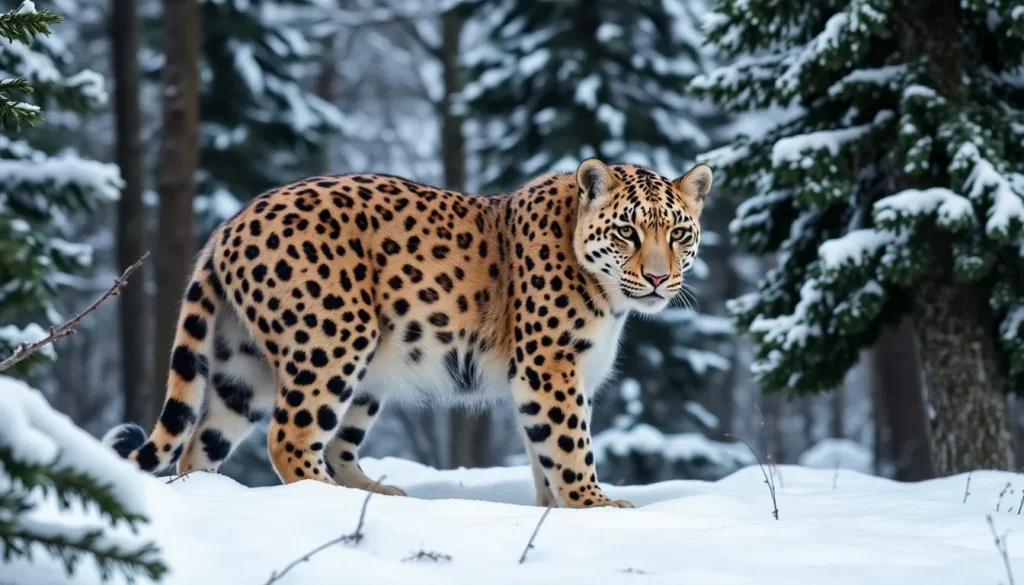
Amur leopards have a thick, pale coat with widely spaced rosettes and spots that help them blend into snowy environments. - Size and Weight
Males typically weigh between 32–48 kg (70–106 lbs), while females are smaller, generally 25–43 kg (55–95 lbs). - Adaptations to Cold
Their dense fur and long legs are adaptations that enable survival in harsh winter climates with heavy snow. - Solitary Lifestyle
Amur leopards are solitary animals, with individuals maintaining large territories that they mark with scent to avoid encounters. - Hunting Skills
They are stealthy predators, primarily hunting roe deer, sika deer, hares, and smaller mammals by stalking and ambushing their prey. - Reproduction
Females give birth to litters of 1–4 cubs after a gestation period of approximately 90–105 days. - Longevity
In the wild, Amur leopards live around 10–15 years, while in captivity they may live up to 20 years. - Territorial Range
Territories can span up to 30–50 square kilometers for females and larger for males, reflecting low population density and wide-ranging behavior. - Diet Diversity
They adapt their diet seasonally, supplementing ungulates with smaller prey like birds and rodents during scarce periods. - Nocturnal and Crepuscular
Amur leopards tend to be most active during dawn, dusk, and nighttime to avoid human activity and optimize hunting success. - Camouflage Efficiency
Their coat pattern provides excellent camouflage in snowy and forested environments, aiding in stealth hunting and predator evasion. - Threats from Poaching
Illegal hunting for their pelts and body parts has historically contributed to their decline, though anti-poaching efforts have increased. - Human Encroachment
Habitat loss due to logging, agriculture, and infrastructure development poses ongoing threats to their survival. - Conservation Efforts
Protected areas like Russia’s Land of the Leopard National Park have been established to safeguard their habitat and foster population recovery. - Genetic Studies
Genetic analyses confirm Amur leopards as a distinct subspecies with unique adaptations to their environment. - Role in Ecosystem
As apex predators, they help regulate prey populations and maintain the balance of forest ecosystems. - Captive Breeding Programs
Several zoos worldwide maintain breeding programs to support conservation and raise awareness about the species. - Symbol of Conservation
The Amur leopard is a flagship species for conservation in the Russian Far East and an emblem of global efforts to protect endangered big cats.
Habitat and Behavior
The Amur leopard inhabits temperate broadleaf and mixed forests characterized by cold winters and hot summers, primarily in the Russian Far East and parts of northeastern China. These forests provide dense cover and abundant prey species such as roe deer and hares. Amur leopards are solitary and territorial animals, with individuals marking their ranges using scent markings and scratch marks. They are primarily nocturnal and crepuscular, hunting by stalking and ambushing prey under the cover of darkness or twilight. Their thick fur and large paws adapted for walking on snow enable survival in harsh winter conditions. The species is elusive and rarely seen, contributing to the difficulty in monitoring their populations.
Why This Animal Matters
The Amur leopard plays an essential ecological role as an apex predator, helping maintain the balance of its forest ecosystem by regulating herbivore populations. This, in turn, supports forest regeneration and biodiversity. Culturally, the Amur leopard is a symbol of wilderness and resilience, particularly in Russia and China. Conservation efforts focused on this species have broader benefits for protecting large tracts of forest and other wildlife. The species’ critically endangered status highlights the urgent need for habitat preservation and anti-poaching measures, making it a flagship for international conservation collaboration.
Common Misconceptions
Misconception: Amur leopards are just a color variation of common leopards.
Correction: Amur leopards are a distinct subspecies (Panthera pardus orientalis) with unique genetic and physical adaptations to cold environments.
Misconception: Amur leopards are aggressive towards humans.
Correction: These leopards are generally shy and avoid human contact, with no verified cases of attacks on humans in the wild.
FAQ
Where do Amur leopards live?
Amur leopards are native to the temperate forests of the Russian Far East and parts of northeastern China, where they occupy cold, snowy environments.
Why are Amur leopards critically endangered?
The species faces threats from poaching, habitat loss due to human activities like logging and agriculture, and low population numbers that limit genetic diversity.
What do Amur leopards eat?
Their diet mostly consists of ungulates such as roe deer and sika deer, as well as smaller mammals like hares, birds, and rodents, which they hunt primarily by stalking and ambush.

Leave a Reply