
Short Answer
21 Facts About Bryozoan Zooid Polymorphism
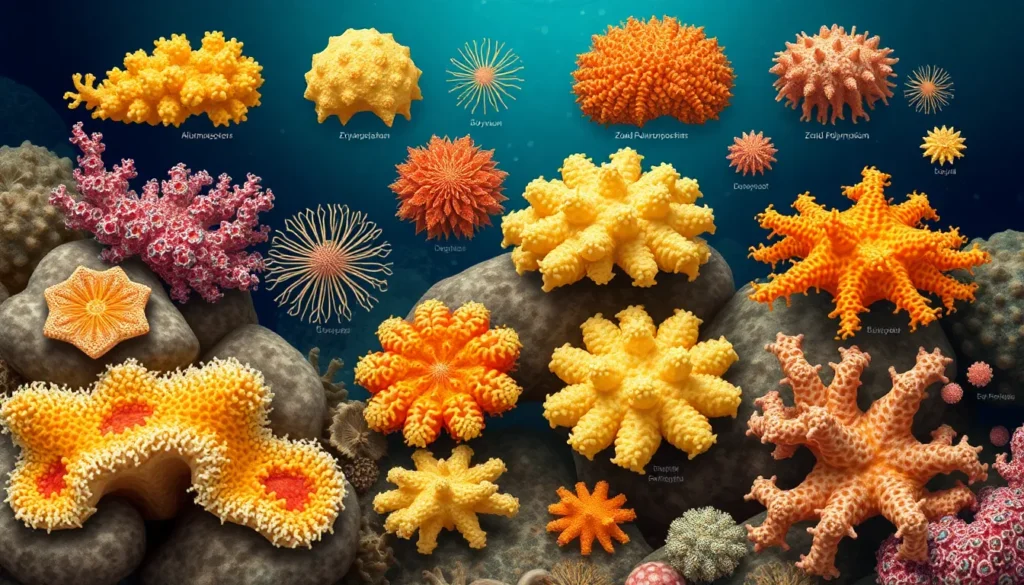
- Diverse Morphologies: Bryozoans exhibit a wide range of zooid forms, including autozooids for feeding and heterozooids for defense and reproduction.
- Colonial Organisms: Bryozoans are colonial animals, meaning they consist of numerous interconnected individuals (zooids) that function together.
- Polymorphism: The term ‘polymorphism’ refers to the existence of multiple distinct forms within a species, often serving different functions.
- Feeding Mechanism: Autopods (feeding zooids) utilize a lophophore, a specialized structure with tentacles that capture plankton and organic particles from the water.
- Defense Strategies: Some bryozoan zooids develop into specialized forms called avicularia, which act as defensive mechanisms against predators.
- Reproductive Forms: Certain zooids may transform into gonozooids, which are specialized for reproduction, producing eggs or sperm.
- Environmental Adaptation: The polymorphic nature of bryozoans allows them to adapt to various environmental conditions, enhancing their survival rates.
- Growth Patterns: Bryozoan colonies can exhibit different growth forms, from encrusting sheets to branched structures, depending on species and habitat.
- Habitat Variety: Bryozoans are found in diverse marine environments, from shallow coastal waters to deep-sea ecosystems.
- Symbiotic Relationships: Some bryozoans form symbiotic relationships with other marine organisms, contributing to the biodiversity of their habitats.
- Fossil Record: Bryozoans have a rich fossil record dating back to the Ordovician period, showcasing their long evolutionary history.
- Calcification: Many bryozoans secrete calcium carbonate to form their skeletons, contributing to marine limestone deposits over geological time.
- Ecological Engineers: Bryozoan colonies can create habitats for other marine organisms, acting as ‘ecosystem engineers.’
- Water Filtration: By filtering water for food, bryozoans play a crucial role in maintaining water quality in their ecosystems.
- Indicator Species: Bryozoans are often used as bioindicators to assess the health of marine ecosystems due to their sensitivity to environmental changes.
- Color Variability: Bryozoans can display a wide range of colors, influenced by factors such as species type, environmental conditions, and the presence of symbiotic algae.
- Colonial Lifespan: Some bryozoan colonies can live for several decades, continuously producing new zooids throughout their lifespan.
- Habitat Formation: The structures formed by bryozoan colonies can provide shelter for various marine organisms, enhancing local biodiversity.
- Climate Change Impact: Bryozoans are affected by climate change, particularly through ocean acidification, which can impact their calcification processes.
- Conservation Status: While many bryozoan species are abundant, some are threatened by habitat loss and environmental degradation.
- Research Importance: Bryozoans are subjects of scientific research, providing insights into evolutionary biology, ecology, and environmental science.
Habitat and Behavior
Bryozoans primarily inhabit marine environments, ranging from intertidal zones to deep-sea habitats. They often attach to hard substrates like rocks, shells, and artificial structures. Their colonies can grow in various forms, adapting to water currents and light availability. Bryozoans are filter feeders, using their lophophores to capture microscopic food particles suspended in the water. Their behavior is influenced by environmental factors, such as salinity, temperature, and nutrient availability, contributing to their distribution and abundance across different marine ecosystems.
Why This Animal Matters
Bryozoans play a significant ecological role by contributing to the structure and function of marine ecosystems. As filter feeders, they help maintain water quality by removing particulate matter and recycling nutrients. Their colonies serve as habitat for other marine organisms, enhancing biodiversity. Additionally, bryozoans are important in the study of evolutionary biology due to their long fossil record and diverse forms. Understanding their ecological roles can inform conservation efforts, especially in the face of environmental changes and habitat destruction.
Common Misconceptions
FAQ
What are bryozoans?
Bryozoans are colonial aquatic invertebrates that belong to the phylum Bryozoa, known for their unique feeding structures and diverse forms.
How do bryozoans reproduce?
Bryozoans can reproduce both sexually and asexually, with some zooids specialized for producing gametes.
Why are bryozoans important to marine ecosystems?
They act as filter feeders, contribute to biodiversity, and serve as habitat for other marine organisms.

Leave a Reply