
Short Answer
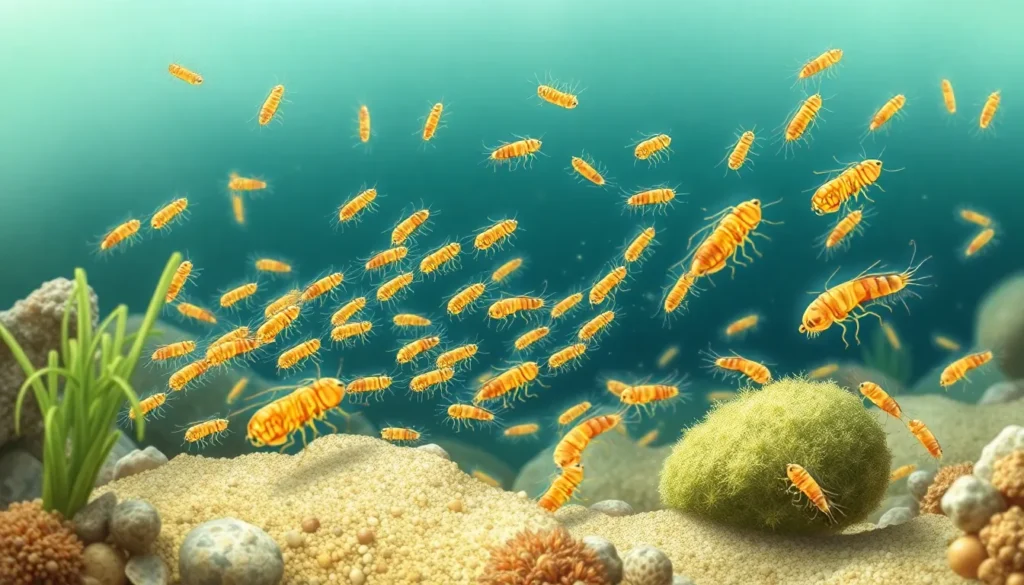
21 Facts About Amphipod Swarms (Sand Hoppers)
- Small Size: Amphipods typically range from 1 to 10 centimeters in length, making them relatively small invertebrates.
- Diverse Species: There are over 10,000 described species of amphipods, showcasing a wide variety of forms and ecological niches.
- Habitat Variety: Amphipods can be found in marine, freshwater, and terrestrial environments, often thriving in sandy or muddy substrates.
- Swarming Behavior: Amphipods often exhibit swarming behavior, particularly during breeding seasons, which can lead to large aggregations.
- Feeding Habits: Most amphipods are scavengers or detritivores, feeding on decomposing organic matter.
- Respiration: They breathe through gills located on their thorax, which allows them to extract oxygen from water.
- Reproductive Strategies: Some amphipods exhibit direct development, with young resembling miniature adults, while others have complex larval stages.
- Predation: Amphipods are preyed upon by a variety of species, including fish, birds, and larger invertebrates.
- Bioluminescence: Certain amphipod species are known to exhibit bioluminescence, which may serve as a defense mechanism.
- Indicators of Environmental Health: Amphipods are often used as bioindicators to assess the health of marine ecosystems.
- Coloration: Many amphipods display varying colors, including transparent, brown, and bright hues, which can aid in camouflage.
- Life Span: The lifespan of amphipods varies by species, with some living only a few months while others can survive for several years.
- Social Structures: Some amphipod species exhibit social behaviors, forming groups that can enhance their survival against predators.
- Adaptations to Dry Conditions: Certain amphipods can survive in moist environments and have adaptations to prevent desiccation.
- Ecological Interactions: Amphipods participate in various ecological interactions, including competition, predation, and mutualism.
- Feeding Mechanism: Amphipods have specialized mouthparts that allow them to scrape and consume organic material from surfaces.
- Migration Patterns: Some amphipod species exhibit seasonal migrations, often in search of food or suitable breeding grounds.
- Habitat Preferences: Many amphipods prefer shallow waters close to shore, where they can find ample food and protection.
- Role in Aquaculture: Amphipods are sometimes used as feed in aquaculture due to their high nutritional value.
- Threats: Amphipods face threats from habitat destruction, pollution, and climate change, which can impact their populations.
- Cultural Significance: In some cultures, amphipods have been used in traditional dishes, highlighting their role in local diets.
Despite their size, they play a significant role in their ecosystems, often serving as a food source for various marine animals.
This diversity allows amphipods to inhabit various environments, from deep-sea regions to coastal areas.
This adaptability is crucial for their survival, allowing them to exploit different habitats across the globe.

This behavior helps in mating and increases the chances of survival for their offspring.
This feeding strategy plays a vital role in nutrient recycling within their ecosystems.
Efficient respiration is essential for their survival in various aquatic habitats.
This reproductive strategy can influence population dynamics and survival rates.
As a key part of the food web, they contribute to the energy flow in their ecosystems.
This fascinating adaptation can help them evade predators in dark environments.
Changes in their populations can reflect shifts in environmental conditions, pollution levels, or habitat degradation.
Coloration helps them blend into their surroundings, reducing visibility to predators.
This variation is influenced by environmental factors and reproductive strategies.
Social structures may lead to improved foraging efficiency and better protection from threats.
These adaptations allow them to thrive in temporary habitats, such as tidal pools.
These interactions contribute to the complexity of ecosystem dynamics.
This adaptation enhances their ability to exploit different food sources.
These migrations are crucial for maintaining population stability and genetic diversity.
These habitats are often rich in organic material, supporting their feeding habits.
This practice highlights their importance in both natural ecosystems and human agricultural systems.
Conservation efforts are essential to ensure their survival and maintain ecological balance.
Their consumption reflects a connection between humans and their natural environment.
Habitat and Behavior
Amphipods predominantly inhabit marine environments, particularly in sandy or muddy substrates along coastlines. They are also found in freshwater ecosystems such as lakes and rivers, as well as in moist terrestrial environments. Amphipods are known for their highly adaptive behaviors, allowing them to survive in varying conditions. They often burrow into the substrate for protection and to search for food.
Why This Animal Matters
Amphipods play a critical role in nutrient cycling within ecosystems, acting as scavengers that break down organic material. Their presence is essential for maintaining the health of marine and freshwater environments, as they serve as a food source for numerous predators, including fish and birds. Additionally, their sensitivity to environmental changes makes them valuable indicators of ecosystem health.
Common Misconceptions
Misconception: Amphipods are insects. Correction: Amphipods are crustaceans, related to shrimp and crabs, and belong to the class Malacostraca.
Misconception: All amphipods are found in the ocean. Correction: While many species inhabit marine environments, amphipods can also be found in freshwater and terrestrial habitats.
FAQ
What do amphipods eat?
Amphipods primarily feed on decomposing organic matter and detritus.
Where can I find amphipods?
Amphipods can be found in marine, freshwater, and moist terrestrial environments.
Why are amphipods important to the ecosystem?
They play a crucial role in nutrient recycling and serve as a food source for many marine and freshwater species.




Leave a Reply